Eski Pano
Some foods are remembered not only for their taste, but for the feeling of returning home that accompanies them. Tray borek held exactly that meaning, especially in the hours after school. A child climbing the stairs of an apartment building or stepping into the stone courtyard of an old house could often smell butter, pastry sheets, and filling from the kitchen before the door even opened. The warmth of the tray fresh from the oven, the slight crackle as it was set on the table, and the impatience of the first spoon reaching toward the plate could dissolve the fatigue of the day at once. Borek did more than satisfy hunger. It drew the child's body, tired from hours outside, and the mind, scattered by the school day, back into the rhythm of the house. That is why it holds a special place among family recipes. Its value lies less in ingredients than in its power of welcome.
As taste memory, tray borek shows both the practical and the generous side of old kitchen culture. Laying the pastry sheets one by one, brushing them with oil, spreading cheese, minced meat, or potato filling evenly, and finishing with a yogurt or milk mixture required not only skill, but a sense of balance. Tray borek is never a food for one person alone. It multiplies as it is sliced and makes a house feel fuller as it reaches the table. For that reason it holds its place among family recipes not simply as a flavor, but as a bearer of abundance. In older homes it could be offered with the same sincerity to an unexpected guest, a hungry child returning from school, or an exhausted adult arriving from work in the evening.
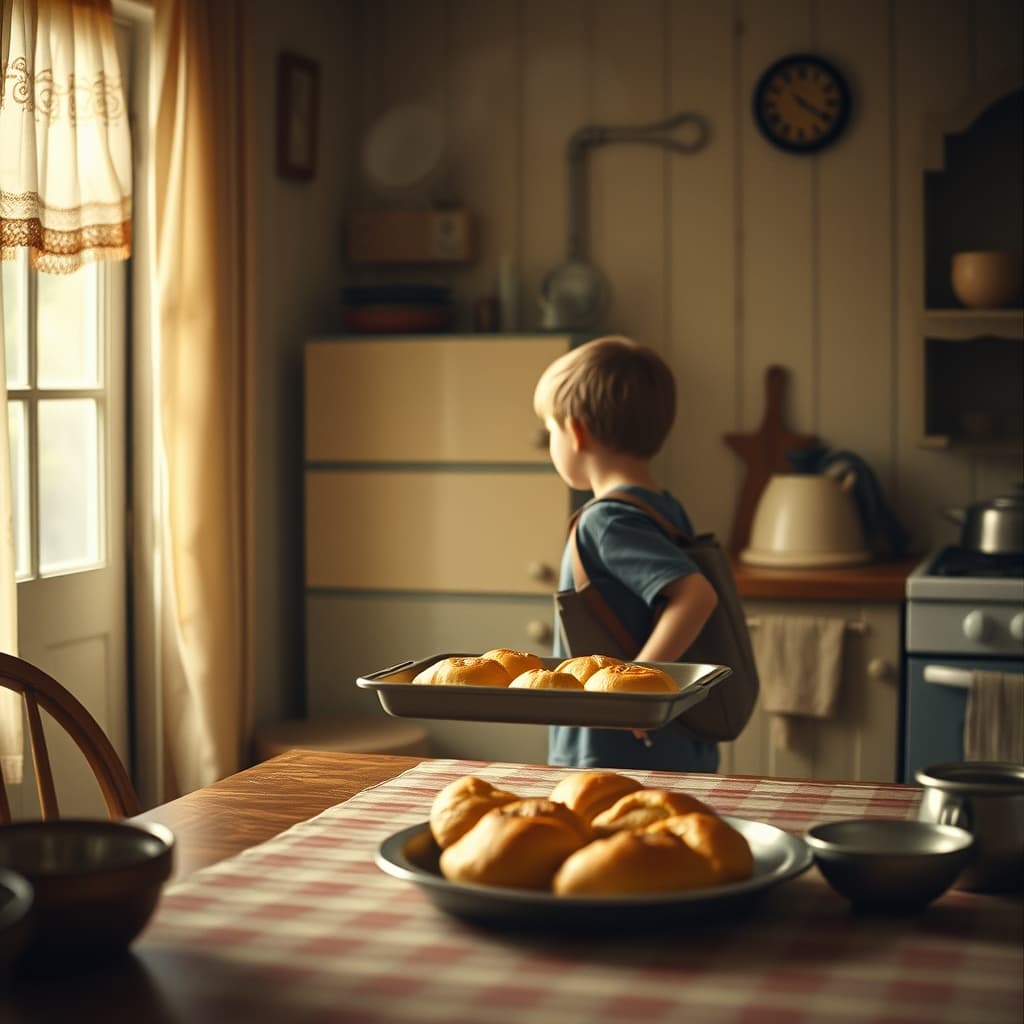
The image of the first spoon reaching toward the plate after school captures the emotional place of this dish very well. The child set the schoolbag aside, washed their hands, and hurried toward the kitchen, often asking for the first portion before the borek had fully cooled. In that scene, waiting mattered as much as eating. While the mother said, "let it rest a little," the child watched the aroma rising from the edge of the tray and waited impatiently for the table to be set. With the first bite, more than hunger was answered. The distance carried home from the noise of school quietly closed. This is one reason family recipes are never truly forgotten. They are not merely foods served at the table, but small forms of order that gather the scattered pieces of the day.
Another reason tray borek holds such a special place is the way it passes from one generation to another. Small pieces of knowledge move quietly through the family: which pastry sheets give the best result, when parsley should be added to the filling, how the top should brown, whether the tray should be lined first. No two homes prepare it in exactly the same way. Some prefer thicker layers, some a thin and crisp finish, some pour milk over the top, some keep it simple. Yet one thing does not change: borek represents continuity inside the home. The child coming back from school grows up, and later another generation enters through the same smell. In that way the recipe continues to live not only in the kitchen, but within family time itself.
Today, as convenience foods become easier, it is easier to understand why tray borek is still remembered with such affection. It is a food of preparation rather than speed. The sound of the pastry, the heat of the oven, the weight of the tray, and the impatience of the first spoon all recall the slow but secure rhythm of domestic life. A single slice can bring back childhood, the walk home from school, or the quiet afternoons once spent in the kitchen. That is exactly why it holds a special place among family recipes. It offers not only flavor, but one of the warmest forms of coming home.
Tray Borek and the First Spoon Reaching Toward the Plate After School: Why Does It Hold a Special Place Within Family Recipes?