 Eski Pano
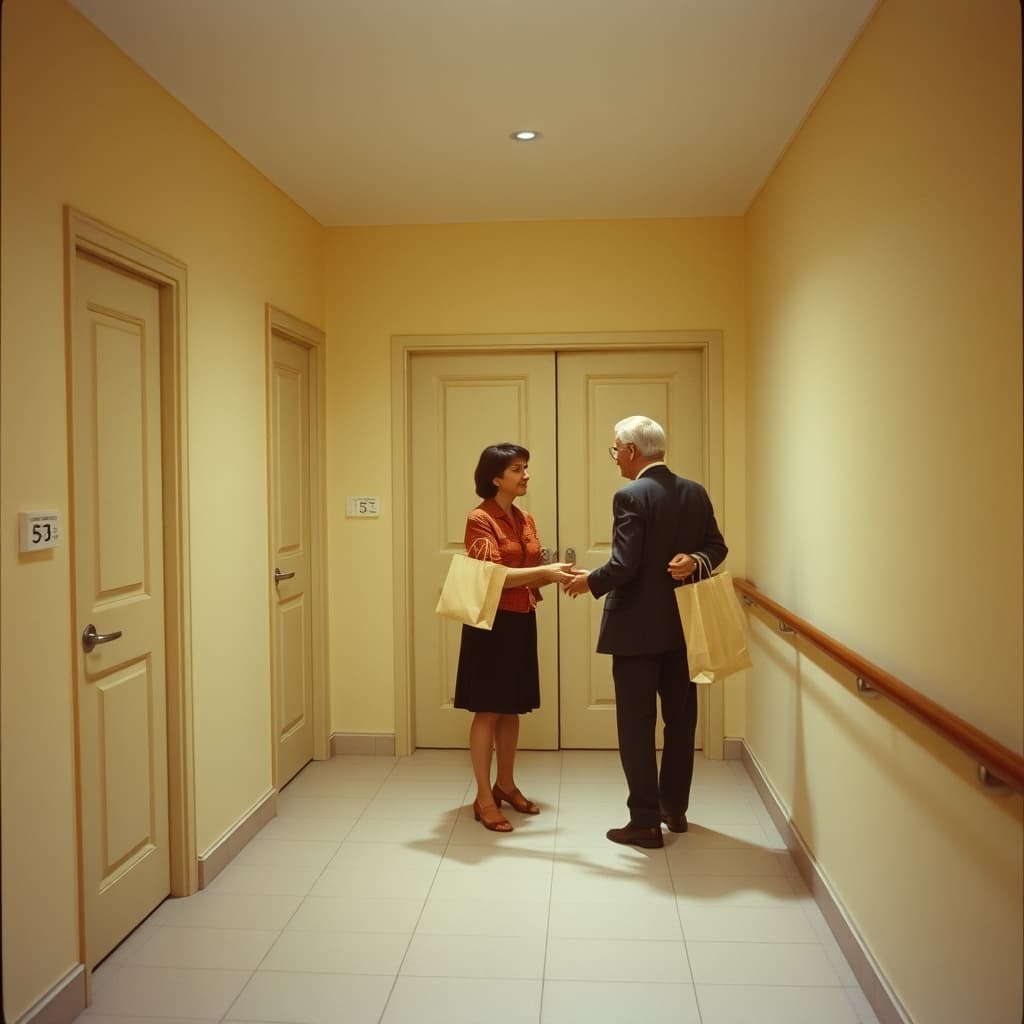
In a neighbourhood’s first apartment blocks, meeting a neighbour could begin with footsteps beyond the flat door rather than a face across a garden boundary. Someone came up the stairs while another prepared to leave. The encounter happened inside the building but outside either home, in a space residents had to learn to share.
This small relocation helps explain why the change could remain emotionally vivid. It did not simply remove neighbourliness or install a new version of it. It changed where recognition happened, how much time a greeting allowed and what somebody could know about the person approaching. The landing introduced a different distance between familiarity and privacy.
A Voice Came before a Face
From inside a flat, a resident might hear movement without seeing who was there. Opening the door supplied the missing view. In a familiar building, repeated encounters could gradually connect a voice or greeting with a person, but the sound alone did not provide a complete account of their movements.
An old street acquaintance could now be encountered carrying shopping towards another floor. A newcomer might first be known through these brief crossings rather than a formal visit. The building gathered households along one route while leaving much of each household’s life behind its own door.
The exact experience depended on the building. A small block and a larger one offered different numbers of neighbours and different opportunities to meet. A memory of one landing should keep that scale visible rather than stand for the whole transition to apartment life.
The Greeting Had to Fit the Passage
On a landing, conversation often began while somebody was already going somewhere. Bags, a waiting companion or an unfinished task could shorten it. The space supported contact without necessarily becoming a place for a long visit. A warm greeting and a quick departure could belong to the same exchange.
Two residents might step aside for another person to pass. That adjustment was part of learning the space: the encounter could not claim the route entirely for itself. The landing belonged to movement as well as conversation, and familiarity did not make it an extension of one flat.
For some residents, these crossings offered welcome company. For others, the shared approach to the door felt less private than the arrangement they had known before. Both reactions can explain the ache attached to a remembered move. A change welcomed for one reason could still involve a loss elsewhere.
A Visit Was Different from a Chance Encounter
Repeated meetings did not automatically create permission to enter. An invitation across the flat’s threshold remained another step. Apartment living placed two boundaries close together: the shared building entrance and the private home door. A resident could be comfortable at one and reserved at the other.
Over time, households could develop their own ways of distinguishing a passing greeting from a visit. Those habits were learned through actual people, not supplied ready-made by the architecture. The first apartment blocks changed the setting; residents still had to decide how to behave within it.
A later photograph may show a plain staircase with little evidence of these decisions. An account can add who met there, whether they were arriving or leaving and what made the crossing familiar. It need not invent a whole conversation to preserve the social importance of the place.
The landing keeps the neighbourhood’s transformation at the scale of a doorway. Neighbours were brought under one roof without being made one household. What endured was the work of recognising one another at that new distance: hearing somebody approach, making room to pass and deciding whether this meeting would end with a greeting or continue another day.