 Eski Pano
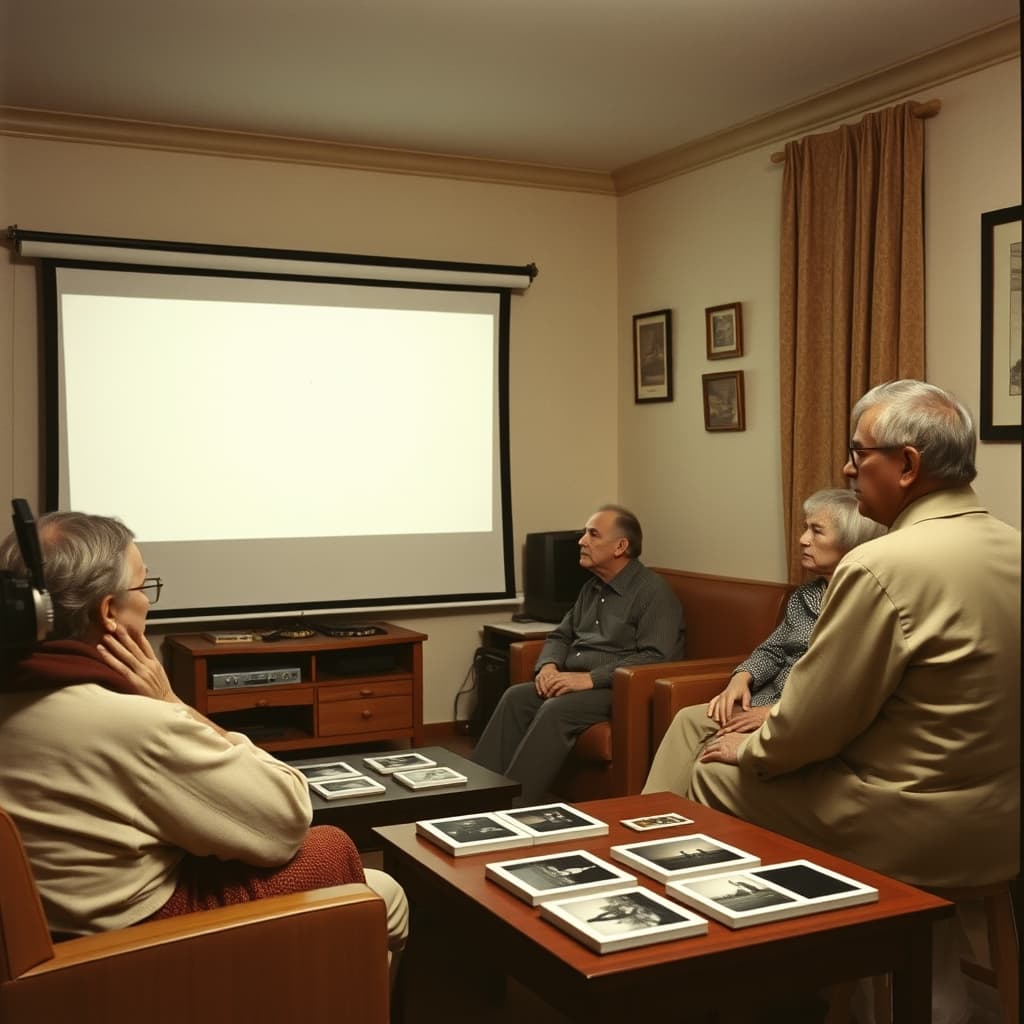
A family slide evening could contain an unexpected picture of a familiar place: the people were recognisable, but they appeared upside down. Before anyone had finished naming the scene, the room had something else to notice. The projected image was not wrong in its subject; its orientation had interrupted the ordinary work of recognition.
That small mistake offers a particular view of the excitement around a dia projector. The machine did not merely deliver pictures to passive viewers. Its presentation could redirect the room’s attention, revealing how much the audience contributed to understanding what appeared on the screen.
Recognising a Scene at the Wrong Angle
A viewer might identify a person before deciding exactly where they stood in the photograph. Another could recognise the location but struggle with the reversed sense of up and down. A familiar image became briefly unfamiliar through a change in its display.
The response need not be supplied as a comic family quotation. Some viewers might laugh; others would simply wait for the picture to be corrected. The interest lies in their shared encounter with the same problem, not in assuming that every household reacted with identical delight.
The projected picture also differed from the small mounted slide in someone’s hand. Enlarged on the screen, a misplaced orientation became visible to the whole room. A minor preparation error acquired a public audience, even though that audience consisted only of relatives or guests.
Somebody Was Responsible for the Next Image
One person had the task of presenting the slides. When an image appeared incorrectly, the others could point it out while that person considered the interruption. The distinction between noticing a mistake and dealing with it was part of the evening’s division of work.
The correction depended on the actual projector and arrangement. This recollection is not a set of operating instructions, and it does not require an invented model or mechanism. What mattered socially was that the image could not be made right merely by everybody in the room recognising the problem.
While the display was being dealt with, a viewer might name someone in the picture or recall what came before that moment. Conversation could move ahead of the projection. The operator was managing a sequence of objects, while the audience was already making a sequence of associations.
The Corrected Picture Was Seen a Second Time
When the image returned in its intended orientation, viewers had another chance to look. They might now attend to a detail missed in the initial surprise: the position of a face, a doorway or the arrangement of people. The error had not added anything to the photograph, but it had changed the route by which the room approached it.
Not every interruption improved the evening. A person presenting many pictures might find the correction tedious, and a viewer waiting for another scene might become impatient. The memory is more complete when this small labour remains beside the amusement.
A slide later encountered in a box could recall the upside-down appearance more readily than the scene itself. The object had acquired a second association through being shown. The photographed moment and the later family viewing were different events held together by the same image.
That is what makes the misplaced slide worth remembering. The projector’s light briefly put everyone before the same puzzle, then offered a familiar scene again. An analogue evening included such visible adjustments between object and audience. For a moment, the family remembered not only the person in the photograph but the way they had all looked at it together.