Eski Pano
In a child's memory, a new pair of shoes always holds a special place. If those shoes were bought for a holiday and then carefully worn again when the school term returned, they became more than an object; they became a small source of pride. In old neighborhood life, the moment the shoebox was opened, the smell of leather spreading into the room, and the quiet excitement felt while slipping the shoes on for the first time all signaled a change of season as well. Holiday shoes were kept clean, but with the reopening of school they also entered the more serious rhythm of daily life. That passage formed an invisible yet lasting bridge with the neighborhood shopkeeper. Buying the shoes, having them adjusted, widened, polished, or repaired required returning to the same shop again and again.
Within neighborhood culture, the shoe shop was not merely a place of purchase, but a stop where trust was built. The shopkeeper knew the child's foot, understood which model would pinch and which should be bought one size bigger, and often said, "let us leave a little room, they will grow." The rush before the holiday took on another shape as the school term approached. Families wanted children to look neat for the new season, and children liked showing classmates the shoes first worn with joy on the holiday. In that way the holiday shoe became part not only of celebration, but also of school order. Neighborhood tradesmen understood this transition better than most. They read children's growth from shoe sizes even before the seasons changed.
Part of the reason this excitement strengthened the bond with local shopkeepers was that the relationship was never limited to sale alone. If the shoe felt tight, people returned to the shop, the leather was loosened, laces were changed, the sole reinforced. Sometimes the model admired in the window was reserved in installments, and sometimes a more durable pair was suggested with the words, "it will still do next year." The shopkeeper acted not simply as a seller, but as a mediator balancing the family's budget and the child's enthusiasm. For the child, the shop was a place where being taken seriously could be felt. Having the foot measured on the counter, a line drawn around it on paper, the box tied carefully with string all nourished the sense of being known in the neighborhood. The bond with the shopkeeper thus turned from commerce into familiarity.
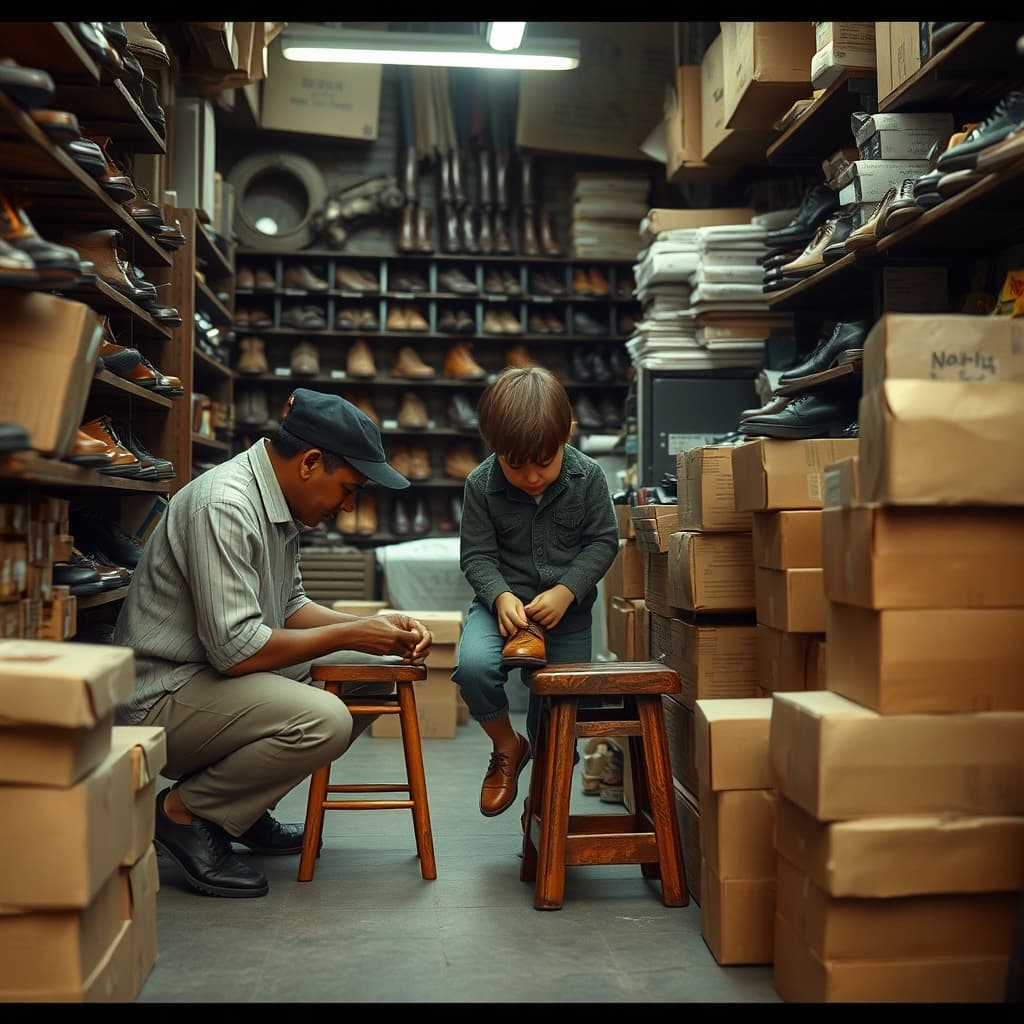
When the school term returned, that bond became even more visible. After a summer of slippers and sandals, the child moved back into closed shoes as autumn approached. The sturdy pair left from the holiday was polished, the laces renewed, and the heel repaired if necessary. Short lines formed in front of the shoe shop, the room filled with the smells of leather, polish, and cardboard boxes, and children sat on stools, impatiently looking into the mirror. This scene was one of the familiar rituals of neighborhood life. Because the tradesman served the same families regularly, he knew not only names, but stories as well. Phrases such as "you bought here last year too" or "your older sister had a similar model" turned shopping into memory.
Today this closeness may be rarer amid large stores and fast consumption. Yet when thinking about why the excitement of holiday shoes remains unforgettable, the issue is not simply wearing something new. That excitement is also the memory of being seen, recognized, and connected through small needs. As the shoes carried the child to school, they also carried, invisibly, the labor and attention of the neighborhood shopkeeper. That is why in old city life a pair of shoes fit not only the foot, but also the memory of belonging.
Holiday Shoe Excitement During the Return to the School Term: How Did It Strengthen the Bond with Neighborhood Shopkeepers?