Eski Pano
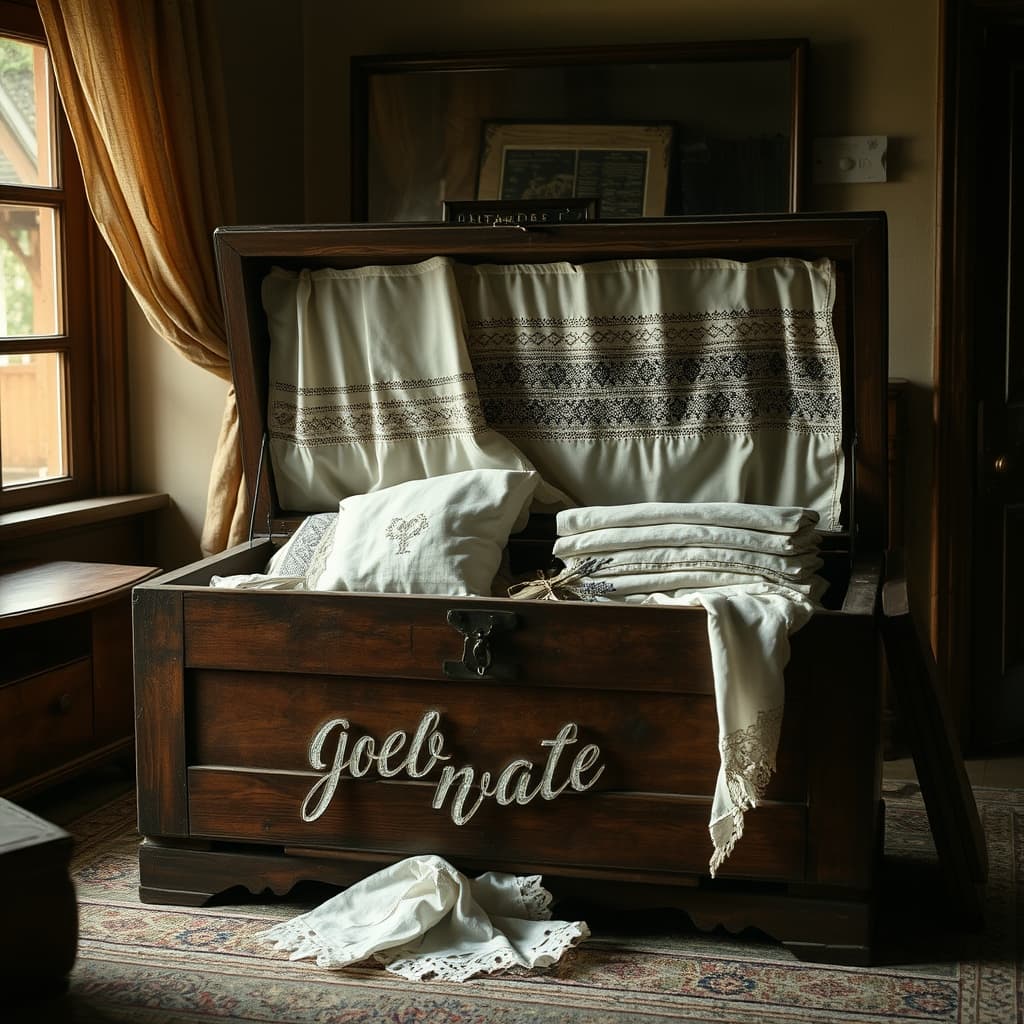
Some objects stand in the quietest corner of the house and yet carry the longest story. The dowry chest is one of them. Placed in a room corner, covered with lace, sometimes topped with cushions, sometimes kept from casual display yet always treated with respect, these chests were never merely storage boxes. When the lid was opened, the smells of soap, lavender, mothballs, and fabric made hidden layers of the past visible all at once. Embroidered towels lay on top, carefully folded sheets beneath them, then handkerchiefs edged with lace, sewing samples, small boxes, and at the bottom the delicate stories waiting in silence. The taste of an era often became readable precisely there: less in display than in refinement, less in what was newest than in what had been patiently preserved.
As an object story, the dowry chest is a powerful example of daily life meeting aesthetics and social meaning. The carved wood, the pattern on the metal handle, the cloth lining the interior, even the sound of the lid opening all belonged to domestic taste. A dowry was prepared not only for practical use, but as a material form of family upbringing, hand labor, and expectation for the future. For that reason every piece inside the chest spoke of more than its owner's personal preferences. Color choices revealed the fashions of the period, density of lace showed the value placed on patience and labor, and the quality of cloth reflected the limits and possibilities of household economy. Even a small embroidered fragment found at the bottom of a chest could reveal much about what a generation considered beautiful.
The delicate story rising from the bottom of the chest was often not told aloud, but understood through gesture. A mother or grandmother would lift a piece and say, "this was stitched during the engagement days" or "we sewed this together with the neighbor girls." In that way the object gained value not only from its form, but from the shared labor and companionship gathered around it. Which colors were placed side by side in lace edging, which fabric was tucked into a bundle, whether flowers or leaves were chosen in a crochet pattern all revealed the era's measure of elegance. Taste here was built not from expense, but from harmony. The admired work was not loud to the eye, but quietly intricate when seen up close. That is why the dowry chest functioned like a silent archive showing how beauty moved through ordinary life.
These chests also carried women's often invisible labor and the transfer between generations. Pieces prepared by a young woman might also bear the touch of a mother, an aunt, or a neighbor, turning the chest into a collective creation rather than a purely personal one. Each item inside reminded people that building a home was not only material preparation, but also the shaping of taste and of a way of living. The pattern of a tablecloth, the seam on a pillowcase, the way a cloth bundle was tied all expressed what kind of order and beauty a household desired. Even if many of these pieces are no longer used actively, this is why they remain memorable. Long after their function fades, they continue to produce aesthetic memory.
Looking back, it becomes easier to see how the dowry chest reflected the taste of an era. The chest preserved not the passing glitter of fashion, but the slowly formed measure of domestic beauty. The delicate story hidden at the bottom was not minor because it stayed out of sight. On the contrary, what lasts longest is often what is kept deepest. Lace scented with lavender, yellowing bundles, and fabrics folded with patience still seem to say the same thing today: the elegance of an era lived not in noise, but in detail.
The Dowry Chest and the Delicate Story Rising from the Bottom of Chests: How Did It Reflect the Taste of an Era?