 Eski Pano
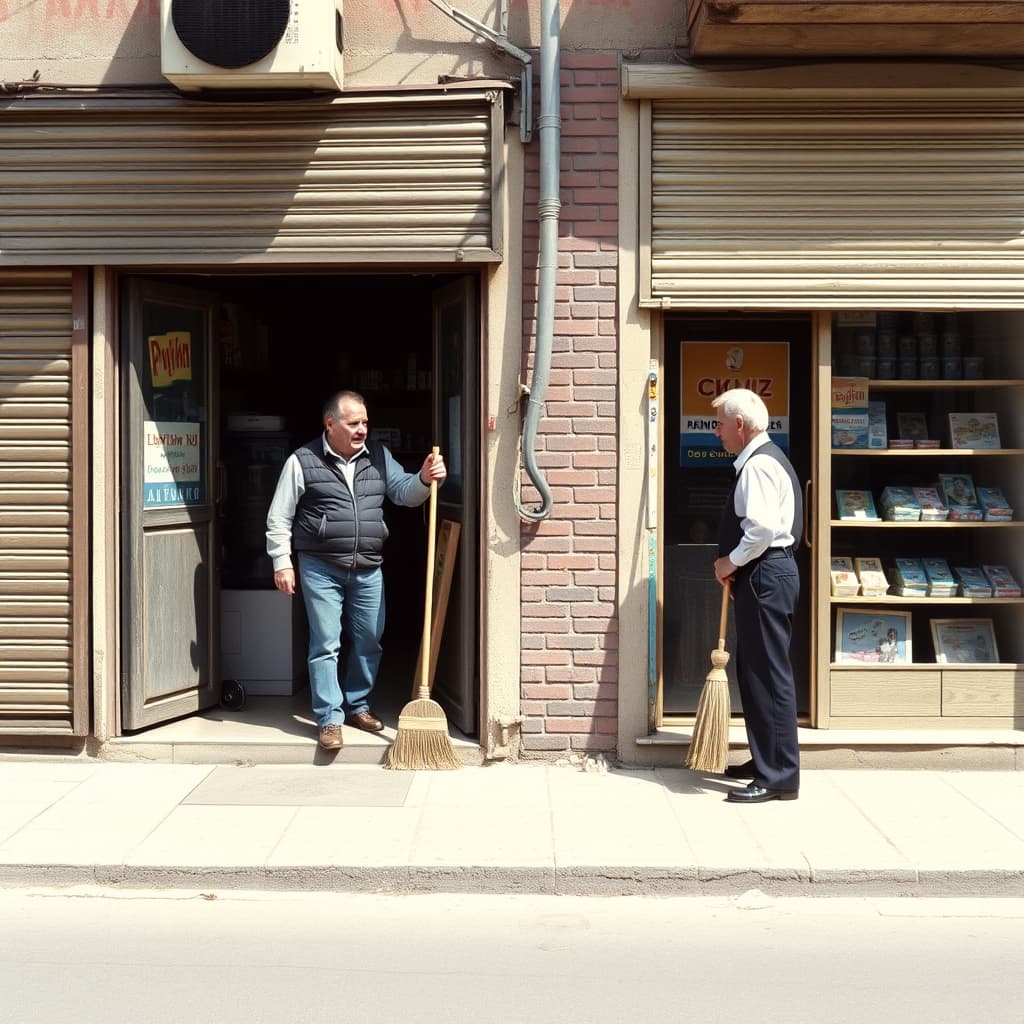
Before a customer received the first greeting of the day, two shopkeepers might already have greeted each other across the street. One was arranging an entrance while another had just opened the door. The exchange joined two working mornings that would continue separately once trade became busy.
This view shifts the familiar neighbourhood scene away from the resident passing through it. The shops were not merely welcoming points along somebody else’s route. They were workplaces beside other workplaces, and their occupants could become part of one another’s repeated beginning to the day.
Opening Did Not Happen at One Shared Instant
The first person outside might see a neighbouring shop still closed. Later, an opening door supplied an opportunity for recognition. The greeting depended on the overlap of tasks, not on a ceremony in which every trader began together.
Different trades kept different hours and required different preparations. The particular street should determine which activity is described. A recollection of a shopkeeper at the threshold should not automatically acquire crates, tools or goods that belonged to another business.
There was something practical in seeing the person opposite begin work. The street’s familiar arrangement became active again, one doorway at a time. This did not reveal the other shop’s private affairs or guarantee a close friendship. It confirmed a presence within the shared working view.
A Brief Greeting Could Fit around a Task
The exchange might be short because both people had something in hand or something still to finish. A nod could serve where distance or noise made a fuller conversation inconvenient. Brevity did not necessarily reduce the warmth of the acknowledgement.
Nor did it remove the effort of opening. The familiar face belonged to someone carrying out work, perhaps before the shop looked ready to a customer. Remembering that stage gives the greeting a different weight from a decorative image of sociability that costs nobody any time.
Some mornings allowed a longer exchange. Others brought the first customer before either person had finished speaking. The conversation could end without a formal farewell because service now required attention. The street’s rhythm came partly from such unfinished exchanges.
Customers Entered an Already Moving Street
A resident arriving later might be greeted by both shopkeepers without witnessing the earlier exchange. From that perspective, the welcome seemed directed towards the passer-by. From the workers’ perspective, it was another encounter in a morning already underway.
The distinction helps explain the impression of the street as a shared home without taking the phrase literally. Different doors opened onto different businesses, and each person had responsibilities there. Familiarity connected those places but did not make their work or resources common property.
Not every neighbouring business had an easy relationship. Competition, interrupted rest or a disagreement over space could affect the greeting. A reliable account can include a reserved acknowledgement as well as an affectionate one. The continuity of the street did not require everybody to be friends.
The morning greeting between doorways deserves a place in neighbourhood memory because it recognises workers as neighbours to one another. Before the street became a series of errands, it was already a set of people arriving to do their jobs. Their brief exchange marked that arrival: another door open, another familiar person present and another working day beginning alongside one’s own.