 Eski Pano
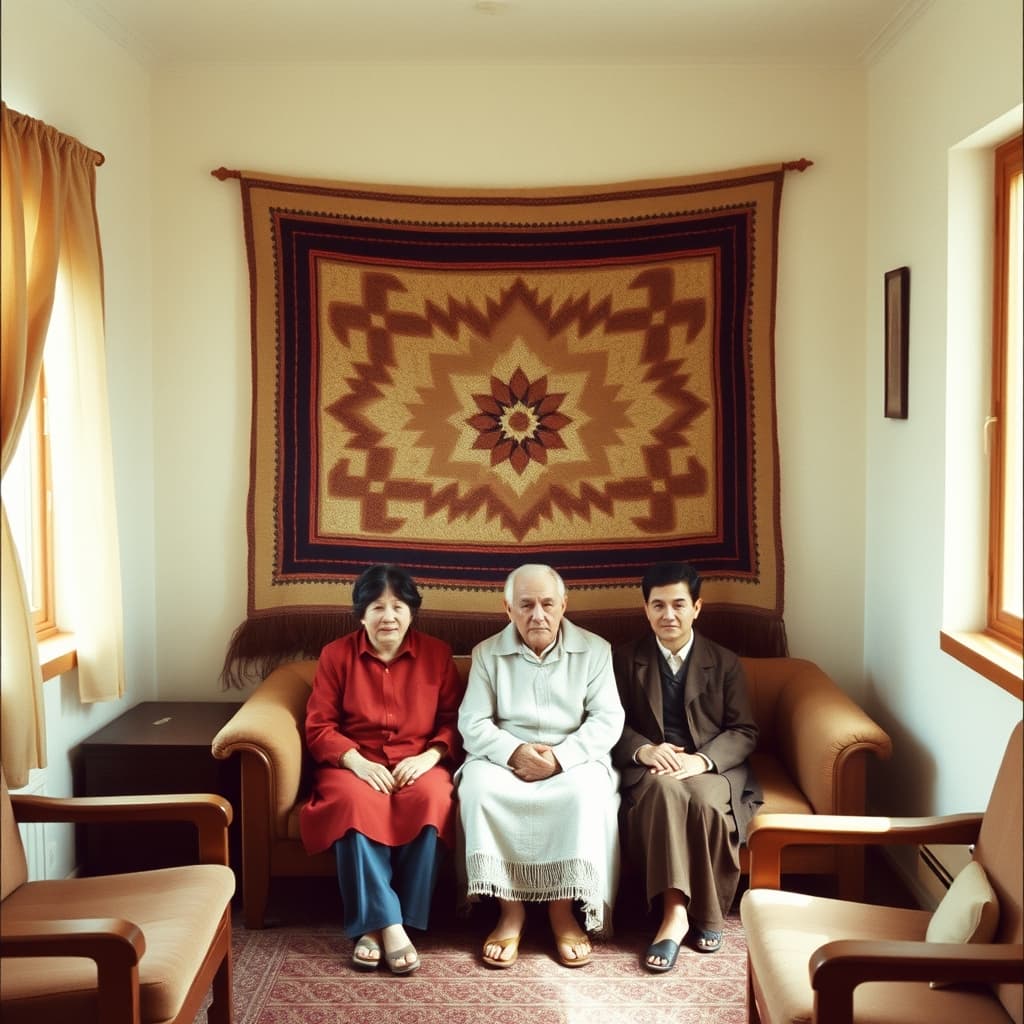
In a family photograph, an inherited wall hanging might occupy much of the background without being the reason for the picture. The people in front drew the eye. Only later, when several photographs were placed together, did the textile’s repeated presence become noticeable. It had remained part of the room while the people and occasions changed.
This is one way a wall carpet could shape domestic ritual without attracting a formal explanation. A family repeatedly gathered before a particular wall, and the hanging entered the record of those gatherings. Its place was expressed through use of the room, not only through the story of who had passed it on.
The Photograph Included More than Its Intended Subject
A portrait could show a portion of the hanging: an edge, a band of colour or part of a larger image. The visible fragment helped identify the room even when the photograph did not show the furniture around it. Relatives could recognise a setting through that detail before naming the occasion.
Yet a fragment cannot establish everything about the textile. A picture taken from one angle may conceal its size or full design. Calling it a tapestry, carpet or another family term should not be treated as a technical identification without further evidence. The background offers a clue, not a complete description.
A repeated position in photographs can suggest that the hanging stayed on one wall. It does not prove that it was never removed or moved between the recorded moments. The ordinary continuity of family memory can be preserved without making that continuity absolute.
Different Generations Stood before the Same Pattern
In photographs taken years apart, different people might occupy the foreground. A child could later appear as an adult, or someone previously behind the camera might finally stand in the group. The hanging offered a repeated visual reference against which those changes became easier to see.
The textile did not itself explain those relationships. Names and occasions still depended on the family’s account. Its repeated presence could connect the pictures visually without settling who inherited the object, who chose its position or what each person thought of it.
Some relatives might remember the hanging fondly; others might remember wanting the room arranged differently. An heirloom did not necessarily command one opinion. Remaining on the wall could reflect attachment, habit or a decision whose reason was no longer known.
A Later Room Changed the Background
If the wall hanging passed to another household, a new photograph could show it behind different furniture and under different light. The familiar pattern remained while its surrounding view changed. That combination made inheritance visible without requiring the new room to imitate the old one.
It is useful to distinguish the object’s transfer from the family photographs associated with it. The dates of the pictures can help locate documented appearances, but they do not automatically date the textile’s making. A long photographic presence is evidence of being there, not proof of a particular maker or origin.
The photographs also show a domestic use that a picture of the hanging alone would miss. People stood, sat and marked occasions before it. The textile was not only viewed; it helped form the place in which a family chose to be seen.
An inherited wall hanging can therefore survive as both object and background. Its repeated pattern quietly joins pictures that otherwise record change. Looking behind the faces restores that part of its life: a familiar wall, a position returned to and a piece of cloth that entered family history whenever somebody raised a camera.