 Eski Pano
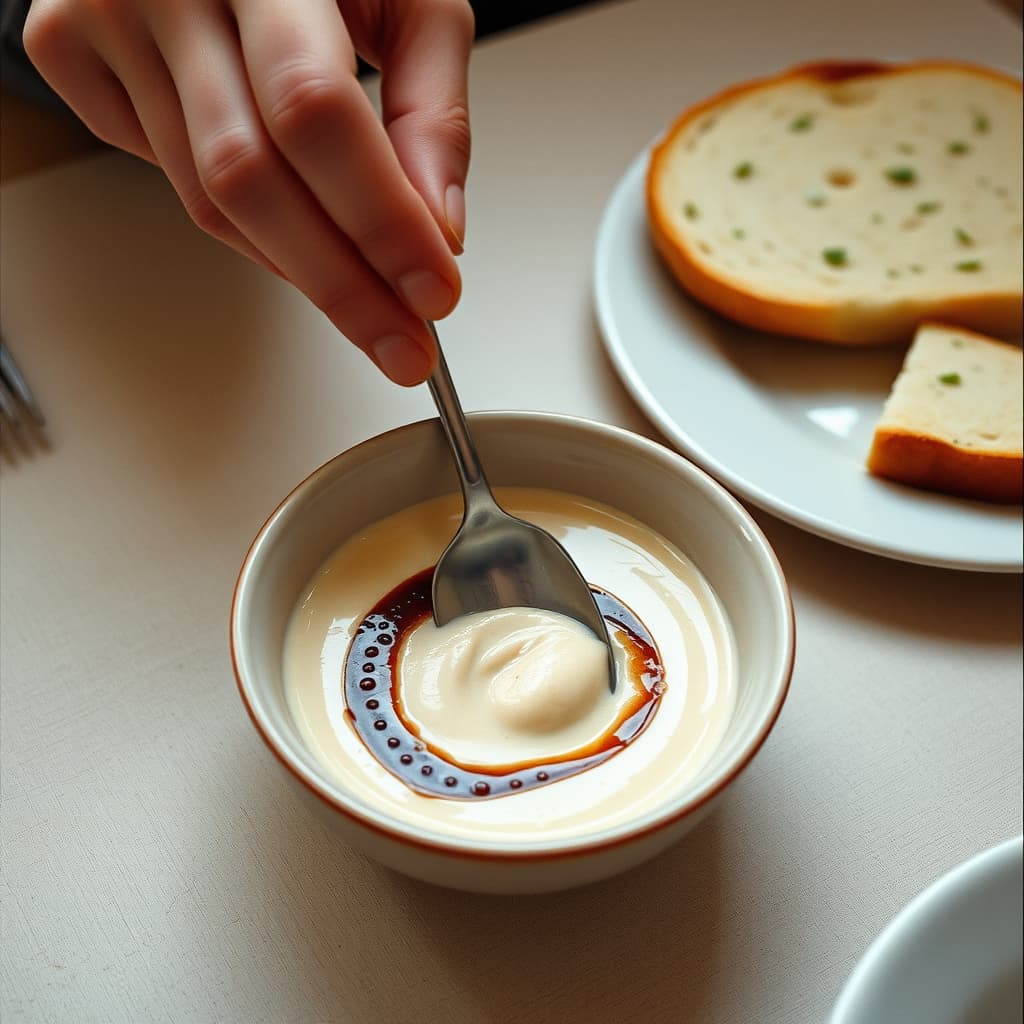
A breakfast bowl of tahini and pekmez could show the movement of the spoon after the two ingredients had been brought together. A dark streak remained beside a paler fold, and another turn changed the pattern. Before anybody took a mouthful, the mixture already carried a visible record of what someone had just done.
This is a small but useful entry into the culture of sharing the bowl. Breakfast was not only the presentation of a finished food. In some households, mixing happened at the table, among the hands that would soon pass the bowl and reach for bread. The preparation was close enough to be watched and discussed.
Two Ingredients Remained Recognisable for a Moment
Tahini and pekmez did not need to disappear into one uniform colour immediately. Where they were still visibly separate, a diner could see the relationship between the sesame paste and the syrup. The pattern changed as mixing continued, and the bowl could look different from one moment to the next.
Pekmez itself was not one identical product in every household. Its fruit source and preparation could differ, as could the tahini used beside it. A remembered bowl should be linked to the actual ingredients where they are known, rather than have an origin or composition guessed from its colour.
There was also no single household ratio to assume. Someone might prefer more of one ingredient, while another liked the mixture differently. Those preferences could be expressed through the spoon at the table instead of appearing as a written recipe. The bowl made a small decision about taste visible.
Passing the Bowl Passed a Decision Too
Once mixed, the bowl could move to another place at the table. The next person encountered the result of somebody else’s choice. They might accept it, comment on it or prefer to serve themselves differently. A shared breakfast contained individual preferences rather than erasing them.
Bread offered another part of the encounter. Depending on the household’s practice, the mixture might be taken with a piece of bread or transferred first to a separate plate. The exact way of serving belongs to the account; the memory should not turn one family’s method into an instruction for every table.
The bowl’s position mattered as well. Someone could ask for it to be passed rather than reach across other dishes. A hand moving it between places made sharing concrete. This was not an abstract claim about generosity, but an ordinary adjustment that allowed another diner access.
The Remaining Mixture Had Its Own Appearance
As breakfast continued, the surface changed again. Marks at the side or a remaining streak could show where the spoon had moved. The bowl no longer looked like the presentation at the beginning, yet it still belonged to the same meal.
A later memory might return through that less orderly view rather than a perfect serving photograph. The utensil resting at an angle, the bread already divided and the mixture partly taken describe breakfast in use. These details connect taste with the company and movement around it.
Remembering the bowl does not require attaching health promises to the food. Its cultural value can rest in the known ingredients, the preferences negotiated and the act of making a place for the next person. One family’s breakfast bowl need not represent every season or occasion on which the mixture was served.
The last swirl holds this breakfast habit at a modest scale. It shows two ingredients being combined by someone at a particular table, then offered onwards. What survived between generations was not necessarily an exact ratio. It could be the familiar invitation to look, mix a little more and pass the bowl before the morning carried everyone elsewhere.