Eski Pano
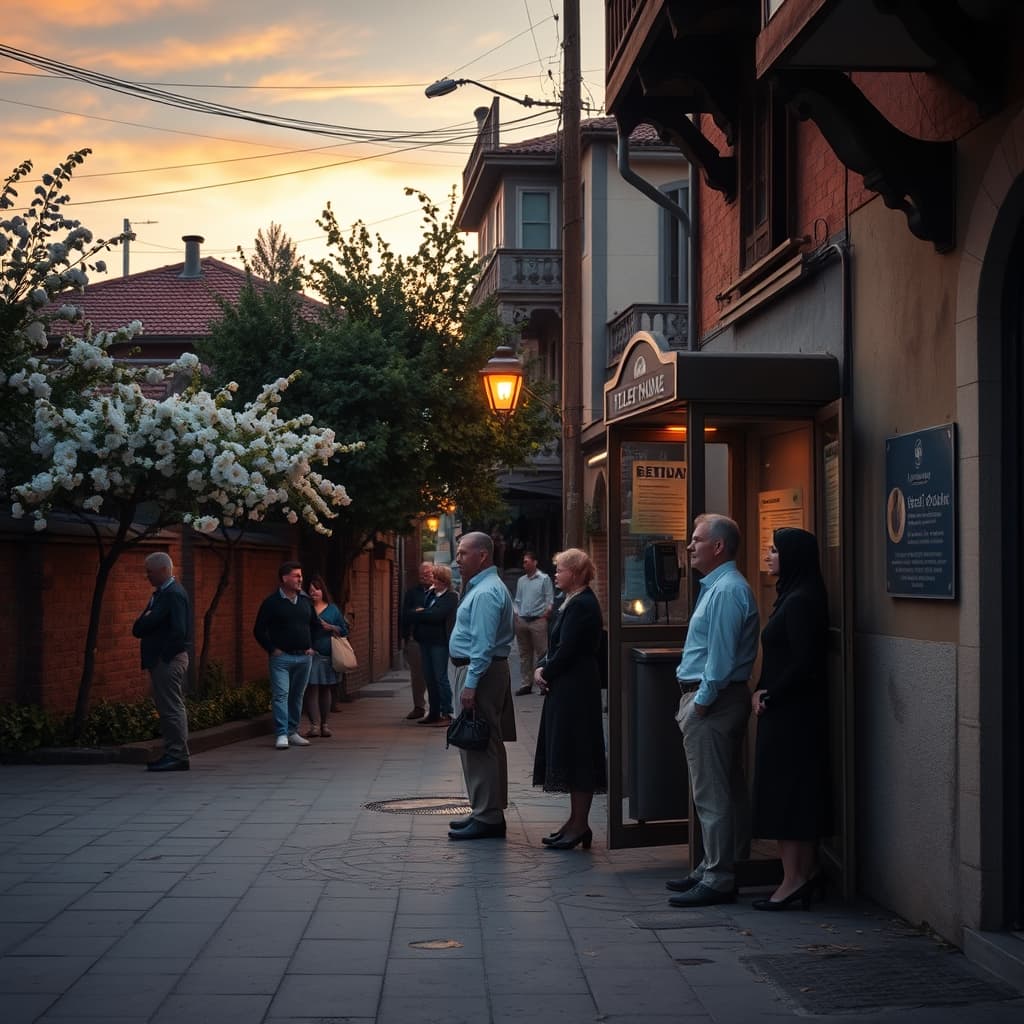
There was a time when the telephone booth was not merely a tool of communication, but a small station that carried the neighborhood’s most visible impatience. Standing on the corner between the grocer and the pharmacy, those glass cabins held the pulse of the city at certain hours of the day. Especially toward summer evenings, when the scent of linden drifted over garden walls, the silence gathering in front of the booth felt different from any other silence. Coins sweated in people’s palms, the eyes of those waiting looked through the glass toward the caller, and those outside tried to read the face inside. As those minutes stretched, the ordinary life of the neighborhood began to shape itself around that tiny cabin. When the telephone rang or the tone of the voice on the receiver shifted, everyone waiting seemed to move a little closer to the same invisible story.
Seen through the trail of time, telephone booths were not only places where a technical lack was resolved, but transition spaces where news was received in public. In years when many homes had no telephone, or when the single household line was often occupied, the booth created a thin bridge between the personal and the communal. News from a son serving in the army, a father working in another city, or a sibling studying away from home often arrived first at the booth. That is why the telephone booth ceased to be a cold metallic object of the city and became an emotional sign fixed in neighborhood memory. People learned not only how to speak, but how to prepare to speak, how to wait for their turn, and how to read the face of the person stepping out once the call had ended. The news was received in the booth, yet its effect spread all the way into courtyards, balconies, and tea glasses at home.
Part of why this scene remains so bright in memory lies in the closeness between the telephone booth and the garden. In old neighborhoods, the booth often stood near apartment gaps, low garden walls, and trees of mulberry or linden. In the late afternoon of summer, when the sun softened and coolness began to arrive, older people brought chairs outside, children played hopscotch or street games, and all the while they watched who entered and exited the booth. Perhaps the exact words spoken inside could not be heard, but the emotion carried by the sentences was visible in gestures. A single “all right,” an “I’m coming tomorrow,” or a “don’t worry” could change the tone of an entire household’s evening. The person stepping out of the booth would often inhale deeply before turning toward the garden gate and bringing the news to those waiting inside. In that moment, the scent of linden, the evening light, and the weight of the message became one.
Those impatient minutes carried by telephone booths are remembered more intensely than today’s instantly reachable world because waiting itself was once a visible part of life. People did not wait for a message by glancing at a screen, but by inhabiting the wait with their bodies. They walked to the booth, stood in line, prepared coins, sometimes borrowed a token from a neighbor, and calculated the length of the conversation. Inside that ritual there was both privacy and community. No one knew exactly what had been said, yet everyone understood how precious it was for news to arrive. That may be why those minutes look brighter in hindsight. What is remembered is not only the news, but the air, the smell, the light, and the manners of the neighborhood that accompanied it.
Gardens turning into the scent of linden still call back that old impatience. On a summer evening, the fragrance of blossoms carried by a light wind can unexpectedly remind someone of an old wait they thought had vanished. Telephone booths have largely disappeared from the city, yet the feeling they represented, the shared waiting for news and the way an evening changed color when it finally arrived, continues to live as cultural inheritance. That was part of what revealed the spirit of the era: a single voice speaking inside a small booth could alter the atmosphere of a garden and of an entire neighborhood. Perhaps the past appears brighter for exactly this reason, because in those days news did not fall only into the ear, but into the street and into memory.
Those Impatient Minutes When Telephone Booths Carried News in the Old Hours That Revealed the Spirit of the Era: Why Do Gardens Turning into the Scent of Linden Look Brighter in Memory?