Eski Pano
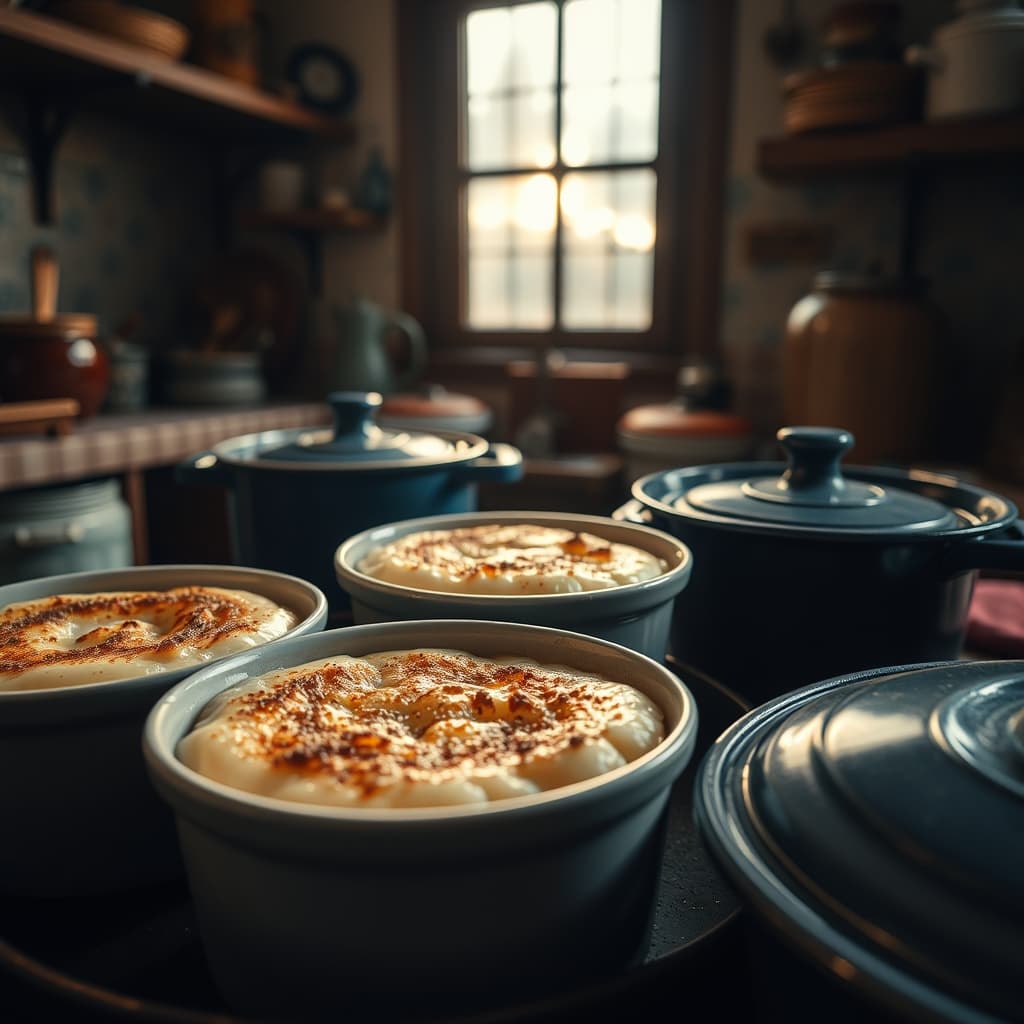
There was a time when certain desserts were not simply eaten; they were awaited. Oven-baked rice pudding was one of them. Passing by the neighborhood bakery, the light scent of browned milk drifting into the air awakened appetite before the dessert even arrived home. That bowl of pudding, with its top blushed deep from the oven, its edges holding the thinnest skin, its center still warm enough to burn the impatient tongue of a child, carried one of the calmest joys of late afternoon in many homes. When the spoon touched the surface for the first time, there was a faint crack before it met the softness underneath, and on the palate it formed not only a flavor, but the outline of an entire domestic order. That is why the days of oven-baked rice pudding remain in memory as more than a dessert calendar. They recall the invisible cooperation between kitchen and neighborhood bakery, the measured happiness at the family table, and the simple rewards of childhood.
From the perspective of taste memory, oven-baked rice pudding is one of the most graceful shared desserts of old kitchen culture. Made from rice, milk, sugar, and patience, it stands out not through extravagance of ingredients but through knowledge of texture and timing. The moment the pudding cooked on the stove is transferred into bowls and sent to the oven is a ritual in itself. The bowls are lined up carefully, the cook trusts the moment when the top will brown just enough, and on the way home the dessert must be carried without disturbing its balance. All this reveals a small craft order within the family. For many children, baked rice pudding was not a dessert immediately set before them, but a lesson in waiting: “Let it rest a little.” Should it be eaten hot, or left warm? Should the browned layer on top be saved for last? Should the first spoonful come from the center? These little rules forming around the dessert are family culture absorbed into taste.
The reason baked rice pudding still recalls childhood in the very first bite lies in the layered structure of its memory. Its taste is not sweet alone. Alongside it come the evening light in the kitchen, the sound of enamel pots, a mother’s warning not to spill while carrying the bowls, a child’s hand trying to open the refrigerator too soon, and the quick calculation of whether there will be enough if guests arrive. Sometimes there was the waiting line beside trays taken to the bakery; sometimes the baker asking, “Shall I leave them a little longer to brown?” In this way the memory of the dessert extends beyond the house. The pudding stops being only a family-made sweet and joins the neighborhood’s shared palate. That is why childhood returns in the first bite. As the spoon reaches the mouth, not only flavor returns, but also kitchen sounds, oven warmth, and family phrases.
Today many desserts may be richer, more decorative, and consumed more quickly. Yet oven-baked rice pudding still holds a special place because its strength lies not in excess, but in balance. Sugar that does not overwhelm the milk, a browned top that draws the eye without crushing the taste, a texture that does not tire the palate, and a plain presentation all preserve the measured kitchen understanding of older homes. That is why so many adults still remember childhood in the first spoonful. What arrives on the tongue is not merely a familiar recipe, but a feeling of safety, calm at the table, and a small form of care once protected inside the house. The coolness felt when holding the bowl, the sound of the spoon touching the ceramic edge, the breaking of the browned layer on top, can carry a person back at once into a kitchen from years ago.
The days of oven-baked rice pudding show that cultural heritage sometimes survives in its quietest form. Without ceremony or spectacle, the past can be rebuilt through the first spoonful of a dessert. Some foods do not feed the stomach alone, but memory itself. Oven-baked rice pudding is one of them. It recalls childhood in the very first bite because it contains not only rice, milk, and sugar, but also the rhythm of old kitchens, the warmth of neighborhood bakeries, and the slow happiness of family tables.
Oven-Baked Rice Pudding Days: Why Does It Still Recall Childhood in the Very First Bite Today?