Eski Pano
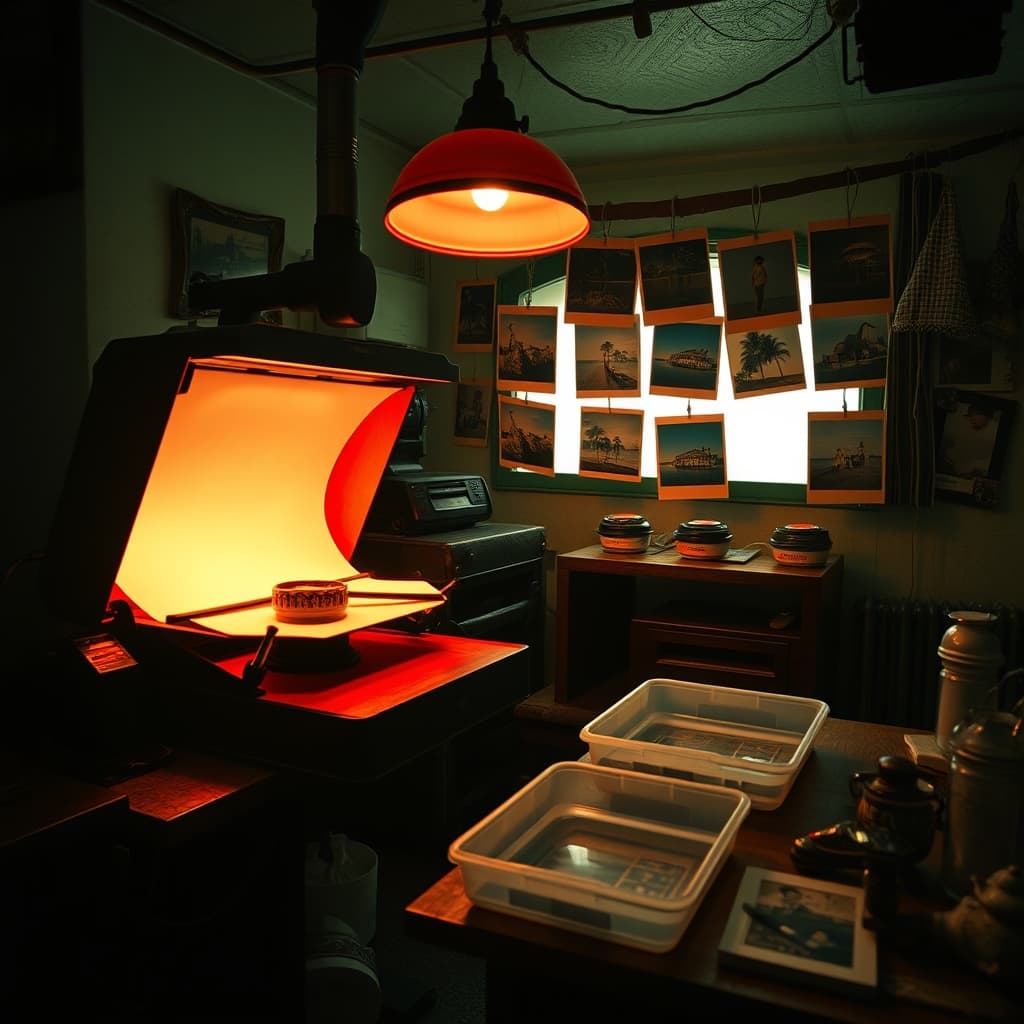
There was a time when photography was not simply something taken, but something awaited, something that appeared slowly like a miracle. When a roll of film shot during a holiday returned home or to the temporary order of a summer house, the images inside it did not yet belong to anyone in full; they were only guessed at. That is why the silence gathering around a darkroom enlarger resembled not the operation of a machine, but the beginning of a ceremony. Under dim reddish light, the tongs and papers placed carefully beside the trays of chemicals, the wet prints hanging to dry, the instinctively lowered voices of those inside, all belonged to the same patience. The feeling was similar to turning a television antenna until the image suddenly came clear: hope slowly sharpening. A face that first appeared as a faint shadow on photographic paper could, within seconds, bring back a summer evening, a stretch of seashore, a burst of family laughter.
From the standpoint of technological heritage, the darkroom enlarger is one of the most poetic devices of analog photography. It does not simply preserve what the lens has seen; it requires a second labor in order to make that vision visible. Developing the film, adjusting the light, calculating the time, moving the paper through solutions, every stage depends on human hands and human attention. That is why using the enlarger was as emotional as it was technical. In the ease of vacation days, when everyone allowed the day to lengthen without hurry, the darkroom stood like a special island inside ordinary life. Outside, tea was being poured on balconies, a gentle melody came from the radio, children hung wet towels after returning from the sea; inside, the images of the whole summer were slowly becoming visible. The appearance of a photograph became a story as worth telling as the holiday itself.
What makes this process remembered as a ritual is not only technical effort. The darkroom was a place of patience where one prepared to see what had not yet been seen. Under the light of the enlarger, people looked not only at the photograph, but once more at the moment they had lived. The watermelon eaten by the seaside the day before, swimsuits drying on the veranda, the talk of aunts around a tea tray, children entering the house with sandy feet, all of these scenes, ordinary while they were happening, appeared more valuable when reborn on darkroom paper. While they were being lived, they were still everyday life; once printed, they became part of the family archive. That transformation was watched in something close to the silence of prayer. No one rushed, no one demanded to see the result immediately, because everyone respected the rhythm by which the image emerged.
The comparison to hope becoming clear as an antenna was turned draws its strength from exactly this. In old televisions, clarifying the picture by adjusting the rooftop or balcony antenna was a familiar domestic skill; finding the right print in the darkroom required a similar attentiveness. A little too much exposure, one second too little in waiting, and the balance of the whole image shifted. But once the correct setting was found, the sense of relief was immense. That is one reason why memories carried from mouth to mouth through languid vacation days settled so securely onto photographic paper. Every print was a witness more concrete and more lasting than simply saying, “that day was beautiful.” The image that would later travel for years through album pages first took its breath in the darkroom.
Today, in the age of digital speed, the becoming-visible of a photograph happens almost as quickly as thought. Yet the enlarger is remembered as a ceremony in itself because images once had to be earned through labor and patience. That ritual shaped not only machines, but family memory. The retelling of a summer holiday, its showing again, its return on winter evenings, often depended on those prints. The photograph whitening in the darkroom revealed not only a face, but a whole era’s relationship to life: slow, attentive, careful, and open to sharing. That is why the enlarger became more than a technical device of the analog age. It became a threshold where memory was welcomed with ceremony.
Why Using a Darkroom Enlarger Alongside Hope Growing Clearer as the Antenna Was Turned Was a Ceremony in Itself, Like a Memory Passed from Tongue to Tongue in the Ease of Vacation Days