Eski Pano
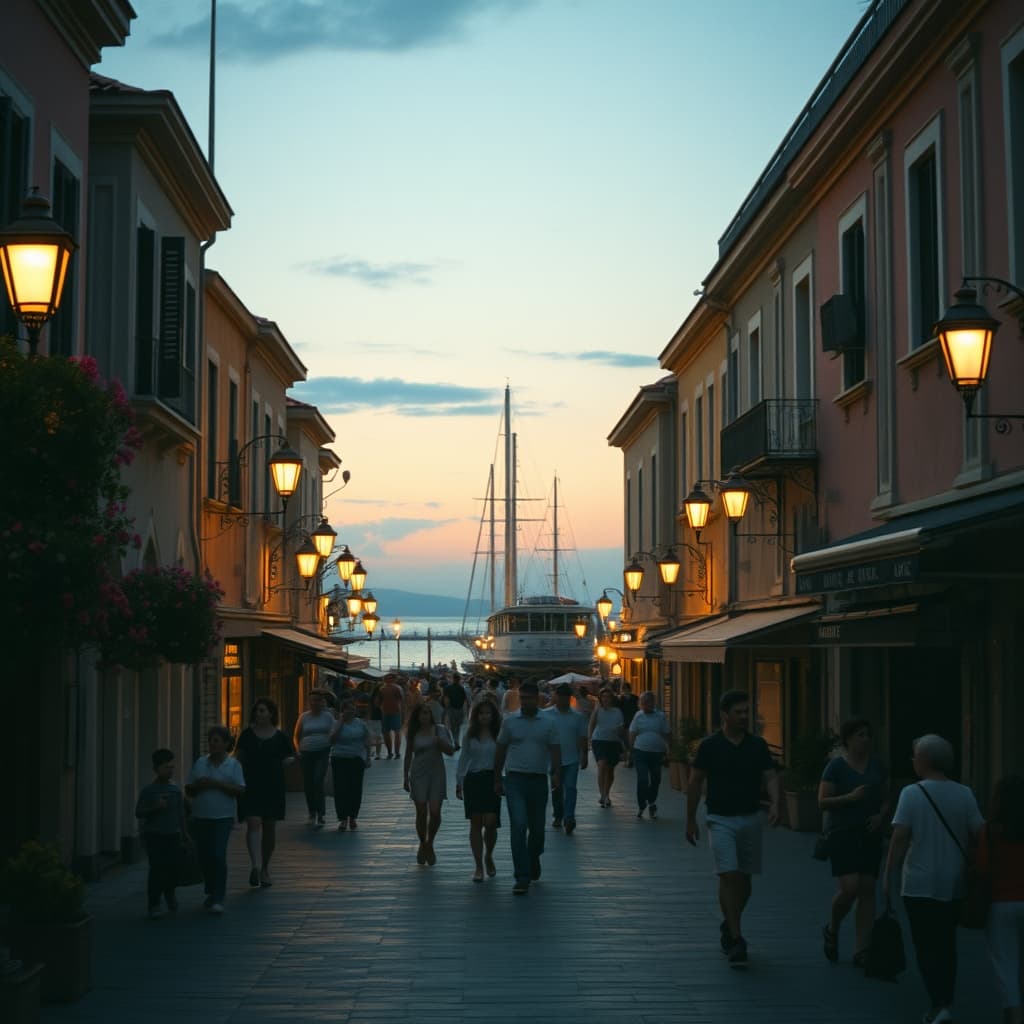
There was a time when evening was understood not by the first yellow light striking the windows, but by the quiet moment when street lamps came alive. In seaside towns and in the pier squares of smaller cities, that light was more than a practical detail that made the road visible. It was a silent invitation through which people found one another. Women gave the doorstep one final sweep, children resisted going inside so the game could last a little longer, and men lowered their shop shutters halfway before walking slowly toward the square. Those who reached the pier through flower-scented streets often had not made any formal plan, yet everyone met one another at nearly the same hour, in the same cool air, under the same lamps. That is why meeting felt less like an appointment than like the natural continuation of neighborhood memory.
Viewed in the trail of time, pier squares formed one of the simplest and strongest public scenes of old coastal life. Old newspapers did not mention evening strolls, waterfront crowds, and families circling the harbor by accident. These places were not only where ferries arrived or cargo was unloaded, but shared settings for being seen, offering greetings, hearing the latest news, and taking part in daily life together. As electricity settled into neighborhood life, street lamps extended the evening, allowing people to remain in public after dark. In that way, the culture of meeting gained a rhythm fed less by strict schedules than by habit. Without anyone needing to call out or confirm, the people gathered by light created the invisible agreement of a town.
The forgotten details of that scene are often hidden in scents, gestures, and repeated habits. The soft fragrance floating from jasmine-covered walls, the haste of a mother settling a light cardigan on her shoulders, the sound of a soda bottle being opened near the pier, the slow steps on old stones, all belong to the same evening picture. Young people stood a little apart and watched one another from the edge of the crowd, older residents sat on the same benches and observed the passersby, while children enjoyed the freedom of having come all the way to the square and staying out a little later. Flower-scented streets still speak to us precisely because they recall not the grand events of the past, but the small details that carried the manners of living together.
What we call a wordless agreement was in fact the trust-based rhythm of older urban life. In a period when meeting did not require long messages, exact timing, or repeated confirmation, people knew one another's habits, trusted the neighborhood's flow, and assumed that the square would fill in the same way again that evening. Tea gardens around the pier, simit sellers, seed vendors, and the benches leaning toward the shore all supported this culture in quiet ways. Going there was not only about seeing a particular person, but about placing oneself back into the current of shared life. In such hours, the street lamp ceased to be merely a technical object and became a social sign. Once it lit up, the square awakened, faces became visible, and the fatigue of the day gave way to an evening held in common.
When we look back today at those flower-scented streets and those pier squares, the strongest thing they tell us is the value of slowness and closeness. People knew that living in the same town did not mean merely sharing addresses, but sharing the same sense of hour, the same evening habits, and the same public grace. The memories that grew beneath street lamps still shine because they contain not only scenery from the past, but a powerful social fabric that tied ordinary life together. Meeting in pier squares was one of the simplest pleasures of that era. Flower-scented streets remind us of something modern life easily forgets: sometimes what makes a city livable is the evening hour when people can still find one another without having to promise it first.
In the Memories That Grew Beneath Street Lamps, the Era When Meeting in Pier Squares Became a Wordless Agreement: What Do Flower-Scented Streets Tell Us with Their Forgotten Details?