Eski Pano
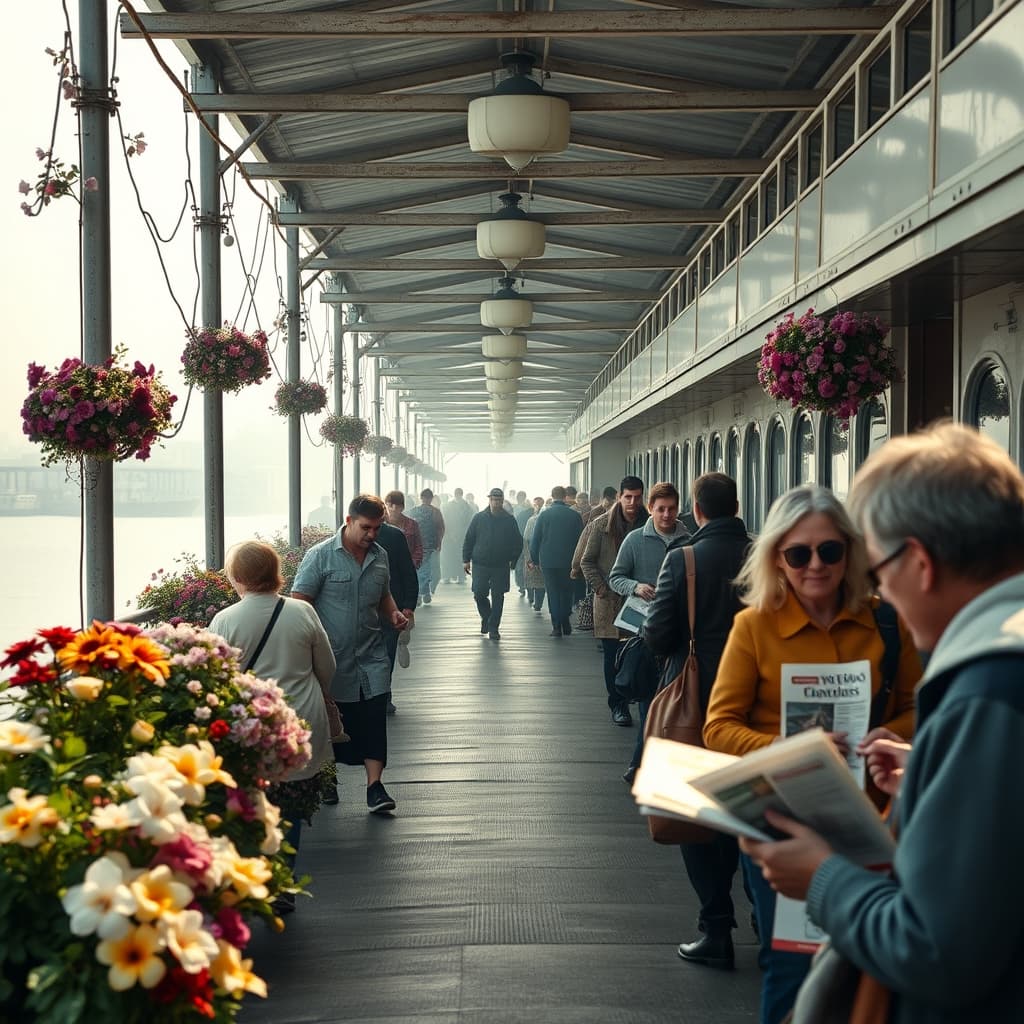
There was a time when traveling on the city lines was not merely a way of moving from one place to another; it was an in-between world that ordered the spirit of the day without burdening it and left a small calmness inside a person. In the early morning, a light mist settled over the water as people approached the pier, and the whistle of the ferry called those waiting on the shore into the same rhythm. A faint scent of soap and cologne rose from women’s handbags, tobacco and wind mingled in men’s jackets, and the cry of the simit seller echoed across the stone quay. Those who arrived at the pier by passing through flower-scented streets had already entered another discipline of urban life before even stepping aboard. The voyage belonged not to a rushed crowd, but to a community that knew how to make room for one another. What remains in memory today is not only the seagulls or the foam drawn by the water, but the quiet measure those journeys left inside human behavior.
Seen in the trace of time, the city ferries resemble one of the invisible schools of manners in older urban life. Boarding in order, offering a seat to an elder, opening a window with consideration for others, reading a newspaper without spreading it onto a neighbor’s shoulder, and speaking in a restrained tone were all habits learned there almost without instruction. The ferry was a shared place where one neighborhood blended into another without losing refinement. The civil servant going to work, the child sitting beside him with a school bag, the woman carrying produce in a string bag on the way to market, all formed a common life for a few stops at least. That was what the flower-scented streets left behind: an unshowy courtesy dissolved into everyday life.
The reason those journeys turned so easily into memory has as much to do with the streets leading to the pier as with the sea itself. The roads to the docks often passed beneath balconies full of flowers, in front of grocery shops with half-open doors, and beside neighbors who had just sprinkled water on the pavement. The scent of geranium, jasmine, linden, or honeysuckle stayed on a person’s clothes, so that when one boarded the ferry, the neighborhood traveled too. For that reason the city lines were not only sea transport; they were also a chain of feeling carried from district to district. A passenger crossing to the opposite shore changed not only place, but also brought a little of the rhythm of his own quarter across the water. A newspaper opened in the saloon, crumbs from a simit, the delicate sound of a tea spoon, and quiet faces turned toward the sea all described an urban life capable of being slow even in the middle of a crowd.
Many of the quiet habits that survive today have filtered out of precisely that discipline in motion. Speaking softly on public transport, waiting one’s turn in line, seeing a view as something shareable rather than possessed, and not forgetting a greeting even in the rush of morning all come partly from that older ferry culture. The ferry compelled people into a condition of waiting and togetherness. The sea softened haste, the pier arranged the crowd, and the voyage asked each person to step back a little and notice the presence of others. Behind the dignified city scenes we still see in old newspapers, postcards, and black-and-white family photographs lies some of this common discipline of travel.
The city has grown now, the routes have changed, and the shores are more crowded, yet the old days linked to the pier by flower-scented streets still live within certain small gestures. Letting someone pass, leaving one’s seat in order before standing up, falling unintentionally silent while looking at the water, drinking the first tea of the morning with composure instead of hurry, these may be the most lasting inheritance of those journeys. If the city lines occupy a special drawer on the dusty shelves of memory, it is not only because the view was beautiful. What is preserved there is the quiet urban etiquette the sea once taught its people.
In the Days When Journeys on the City Lines Turned into Memories on the Dusty Shelves of Recollection: What Quiet Habits Did the Flower-Scented Streets Leave to Today?