Eski Pano
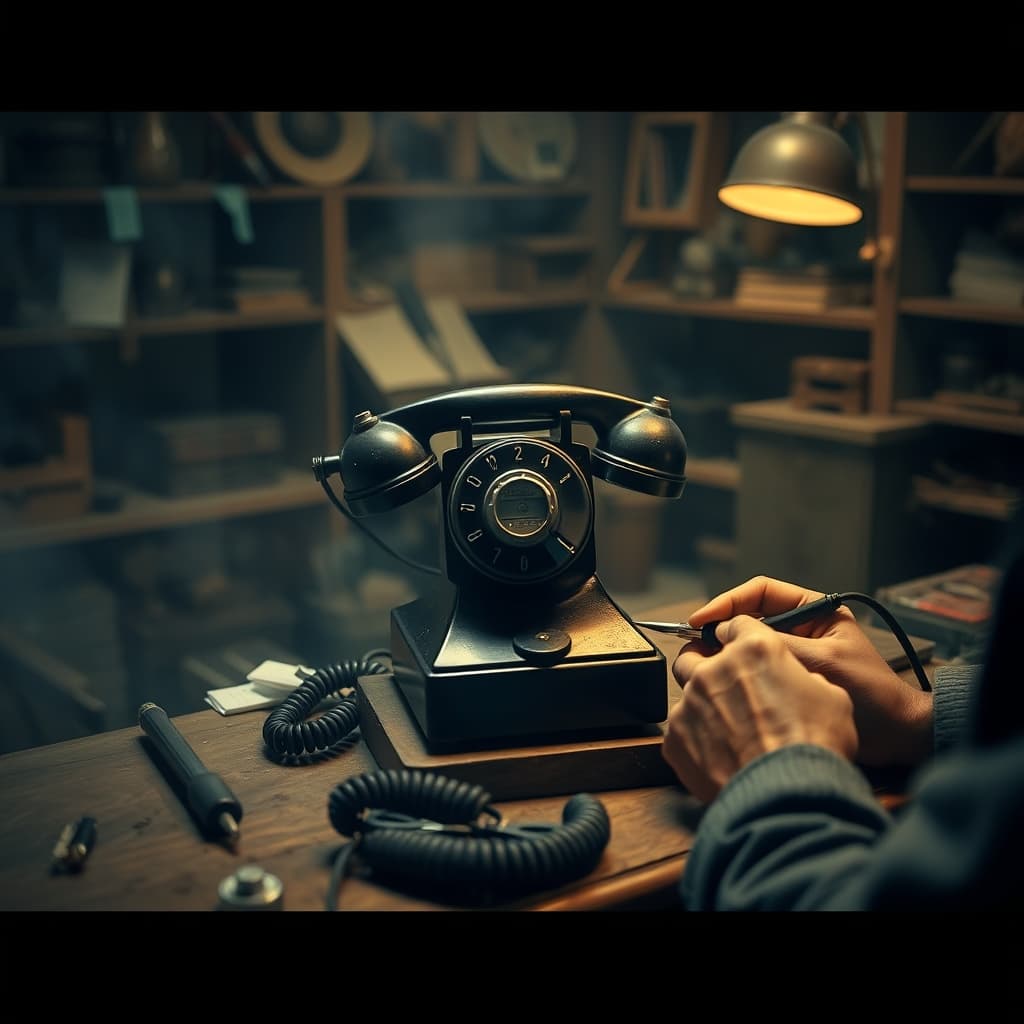
There was a time when approaching the neighborhood electronics shop or telephone repairman meant more than checking on the fate of a broken object; it meant witnessing the patience of the analog age. Behind a fogged window, among cables hanging from the wall, small screwdrivers, the smell of solder, and rotary telephones quietly waiting in the corner, another sense of time unfolded. Just as hope sharpened when the antenna was turned to clear a television image, a telephone taken apart on the repair bench told people that an object was not dead the moment it failed. With enough attention, effort, and craft, it could return to life. The rotary telephone’s second life in the hands of repairmen is one of the clearest signs of that culture.
From the perspective of technological heritage, the rotary telephone was more than a communication tool. It represented how sound entered the home, how waiting was accepted as natural, and how trust was built through mechanical systems. The weight of the receiver, the measured clicking of the dial, the slight twisting of the cord, and the short silence before a call connected all made the device feel materially rooted in everyday life. For that reason, when it broke, taking it to a craftsman instead of replacing it felt almost instinctive. The value lay not only in the phone itself, but in the habits attached to it. A telephone resting on the hall table held not just conversation, but waiting, news, anticipation, and the sealing of intimate moments through voice.
This repair culture, settling into the memory of the street behind fogged glass, came partly from the economic and emotional realities of its time. Objects were not easily thrown away, because each device contained not only money, but labor, time, and habit. The repair shop therefore functioned as more than a place where faults were fixed; it was a station where the life of objects was extended. The rotary phone would be opened, its springs checked, its wires renewed, sometimes its shell cleaned and polished. The repairman did more than restore a mechanism; he made sure the object would again inspire confidence when it returned home. For the customer waiting outside the misted window, that workbench meant a mixture of technical knowledge, hand skill, and consolation.
There is an invisible kinship between turning an antenna and repairing a rotary telephone. One clarifies an image, the other restores a voice, but both ask human beings to enter into a patient relationship with technology. Just as it was ordinary for someone to stand up and adjust the antenna when the television picture filled with snow, it was equally natural to carry a noisy telephone to the repairman. The hope of the analog age was rooted precisely here: in the belief that devices could be set right and serve again. That belief treated technology not as something to consume, but as something to sustain. For that reason the repair shops carried not only solder and screws, but also an ethic of durability woven into everyday life.
What still makes the rotary telephone’s second life so memorable today is the culture of attention that surrounded it. Listening carefully to the mechanics of a device, trying to understand the nature of its fault, then using it more thoughtfully after it had passed through a craftsman’s hands was one of the quiet educations of older urban life. Those small shops glimpsed through fogged glass remain vivid in street memory for that reason. They remind us that technology was once a matter not only of novelty, but of maintenance and loyalty. The rotary telephone’s second life is, in truth, another name for an era’s fidelity to its objects.
Hope Clarifying as the Antenna Turned and the Rotary Telephone: Explaining Why It Found a Second Life in Repairmen’s Hands While Settling into the Streets’ Memory Behind Fogged Glass