 Eski Pano
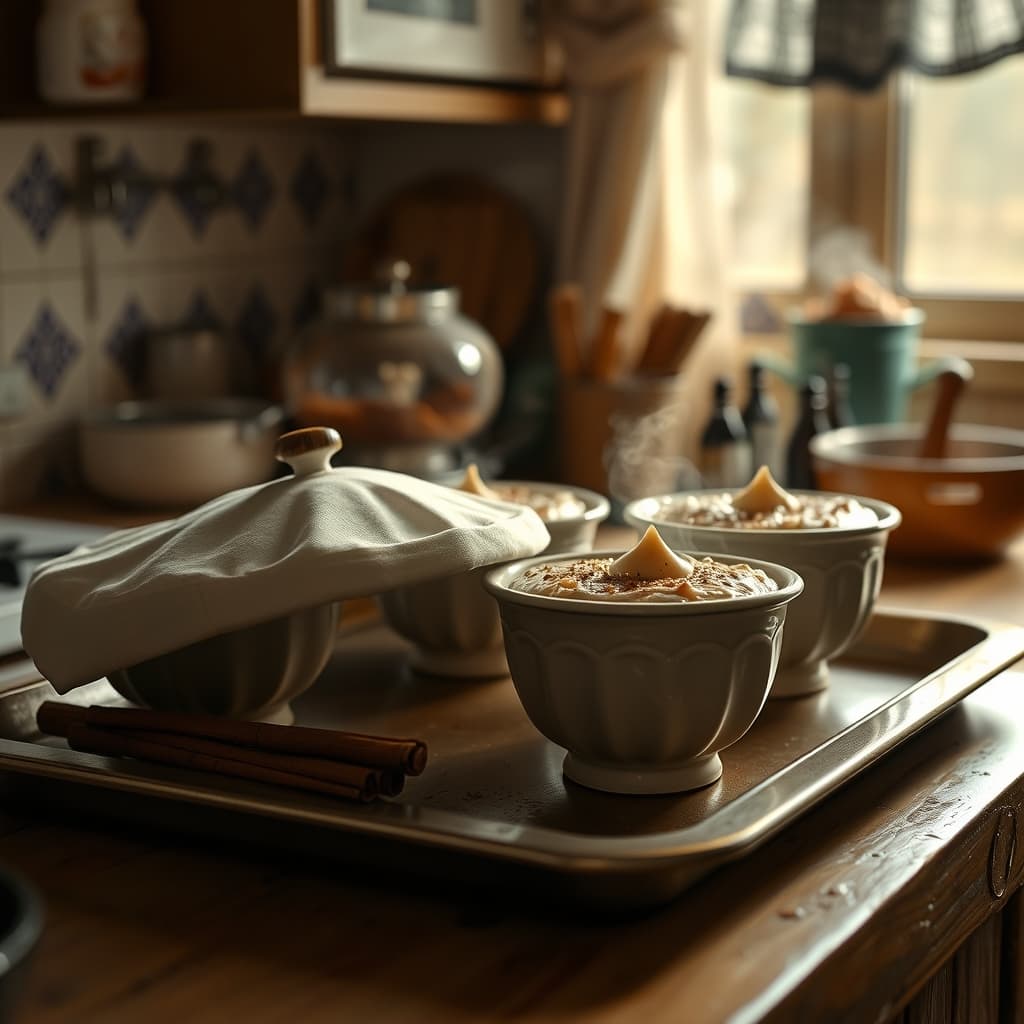
There was a time when even the way a smell moved through the house felt different when rice pudding was being made. The warmth beginning in the kitchen as milk simmered would slowly spread into the corridor, the courtyard, and the open window, and the scent of cinnamon felt like a soft piece of news drifting all the way into the neighborhood. Especially in the late afternoon, rice pudding thickening in a pot was not only a dessert prepared for the family, but a household treat already ready to be shared. It was ladled into bowls, dusted with cinnamon, set aside for a neighbor, sent to an ill relative, or placed before a guest who happened to knock at the door. That is why cinnamon-scented rice pudding represented in older kitchen culture not only a flavor, but also the way the home opened itself outward. Distributing it was as much a part of the recipe as making it.
From the perspective of taste memory, the reason rice pudding carries the culture of sharing from an earlier period lies in the simplicity of its ingredients and the breadth of its emotional circulation. Made from accessible ingredients such as milk, rice, sugar, and cinnamon, it is modest yet inclusive. It is not as ceremonial as trays of rich pastries, and precisely for that reason it suits everyday generosity better. When rice pudding was cooked in a home, the thought of sending a bowl to the neighbor across the hall arose almost by itself. That is the unexaggerated language of sharing: whatever is cooked that day becomes a thread in the fabric of neighborliness. The softness of the pudding, the lightness of its sweetness, and the familiar mark left by cinnamon on top make it close to both children and adults. In this way, the dessert ceases to be merely something eaten and becomes a small gesture that renews relationships.
Its power to keep old kitchen traditions alive comes partly from this as well. Rice pudding is not the dessert of speed, but of staying near the stove. It requires attention so the milk will not boil over, patience for the rice to soften well, and experience for the texture to settle properly. Each household carries its own small customs about when the cinnamon is added, how the bowls are cooled, and whether the top is browned or left pale. Old kitchen culture survives precisely through the passing down of such methods from one generation to another. A mother teaches her daughter the rhythm of stirring the milk, a grandmother warns not to go too far with the cinnamon, and children line up to claim the bowl with the heaviest dusting on top. The recipe stops being a list of ingredients and turns into a way of behaving inside the home.
The cinnamon-scented rice pudding also makes visible the bond between the kitchen and social life beyond the house. In older neighborhoods, the path of hospitality often passed not through formal invitations but through small bowls carried by hand. A bowl of rice pudding covered with a small plate would travel in the hands of children up and down staircases to a neighbor, and on the return trip the empty bowl would bring back a few kind words with it. That small circulation made domestic labor visible and reminded everyone that sharing was an ordinary habit. The scent of cinnamon therefore lived not only in the kitchen, but also in stairwells, at doorways, and in the memory of the neighborhood.
Today rice pudding is still made and still loved, yet what makes it nostalgic is the social warmth it once carried. Cinnamon-scented rice pudding gathered in a single bowl a period’s culture of sharing, the courtesy of neighborliness, and the patient rhythm of the old kitchen. That is why it remains in memory as more than a dessert. It is the sweet form of an older domestic ethic that believed what was cooked in one home ought to reach another as well. Sometimes the cinnamon sprinkled over one bowl is enough to tell the story of how closely a neighborhood once lived together.
Cinnamon-Scented Rice Pudding: How Does It Carry a Period’s Culture of Sharing and Keep Old Kitchen Traditions Alive?