Eski Pano
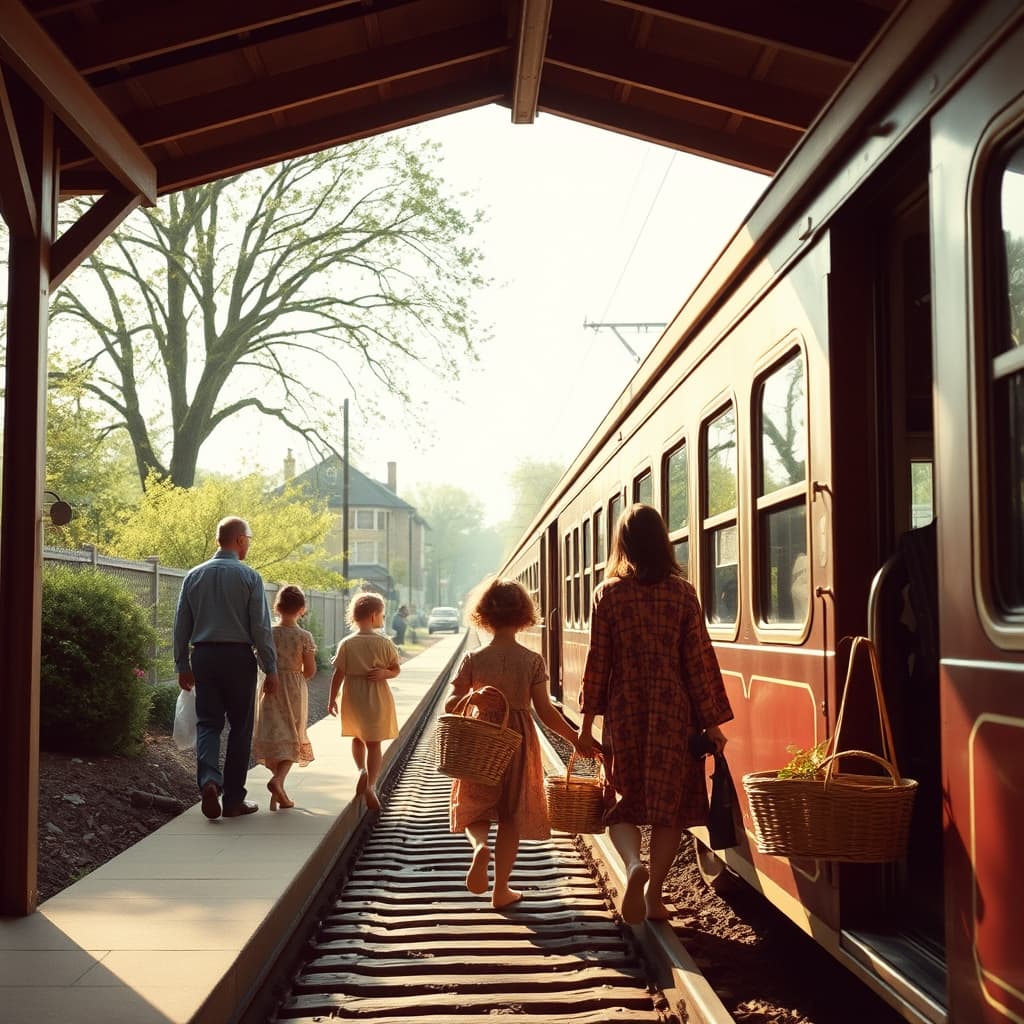
There was a time when, in certain neighborhoods, the rhythm of a weekend morning began with the thought of a train long before the bustle inside the home was complete. Picnic trains were not merely a mode of transport. They were the name of a brief passage through which families, tired from the week, crowded by city life, could breathe for a few hours. Cloth bags were packed, enamel containers were filled with meatballs, stuffed vegetables, or boiled eggs, and loaves wrapped in newspaper were tucked into baskets at the last moment. Children hurried from the window, elders reminded one another not to forget the water or the blanket, and even the walk to the station felt like a small holiday procession. The excitement began before the train appeared, showing that what marked the weekend on the neighborhood calendar was not simply leisure, but the promise of going out together.
Seen historically, picnic trains reveal how urban families used the narrow space of freedom that city life allowed them. Old newspapers, especially as summer approached, mentioned crowded suburban lines, lively excursion grounds, and baskets carried into railway carriages. Yet the real story lived not in the columns, but in the murmur on station platforms. The train moving along the tracks carried residents toward greener edges of the city, but it also carried domestic cheer itself into the wagons. Net bags hung beside the seats, children’s faces pressed to the glass, handkerchiefs pinned to mothers’ skirts, and fathers checking the tickets more than once all recorded the family order of the period without saying so directly.
These weekends remain like an ache because the journey was nearly as important as the picnic itself. Before the train even moved, a soft hum filled the carriage. A bottle of lemonade clinked in one corner, a packet of wafer sweets opened in another. Children who won the window seat counted fences, bridge pillars, and station signs, while adults waved to acquaintances in the next carriage. Every sway of the train seemed to shift not only bodies, but family joy itself. Even a short ride was enough to lighten the daily weight of the house. To go a little beyond the city meant not only getting away from routine, but also drawing closer again to one’s own family.
The gardens turning into the scent of linden formed the softest layer of this memory. Once the picnic ground was reached, the blankets spread on the grass, the searching for shade, and the hands choosing where to set the samovar were joined by smell as a lasting part of remembrance. Linden mixed with warm air, with damp soil in one place, with charcoal smoke in another. Children ran with a ball at the foot of the trees, grandmothers wiped fruit knives on newspaper, and young women poured tea into thermos cups while a leaf brushed their hair. Nothing dramatic happened, perhaps, and that was precisely why it mattered. What remained memorable was not an extraordinary adventure, but the way shared happiness settled inside ordinary details.
The return in the evening explains why the memory still carries a tender ache. Blankets were shaken out, containers collected, and children walked back toward the station with earth still clinging to their shoes. Families who had talked all day grew quieter on the return train, with tiredness and happiness blending into each other. As the light outside thinned, everyone felt how quickly the day had passed, though few said it aloud. By the time they reached the neighborhood, the smell of the garden remained on clothes, baskets, and hands. That is part of the ache remembered today: the knowledge that weekend joy once traveled along railway lines and then gently withdrew with the evening.
What is missed now is not only the excursion grounds or the old suburban lines. What is missed is the collective rhythm in which family happiness could become a way of traveling. If laughter, thermoses, linen cloths, and the scent of linden could all fit into the same carriage, then urban life of that era still offered a shared spaciousness inside limited time. That is why the weekends when picnic trains carried family joy along the rails never disappeared from neighborhood memory. They were not one of the great events of history, but one of the most delicate forms of everyday happiness.
Weekend Picnic Trains Carrying Family Joy Onto the Rails as a Scene That Never Fell from the Neighborhood Calendar: Why Are Gardens Turning into the Scent of Linden Still Remembered Like an Ache Today?