Eski Pano
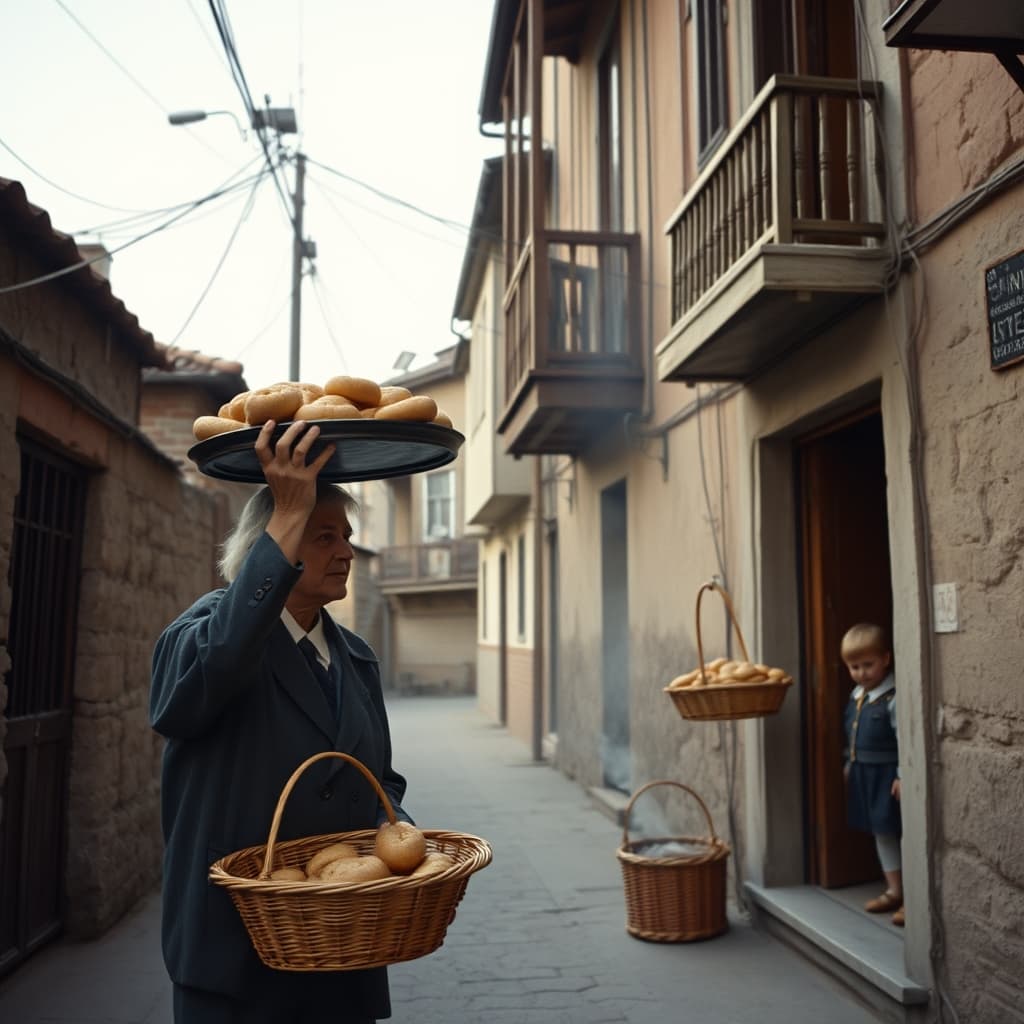
There was a time when the sound of neighborhood mornings changed completely once the school term began. The looseness of summer withdrew, the streets became accustomed again to early-hour haste, and one of the most familiar signs of that movement was the voice of the simit seller. Tea had only just been brewed, school uniforms had come fresh from the iron, and shoelaces were being tied in a hurry when that call rose from the street and suddenly organized the bustle inside the home. A child would ask, “shall we buy simit,” a basket would be lowered from the window, and within minutes the warm smell of sesame would arrive at the door. One of the warmest scenes of old neighborhoods was built exactly there, in the middle of morning, because the simit seller's call was counted not only as news of bread, but as the sound of a day beginning together.
Seen from the perspective of neighborhood culture, the warmth of that call came from the everyday closeness between the street vendor and the home. Unlike today's enclosed shopping routines, the cries of sellers once established the pulse of the street. Just as the milkman, the boza seller, and the yogurt vendor were remembered by their own hours, the simit seller was one of the indispensable figures of school mornings. Appearing in the cool air with a tray on his shoulder or a cart in his hands, he invisibly connected the neighborhood children, mothers, building caretakers, and civil servants leaving early. People hearing the same call could sense the same movements in one another's windows. In this way, buying simit ceased to be a small transaction and became a shared morning rhythm.
What remains unforgettable in this scene is the domestic warmth hidden in its details. White cheese would be prepared in the kitchen, more hot water poured into the tea glass, and while the schoolbag waited by the door, someone would think about butter or triangle cheese to spread over the simit. Children often wanted to hold it and walk with it, while mothers called out, “eat quickly, the school bus will come.” In some apartment buildings neighbors exchanged change with one another; in some streets the simit seller waited a few minutes, patiently watching for every basket to return. Even in that small pause there was the subtlety of belonging to the neighborhood, because the street vendor was not merely someone who sold, but someone who knew the neighborhood's time.
The return of the school term made that call even more meaningful. As the order scattered by summer gathered itself again, early waking, the smell of uniforms, the firm covers of notebooks, and the chill of morning all announced a new season. The voice of the simit seller drew a warm, familiar, comforting line through all of it. For the child leaving home, that sound was a small reward against the strictness of the day; for the adult, it was a familiar reassurance softening the morning rush. In this way, the neighborhood streets became not only places through which people hurried to work and school, but a living fabric held together through sound. The seller's call was one of the most loved strands in that fabric.
Today breakfast may be quicker, the street quieter, and shopping more anonymous. Yet in the minds of those who remember old neighborhoods, the simit seller's morning call remains warm. That is because this sound carried more than food; it also carried the everyday trust created by neighborly life. The call heard on school mornings made people feel both that the neighborhood was awake and that the day could still be shared. Perhaps that is why the warmest scene of old neighborhoods lies precisely in those hours when children were getting ready for school and the simit seller was leaving his voice in the street.
Why Was the Simit Seller's Morning Call, at the Return of the School Term, the Warmest Scene of Old Neighborhoods