Eski Pano
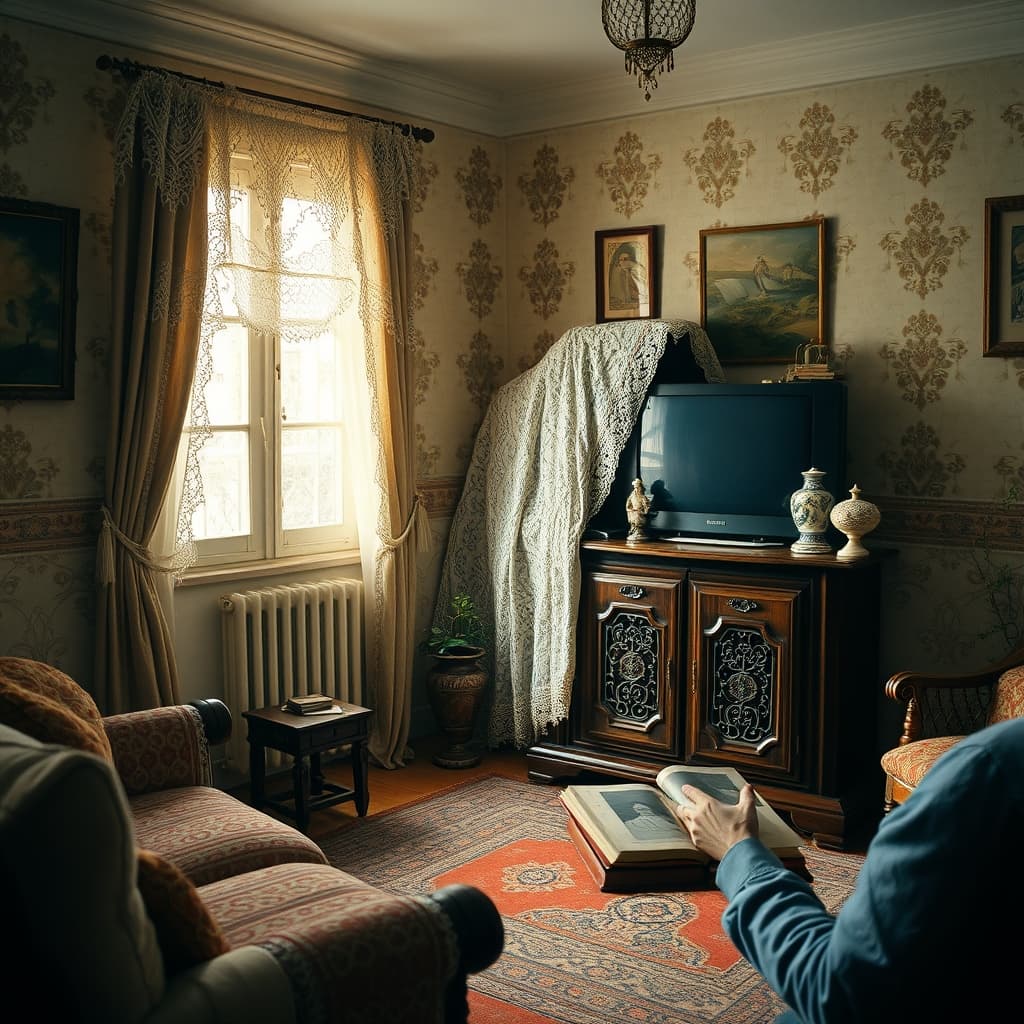
There was a time when one of the most visible silences in the home was the lace cover. Resting on top of the television, along the shelf of a display cabinet, on the sideboard, or on the coffee table in the guest room, these finely worked pieces were more than cloth protecting an object; they were small signs showing the homeowner's taste, patience, and way of looking at the world. The porcelain figurine, crystal sugar bowl, or family album placed upon them acquired another meaning within the frame drawn by lace. Today, as collectors track these covers through old homes, trunks, and flea markets, they continue to carry the aesthetic understanding of an era in a quiet yet powerful form. Lace was a language of taste laid over everyday objects.
Seen through the lens of object stories, the value of the lace cover lies not only in hand labor, but also in the invisible rules that shaped domestic arrangement. From the 1950s to the 1980s especially, the order of the home was read through visible signs of cleanliness and care. Lace was one of the most elegant instruments of that care. It softened the surface of furniture, lightened the formality of objects, and announced that the house was well kept without needing words. There was a reason it occupied a place in dowries, was carefully displayed in guest rooms, and was straightened again on special days. Every motif pointed to a place where domestic labor met aesthetics.
That is also why it is meaningful that collectors pursue these covers today. In the edge pattern of an old lace piece, in the kind of thread, in its yellowed texture, and in the final loop once made by hand, there survives not only age, but a history of taste. One cover may carry a restrained urban elegance, another the dream of a more ornate salon, another the habits brought from provincial life into the city. Lace displayed in a cabinet tells, together with the objects around it, what kind of shine the era loved, what arrangement it considered refined, and what form of labor it wished to keep visible. In that sense, collectors gather not simply cloth, but the aesthetic discipline of a whole period.
What makes the lace cover so open to tracking the past is that it stood close to daily life and yet was also ceremonial. It remained in sight every day, yet was kept carefully clean; it could be touched, but not used carelessly. Children being told, “don't pull it, it will lose its shape,” and mothers or grandmothers straightening it with two fingers reveal the respect attached to the object. This graceful layer spread over things was also an extension of the idea of order within the home. If the radio, television, or table beneath it belonged to modern life, the lace laid over it granted those objects a domestic softness, even a sense of intimacy. Perhaps the taste of an era became visible exactly there: in the desire to tame the new through a delicacy made by hand.
Today, among minimalist interiors and quick decoration fashions, the lace cover may appear old-fashioned to some. Yet the past traced by collectors shows that it is not merely an object of nostalgia. The lace cover stands like a powerful document telling of an era's measure of beauty, its ideal of a well-kept home, the visible presence of women's labor, and the value bestowed upon everyday things. To look at it, then, is to look not only at fabric, but at the subtle relationship between taste, order, and family life. The quiet persistence of lace still makes the aesthetic language of the past readable today.
The Lace Cover and the Past Traced by Collectors: How Did It Reflect the Taste of an Era