Eski Pano
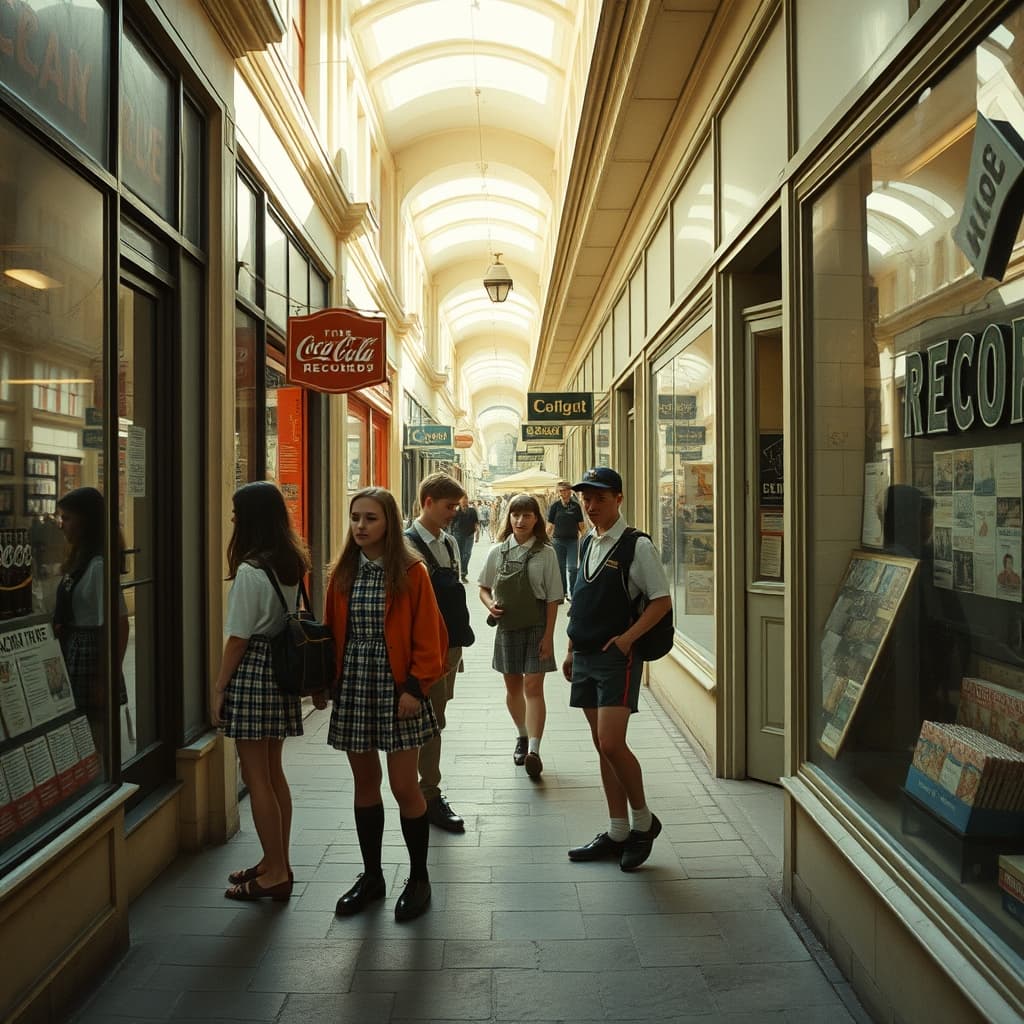
The memory of some cities begins only after the school bell has fallen silent. In those hours when a schoolbag seemed to hang a little lighter from the shoulder and the seriousness carried all day by uniforms or jackets slowly dissolved, the interiors of old arcades shone in a different way. Afternoon light struck the shop windows, faint music drifted out of the cassette store, the scent of paper rose from the stationery shelves, and the little stools in front of the cobbler made room for the unhurried side of youth. Instead of going straight home, students lingered before a few shops, looked once more at a poster they would normally pass, or shared a soda with friends while standing at the edge of a stairway. It felt like a rehearsal for summer vacation. That is why those days seem not only old, but brighter when we look back.
From the perspective of time, the arcades after school were among the emotional thresholds of city life. Old newspapers mentioned newly opened passages, competitions of shop windows, and the famous stores frequented by the young, yet the real story remained hidden in the ordinary waiting that lived between those lines. Arcades were not merely places of shopping. For students they were semi-public stages carrying a little freedom, a little curiosity, and a little sense of growing up. Between the dust of the street outside and the cool stone floor within, beneath yellow lights hanging from the ceiling and the half-familiar gaze of shopkeepers, childhood and youth blended together. The city reconciled discipline and the desire for free time precisely in those narrow corridors.
The reason those years are remembered today as smelling of vacation is not only that the season itself approached summer, but that the feeling of summer began earlier than the calendar. By late May, even while classes continued, one part of the mind had already turned toward the sea, the family hometown, country gardens, or long evenings outdoors. Lingering in the arcade became a small ritual of that expectation. To stare at a record sleeve, try on a cheap pair of sunglasses, glance over colorful hair clips on a counter, or study the posters at the cinema booth was to hold the freedom of a holiday not yet begun. Children counted their pocket money carefully, teenagers found excuses to pass the same shop twice, and shopkeepers did not find this slow wandering strange. Arcades were the legitimate and safe address of lingering in the city.
One thing that deepened the memory was the soundscape of those passages. The hum of a fan from a half-open door, the tailor's machine, the watchmaker's drawer, the clink of tea glasses, and a summer song heard from a distant radio blended into each other. None of these sounds dominated, yet together they built the loosened rhythm of the hour after school. One friend feared getting home too late, one showed a newly bought pen, and another fell silent before a pair of shoes in the window. Many of the small feelings through which youth begins to shape itself took form in such intervals. Nothing grand may have happened, yet it was there that one first sensed having time of one's own. The vacation-scented days seem brighter from today partly for that reason.
The brightness we feel now does not come from the past having been flawless, but from the collective warmth of those moments of transition. The after-school arcades belonged neither entirely to childhood nor entirely to adulthood. They stood in between and granted room for trial. To step into a shop and out again, to see oneself in a window, to prolong the route with a friend, to arrive home a few minutes late: all these were part of youth's quiet education. In old city life, arcades remained therefore not only commercial corridors, but invisible classrooms of growing up. It is not surprising that those days appear brighter in memory, because there youth first heard its own voice on cool stone floors in the scent of an approaching summer.
In Those Old Hours That Revealed the Spirit of the Era, the Years When Lingering in Arcades After School Mixed with Youth: Why Do the Vacation-Scented Days Look Brighter When We Look Back?