Eski Pano
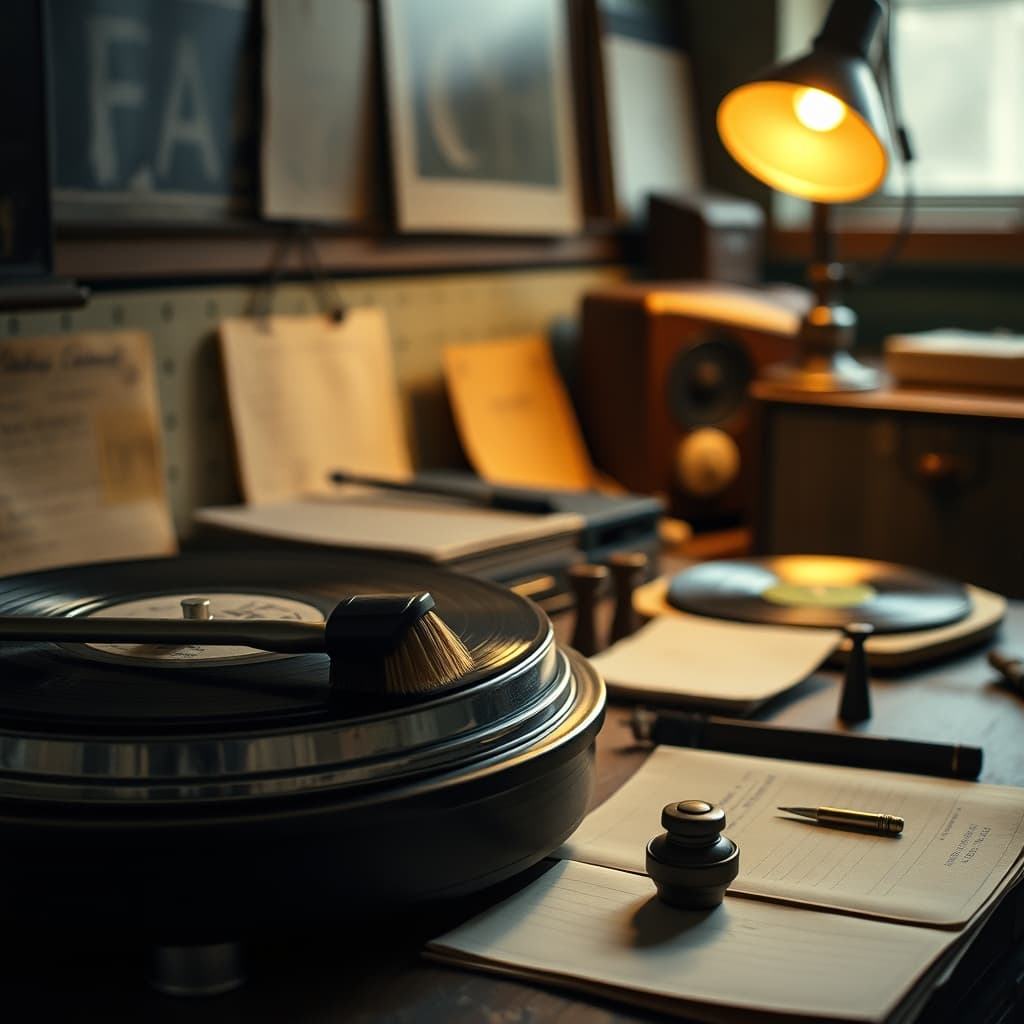
Some objects look small at first glance, yet they carry within them the discipline of an entire technological era. The record cleaning brush is one of them. On summer mornings, with the window open and the paper scent of school notebooks spreading from the table, the static of the radio would become a little more ordered as the antenna was turned, and beside the turntable a slim-handled brush would wait quietly for its task. That brush was not used merely to remove dust, but to do justice to sound. The care that took even the smallest particle on a record seriously reminds us that the relationship people once had with technology was not hurried, but attentive. That is why it is hardly surprising that such a brush later found a second life in the hands of repairmen.
From the perspective of technological heritage, the record cleaning brush is one of the invisible yet essential assistants of the analog age. In old cities, radio and turntable repairmen were not merely craftsmen who fixed faults; they were also guardians of the small culture surrounding those devices. In a time when adjusting an antenna required patience, when the needle had to be placed carefully and lids were closed gently, sound machines were not objects to be used with a casual press of a button. They had to be wiped, protected from dust, and entrusted to the right hands when they failed. The record cleaning brush stood ready within that culture of maintenance. A young listener used it at home to reach clearer music, while in the shop a repairman used the same kind of brush to make an old record listenable once more.
Part of the reason the object found a second life with repairmen lay in its dependable versatility. Its bristles had to be soft enough not to scratch, light enough to respect the surface, yet firm enough to gather what had settled there. Craftsmen used it not only on records, but on turntable lids, radio grilles, around knobs, and sometimes even on the delicate corners of tape decks. In that way, a small object that seemed to belong to a music shelf at home became one of the everyday tools of the workshop. The care that began in the hands of young people on notebook-scented mornings continued under the lamp of the repair shop on quiet summer evenings. The revival of a device often depended not only on technical knowledge, but on such habits of delicate maintenance.
In those years, hope could quite literally become clearer as the antenna was turned. When a good frequency was caught, everyone's expression changed, and a familiar voice or a loved song emerging from the static created a small happiness in the room. There was a similar expectation with records: if the surface was cleaned, the sound would arrive more clearly, the song would skip less, and the recording would seem more alive. Repairmen understood this expectation well. An old turntable or a stack of scratched records brought to the shop were not merely objects, but an owner's wish to reach voices preserved from youth. The brush became one of the quietest partners in that wish. It was not large or spectacular, yet often it was the small instrument that made the real difference.
When we look at a record cleaning brush today, what we see is not only an accessory. What truly appears is the habit of an era that knew technology required care as much as use. Its second life in repair shops comes from exactly that truth, because good craftsmanship recognizes the hidden value of objects. The order of notebook-scented mornings, the patience felt while turning the antenna, and the faint music drifting from the workshop into the street on quiet summer evenings together create the cultural frame around this small brush. What remains in memory is therefore not only the light pass of bristles across vinyl, but a way of life that respected sound, made time for repair, and knew how to give objects a second chance.
Record Cleaning Brush: Explaining Why It Found a Second Life in the Hands of Repairmen, Blending into a Quiet Summer Evening Within the Hope That Grew Clearer as the Antenna Was Turned on Notebook-Scented Mornings