Eski Pano
Some foods settle in memory most deeply precisely because they are not showy. Purslane with yogurt is one of them. On summer evenings, when a crowded family table was being laid, it was often one of the quietest yet most familiar dishes on the table. The olive oil drizzled over it, the mild sharpness of garlic blended into yogurt, and the cool, lively texture of the purslane carried an immediate domestic peace. Beside large pots of the main meal or pastries fresh from the oven, its modest presence gave another kind of reassurance. In many homes, purslane with yogurt was not merely a side dish, but the calm flavor that balanced the whole table. That is one reason why it recalls childhood at the very first bite: one feels returned not only to a taste, but to a familiar order of home.
From the perspective of taste memory, purslane with yogurt is among the clearest examples of the bond between season and household. When purslane arrived from the market or the garden, it was first picked over and washed at length, then prepared so that its stems would remain slightly crisp. Yogurt was mixed in a separate bowl with crushed garlic; sometimes dried mint was added, sometimes red pepper flakes, and sometimes only a bright thread of olive oil. This process did not create a dramatic performance in the kitchen, yet it established a neat summer order inside the home. For children, this dish often stood as the most direct form of the feeling that "my mother's hand has touched this." Its ingredients were simple, yet the consistency and proportions differed slightly from one house to another, and that difference became the clearest mark of a family-specific taste.
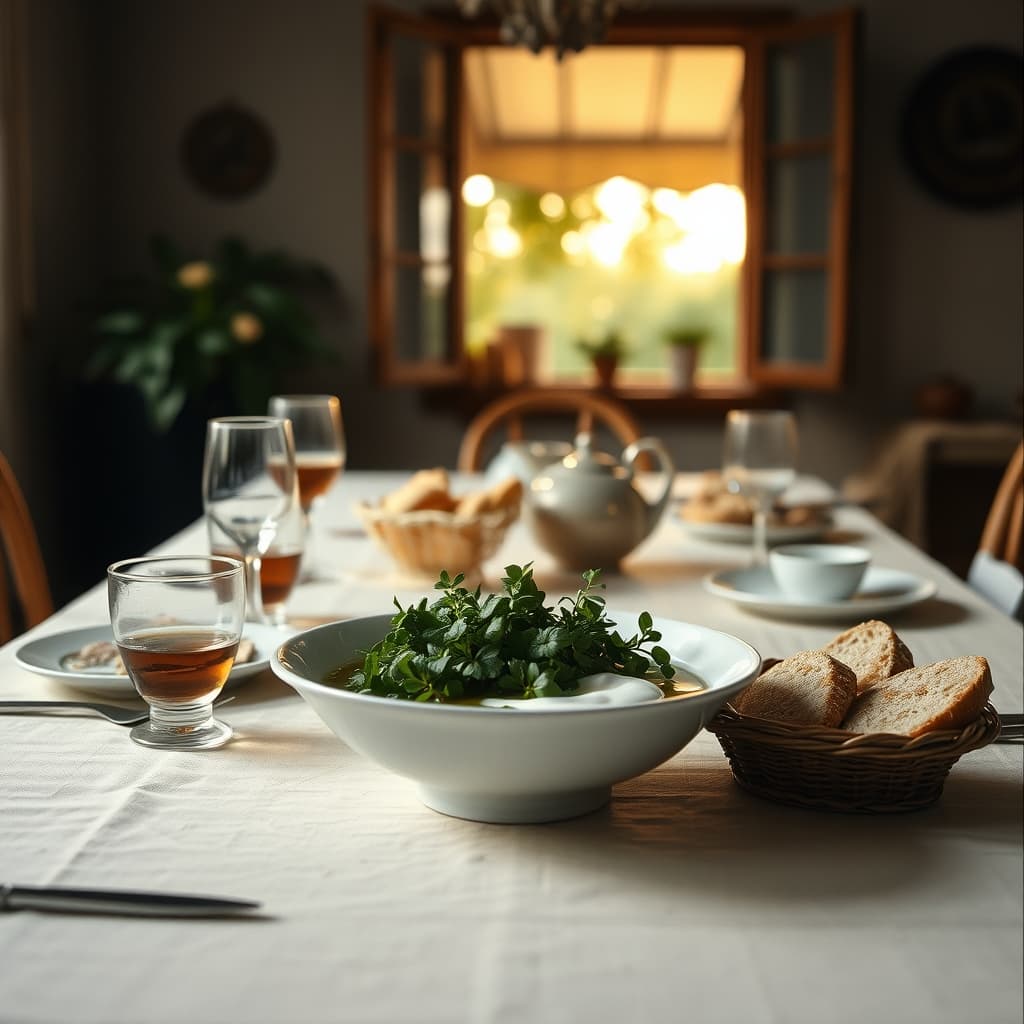
Its becoming the unforgettable taste of crowded family tables is also tied to the manner in which it was shared. This dish was rarely lived as an individual plate; it belonged to the center of the table, reached toward by everyone with a spoon. While the main dishes were being served, the sentence "have some of the purslane too" almost always moved around the table. A child might first make a face, yet over time the coolness of the yogurt and the faint sour freshness of the purslane became beloved. Later, in adulthood, the same taste could suddenly open one of memory's strongest doors. That is because this flavor is preserved not only in the mouth, but in the sounds around the table as well: in the clink of plates, the filling of the water jug, the hand passing bread, and the summer breeze slightly pushing open the window. The first bite brings all those accompanying details back with it.
Part of the reason this dish recalls childhood lies in its seasonal simplicity. Among the lighter, cooling foods of summer, purslane with yogurt represented the quiet wisdom of the household. It belonged to a kitchen understanding that avoided waste, did not seek display, yet never gave up flavor. Grandmothers spoke of the virtues of purslane, mothers took care not to overdo the garlic, and children liked gathering the remaining yogurt with a piece of bread. In that way the dish became a quiet bridge between nourishment and affection. That plate held health, summer, and domestic tenderness all at once.
When asked today why purslane with yogurt still recalls childhood at the first bite, the answer lies in more than flavor alone. What matters is the feeling of order and closeness the dish carried at crowded tables. Those moments when everyone waited for one another, dishes were set at the center, and a cool summer evening spread through the house have settled into the mild taste of purslane joined with yogurt. When a person eats it today, memory works alongside the palate. The creak of a chair, the sound of a glass, the voice of an elder saying, "take a little more," all seem to accompany it. That is why purslane with yogurt remains unforgettable: not only as food, but as a simple inheritance of summer carrying the crowded and secure feeling of childhood tables into the present.
Purslane with Yogurt, Remembered with the Unforgotten Taste of Crowded Family Tables: Why Does It Still Recall Childhood at the First Bite Even Today?