Eski Pano
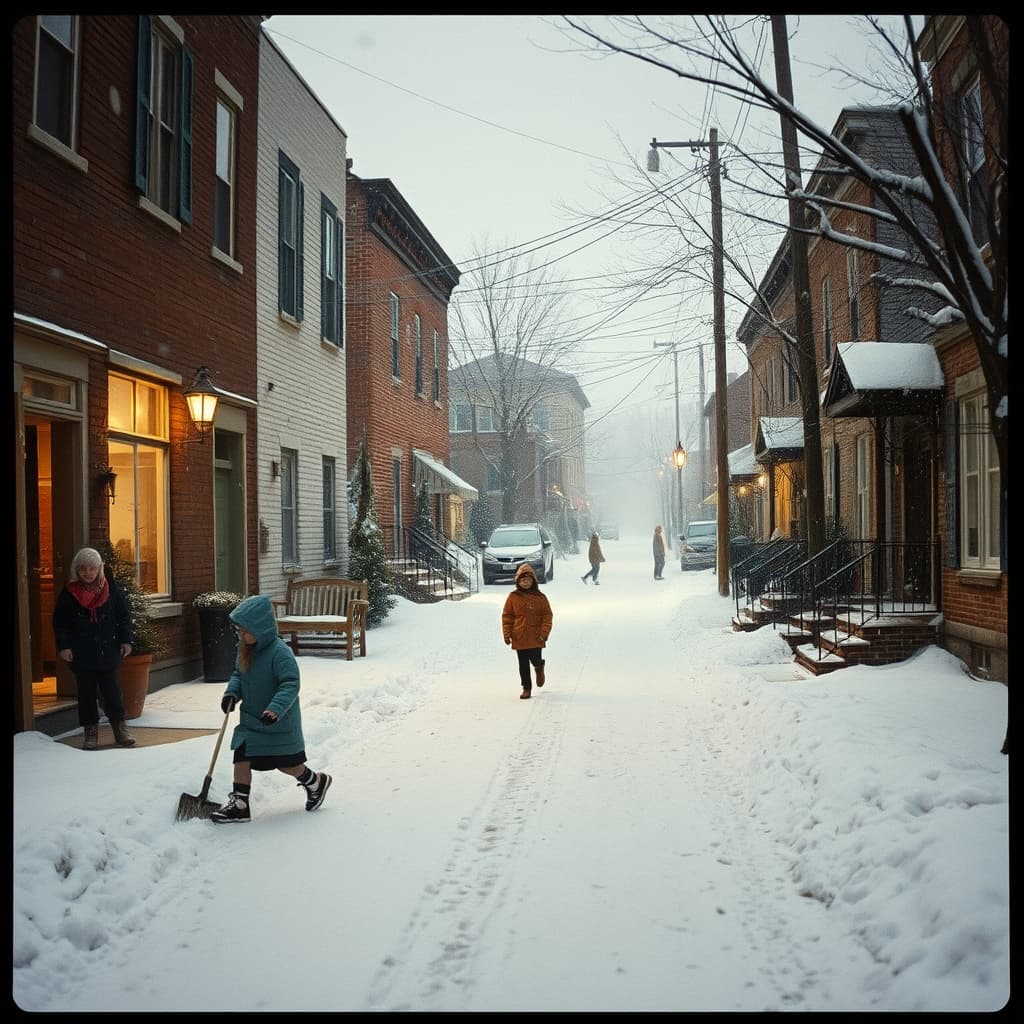
Snow brought more than whiteness to old neighborhoods; it also made people more visible to one another. Streets did not empty immediately in the snow the way they often do today. On the contrary, windows, doorways, and corners grew slightly livelier. Children ran out for snowball fights, mothers called from the door both to warn and to watch, fathers came from courtyard to street carrying shovels or coal buckets, and shopkeepers clearing snow in front of their shutters called out to one another. The hours that passed were not simply time spent enduring the weather. They were hours of learning how to remain together inside a shared season. Cold could close people indoors, but it could also draw them nearer outside. Snow did not shut the neighborhood down; it wove it tighter.
From the perspective of neighborhood culture, streets that did not empty when it snowed are an important scene for understanding the durability of old neighborliness. What we call a neighborhood grows not only through visits on good days, but through the small attentions shown to one another under difficult weather. Clearing the pavement, opening a path to an elderly neighbor's door, drying a child's wet gloves by the stove, or buying bread for the apartment next door while going to the grocer are not heroic acts. Yet the material of trust is often made from precisely such ordinary help. If the street did not empty when snow fell, it was not only because people had things to do outside, but because they cared about one another's presence. Everyone became a little visible and a little responsible to everyone else.
Another reason the hours passed under snow made neighborliness stronger lies in the slowing of time. On ordinary days, one crossed the street in haste; when snow covered it, the pace had to soften. People placed their steps more carefully, greetings lasted longer, and brief conversations stretched at the threshold. Even looking out from a window became a way of participating in the neighborhood. Who had slipped, which child was too cold, which stove was burning well, who had cleared the entrance... all this created a shared observation that everyone sensed without needing to speak it aloud. That attention was not oppressive, but protective. In the quietness of snow, people heard one another's lives more clearly. Sometimes neighborliness thickens in exactly that slowed-down time.
The fact that the streets stayed full was decisive for childhood memory as well. The cries of children on sleds, the call to those whose gloves were soaked through, the smell of chestnuts just taken from the stove, snowy boots left in apartment entrances, and the voices from upper floors calling, "come in now," at the evening prayer all showed that the street was lived like a common room. The hours spent there were not only play, but quiet lessons in neighborhood manners. A child watching adults help one another learned that being neighbors meant more than living door to door. It meant sharing the same weather, the same difficulty, and the same joy. Snow made that feeling visible because it touched everyone's routine at once.
The reason scenes of snow from the past are still remembered so warmly lies here. The real warmth was not in the air, but in human relations. Streets that did not empty when it snowed made the solidarity woven into neighborhood life visible. People protected not only their own doorway, but the rhythm of the street. That is why neighborliness was so strong: it was built not only through conversation, but through cold hours spent together. The snow melted, the footprints disappeared, and the sleds were taken indoors, yet the feeling remained for a long time. Even today, when snow gathers on a street, what warms a person inwardly may be that older knowledge still lingering within: some neighborhoods draw closest precisely in the cold.
Why Did the Hours Spent in Streets That Did Not Empty When It Snowed Make Neighborliness So Strong?