Eski Pano
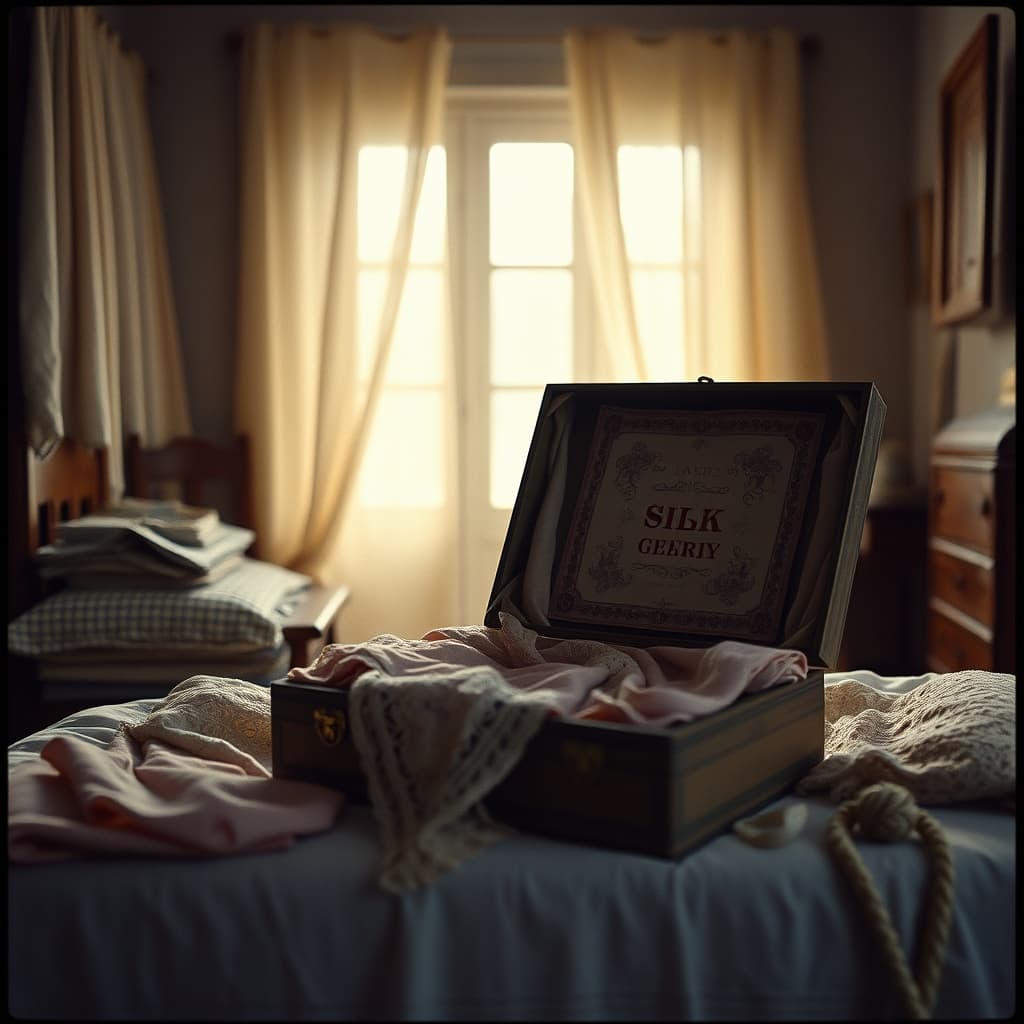
Some objects take their place within a family even before they are used. The silk scarf box is one of them. Resting in the quietest corner of the dowry room among lace covers, the scent of mothballs, and carefully folded fabrics, it seems like the messenger of a future not yet entered into daily life. When the lid is lifted, the glossy tissue paper, the silky surface of the scarf, and the order arranged inside preserve not only an accessory, but a long-awaited stage of life. Time works differently in that room. Objects do not wait merely to be used; they wait for the day when their meaning will be completed. For that reason, the silk scarf box ceases to be a simple container and becomes part of the emotional order a family builds with patience.
From the perspective of object stories, this box is a small but concentrated representative of domestic aesthetics and intergenerational transfer. In older homes, the dowry room was not merely a place where goods were stored, but a place where manners, care, and social expectations about the future were gathered as well. The silk scarf placed in the box was often intended for a wedding, a holiday visit, a formal occasion, or the first rounds of visiting in a new household. For that reason, the box itself mattered almost as much as the scarf. With its printed lid, delicate paper lining, and at times a maker's label or ribbon-like detail, it carried traces of both modern retail culture and the older feeling of careful preparation. Here, the object was not merely purchased; it was invested with meaning.
The waiting that grew in the dowry room became a family heirloom precisely because meaning accumulated around it over time. A box placed in a young woman's room gradually came to hold not only her story, but those of the elder women in the household. A mother would say, "we were saving this for a special day." An aunt would speak about the quality of the fabric. A grandmother smoothing the lid with her hand would remember the shopping of her own youth. In that way, the object passed beyond individual ownership and became a witness circulating through family memory. The waiting enlarged not only the day on which it would be used, but also the sentences, advice, and quiet expectations that gathered around it. Even the manner in which the box was opened and closed carried the gravity of a small ceremony.
Place mattered in the making of this heirloom just as much as material. In many homes, the dowry room was a somewhat cool, orderly, and time-sealed space that not everyone entered every day. This half-closed atmosphere gave the box a weight different from ordinary belongings. A lavender sachet resting on it, an embroidered bundle beside it, and the other protected fabrics inside the wardrobe all helped build the scenery of waiting. Within that decor, the silk scarf box appeared not only as an object, but as a center in which good wishes for the future became tangible. Years later the scarf may have been worn, its fashion changed, or its fabric worn thin, yet the box was often kept. What was being preserved by then was no longer only the scarf, but waiting itself.
It is not difficult to understand why such boxes are now viewed as family heirlooms. As modern life accelerated, the process of preparing and keeping objects in readiness almost disappeared. The silk scarf box reminds us that there was a time when objects were not simply bought, but brought into family life through waiting, protection, and meaning. The waiting that grew in the dowry room turned over time into a kind of domestic archive. When the lid is opened, past voices, the smell of cloth, and the sentences exchanged among women in the household seem to open with it. That is why this small box is remembered today not merely as an elegant object, but as a modest yet powerful representative of patience, preparation, and transmitted domestic care.
The Silk Scarf Box and the Waiting That Grew in the Dowry Room: How Did It Turn into a Family Heirloom?