Eski Pano
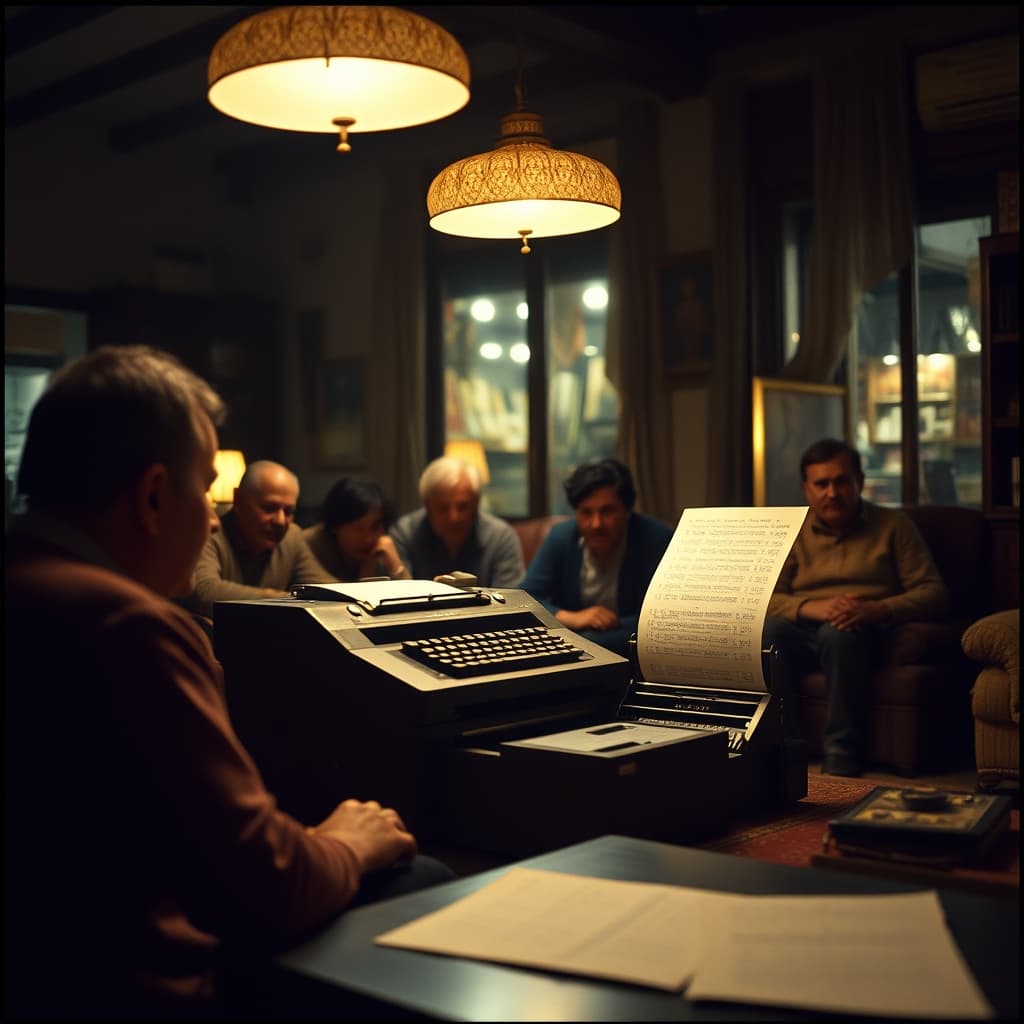
Some sounds call back the inner life of an entire period on their own. The broken rhythm of a dot-matrix printer advancing paper line by line is one of them. In the evening, the television in the living room would be lowered a little, the tablecloth straightened, children would drag their chairs closer, and the adults would lean forward gently and say, "let's see what comes out." As the perforated paper moved through the rollers, it was not only a document being printed; the family's curiosity was also becoming visible line by line. That mechanical rattling was a way of meeting something new without needing spectacle. Beginning in the windows of computer shops in the crowded bazaar and stretching into the living rooms of homes, this habit soon became a familiar scene of everyday life.
From the perspective of technological heritage, dot-matrix printers represent the bond between home and workplace in the early stages of digitization. Small electronics shops, stationers, and bookkeeping offices in busy market streets were among the most visible stages for these machines. The continuous feed paper curling out behind glass looked almost magical to children. Yet what remained unforgettable was the meaning the printers gained once they entered the home. They did not remain cold office devices. They brought school assignments, address lists, holiday invitation texts, and sometimes even command sheets for early computer games into the family setting. Technology thus ceased to be an alien guest arriving from the outside and became a new household object joining the quiet excitement of the living room.
One reason this habit was not forgotten lies in how visible the printing process was. Today most printouts arrive all at once, but in the age of dot-matrix printers the formation of text was almost something to watch. Every letter struck by the pins, passing through the ink ribbon onto the paper, allowed people to follow the result step by step. The sense that "one more line has appeared" prevented technology from remaining a sealed box. The quiet excitement of families gathering in the living room was nourished by this shared witnessing. For a child, the printer became a miniature performance stage. For a father, it conveyed order and record. For a mother, it offered a concrete sign that modern time had entered the home. Even tearing off the perforated side strips from the paper was, in many houses, almost ceremonial.
Its sinking into the memory of the streets within the bazaar crowd was no coincidence either. The dot-matrix printer became not only a domestic device, but one of the sounds of neighborhood commerce. Shops printing invoices, stationers preparing name lists, school offices producing registrations, and bus agencies where the paper flowed continuously all spread the same mechanical rhythm through the city's working arteries. Passing through a street and hearing that sound from inside told you that some task was being carried out with seriousness. The noise of the printer was like the sound of order, record, and a mild future-mindedness in the old city. The curiosity at home and the working tempo of the bazaar thus met around the same machine.
When we ask why this habit is still not forgotten today, the answer lies not only in the device, but in the collective attention gathered around it. Dot-matrix printers taught families to wait, to watch a result take shape, and to feel the material value of a printout. They gave the bazaar an audible signature of disciplined labor. What remains in memory is therefore not just the perforated paper or the mechanical sound, but the manner in which people approached new technology not with fear, but with care and a certain admiration. What entered the memory of the streets was that measured excitement stretching from small shops in the market to the coffee table in the living room. The days of dot-matrix printers may be past, yet the shared curiosity created by text appearing slowly on paper continues to live in memory.
The Days of Dot-Matrix Printers: Why Was a Habit That Grew with the Quiet Excitement of Families Gathering in the Living Room Not Forgotten, Sinking into the Memory of the Streets Within the Bazaar Crowd?