Eski Pano
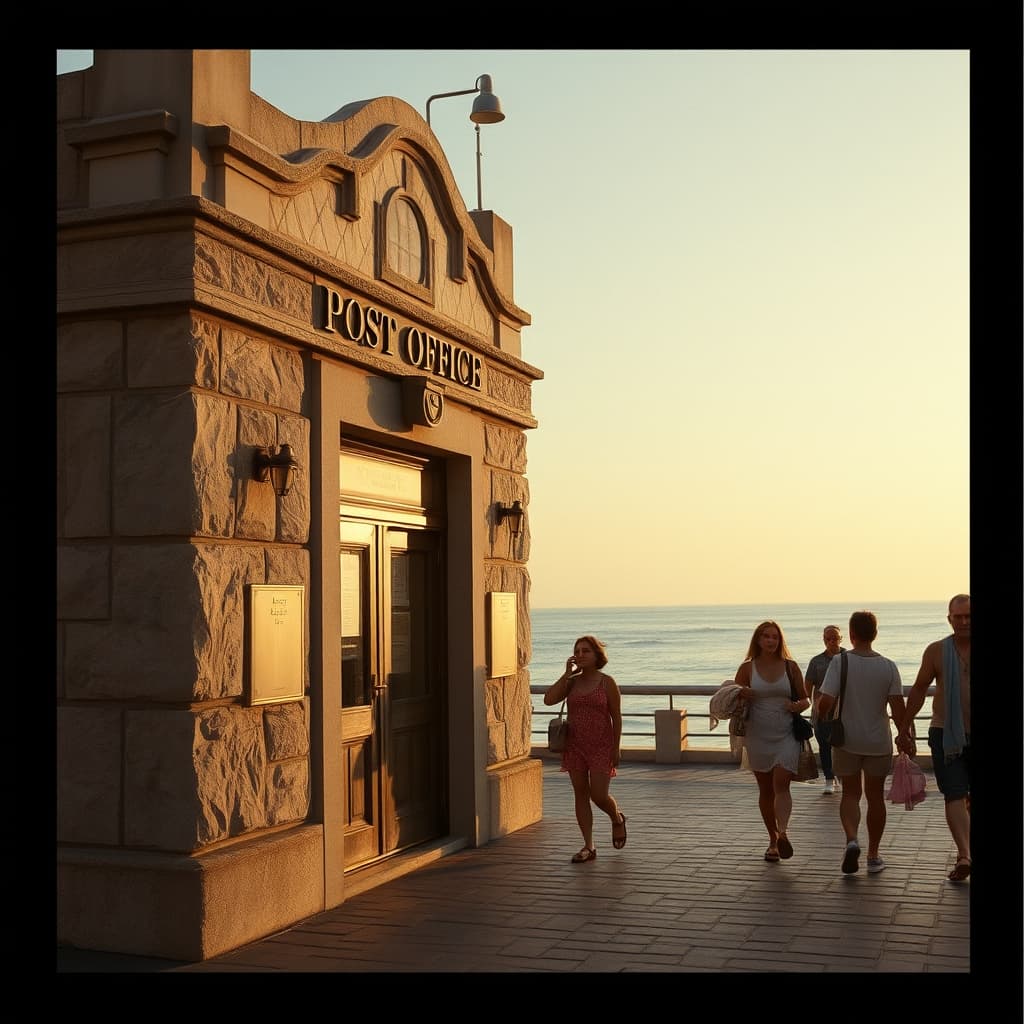
The hours of returning from the shore once had a color of their own in old cities. As the sun withdrew with a salty tiredness, wet slipper marks appeared on pavements, the smell of the sea clung to people's hair, and newspapers were tucked under arms on the way home. At such times, post office buildings suddenly seemed more alive. Their stone facades, heavy under the midday heat, appeared to breathe inwardly in the cool of late afternoon. The brass door handle, the mild rush before the counters, and the steady progress of the wall clock gave the whole neighborhood another rhythm. People coming back from the coast stopped by before going home to send a card, ask about a money order, or check whether an awaited letter had arrived. In that way, the looseness of the shore and the seriousness of the city met for a few minutes in the same corridor.
When viewed through the lens of time, old post offices were not merely official institutions, but emotional crossroads of daily life. Old newspapers might report new routes, telegram traffic, or the accumulation of parcels before holidays, yet for ordinary city dwellers the post office carried a quieter and deeper meaning. A letter from a son studying far away, a card sent to relatives staying at a summer house, the hopeful question of a civil servant waiting for a transfer, or a few lines expected from military service... all these distances drew closer within the wooden benches, the thick glass counters, and the faint smell of ink. The quiet hustle of the post office came precisely from this. No one hurried loudly, yet everyone was following an invisible clock.
Part of the reason the hours of returning from the shore remain so vivid in memory is this feeling of transition. One came back from the sea still carrying the relaxation of sand and the coolness of salt on the skin, yet stepping into the post office meant entering another seriousness. Wet towels, net bags, and sun-browned faces passed among official envelopes, stamp drawers, and the gazes of people waiting for their turn. This meeting turned daily life into something almost cinematic. Children peered curiously beneath the counters, mothers unfolded crumpled slips of paper with addresses, and fathers gathered everyone with a practical sentence such as, "let's buy the stamps first." What brought the distant near was not only the letter itself, but the way family, neighborhood, and summer briefly aligned around the same table.
The interior of the post office deepened that memory with its own details. A ceiling fan turning slowly, rate charts hanging on the wall, worn forms, parcels tied with thick string, and the solid sound of a stamp coming down on the desk all represented an orderly yet emotional face of city life. For someone returning from the shore, these were signs that the day had not yet finished. The sea offered a temporary ease, while the post office restored the bonds of life. That may be why the bicycles leaning outside in the evening cool, the elderly waiting on the bench, or the voice of a clerk from behind the window can still stir an inward tenderness. It was like an inner-city courtyard where even strangers briefly shared the same expectancy.
When we think of old post offices today, what returns is not only the age of letters. What truly remains is a time when distance was more tangible, but closeness more precious. The hours after the shore stay vivid for exactly that reason: the freedom of the sea and the responsibilities of the city entered through the same door and met at the same counter. Old post offices taught people the weight of news, the etiquette of waiting, and the sense that life could open toward another corner of the world even in front of a modest clerk's window. What memory keeps is that short evening interval in which the sound of a stamp and the scent of the sea could stand side by side. The city's quiet hustle still seems to work within us because of that cool stone building visited before going home.
In Old City Life, the Quiet Hustle of Old Post Offices That Brought the Distant Near: Why Are the Hours of Returning from the Shore Still So Vivid in Memory?