 Eski Pano
Some flavors are remembered less for how long they remain on the tongue than for the atmosphere they spread through a house. Wafer halva was like that. On slow summer days or in the late afternoon after school, it sat in the grocer's or pastry shop's display window in neat round stacks: light to look at, fragile to hold, yet once it reached the table, strangely capable of filling the whole home with memory. Its scent was never showy. It carried a quiet sweetness made from tahini, sugar, and the dry delicacy of the wafer itself. Yet precisely because it was so restrained, it could move from kitchen to sitting room and from sitting room to hallway with the same gentle tone. When wafer halva entered the home, the ordinary day suddenly turned into a small celebration.
From the perspective of taste memory, wafer halva was not merely a childhood snack. It was an old domestic sweet that shaped the way sharing happened. Its wrapping was not loud, its portions were measured by eye, and people handled it carefully so it would not crack in the hand. That physical fragility changed behavior at the table. No one rushed it. Pieces were distributed with a certain care, and tea or soda often accompanied it. Carried from the display window into the home in the middle of holiday languor, this dessert tied the looseness of the season to the rhythm of family sharing. For adults it could recall old Ramadan evenings, returns from holiday visits, or nights after the summer cinema. For children it meant a reward that felt accessible, yet still special.
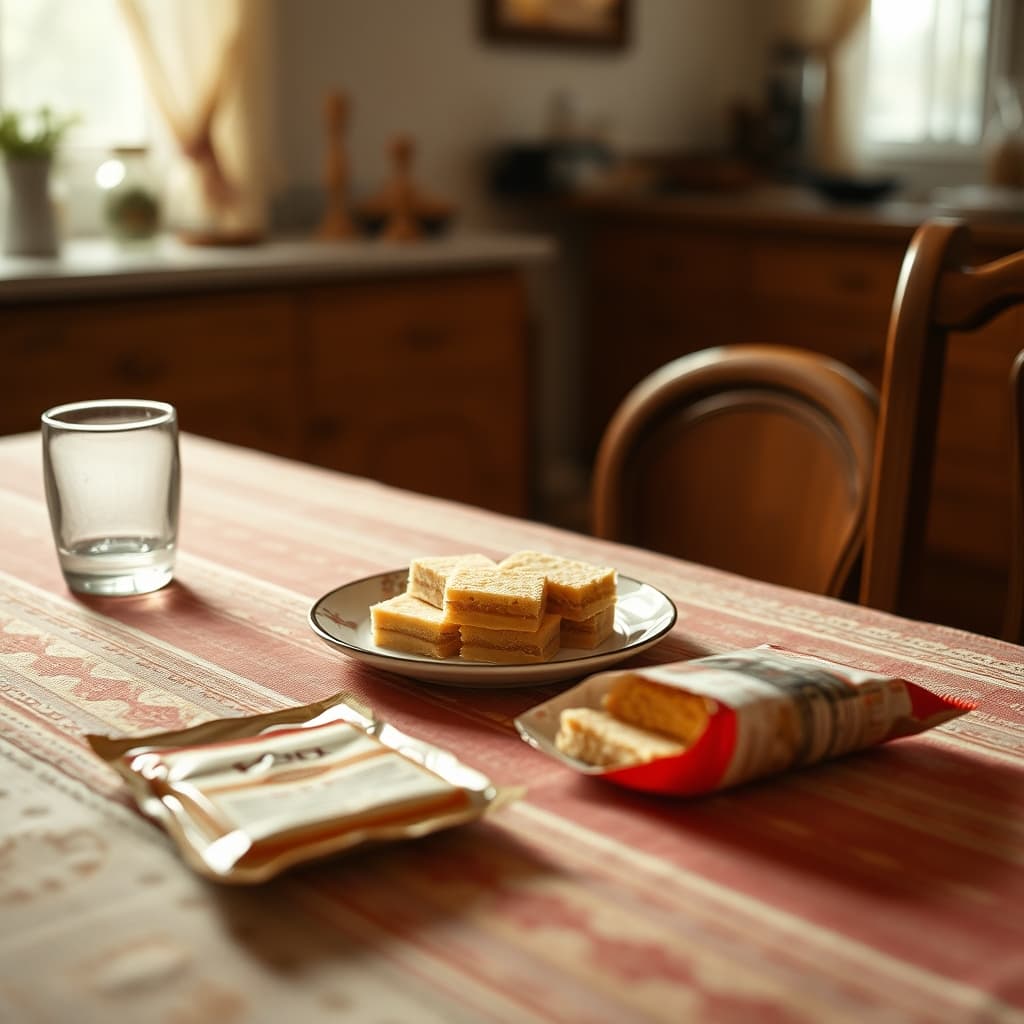
The reason it seemed to fill the entire house with one scent lay not only in its aroma, but in the scene created as it was prepared. The faint crackle of the package opening, the care with which it was placed on a plate, the increased expectancy if ice cream was spread between the layers, and the brief pause before everyone reached for a piece all belonged to the same ritual. The air inside a home is often shaped as much by anticipation as by food itself. Wafer halva did exactly that. Unlike heavy syrup sweets that dominate a room, it brought a quiet fragrance that drifted gently into every corner. It was a dessert that brightened conversation without overpowering it.
Its image in the display window was also an important part of the memory. In pastry shops and groceries, wafer halva arranged in orderly stacks behind the glass looked like a luxury children might realistically hope for. It was not impossibly far away, yet it invited imagination until it was finally brought home. That is part of why it became one of the small rewards of going into town during vacation days. Once carried indoors, however, the cool order of the window display blended into the warmth of the family table. The commercial object outside became an emotional object inside. Sometimes eaten plain, sometimes with ice cream, sometimes after tea, sometimes when guests arrived, it always did the same thing: it gathered the house under a single scent.
Wafer halva can still be found today, yet what makes it vivid in memory is less its flavor than the sense of home it carried. This sweet gained value not by displaying abundance, but by making simplicity shareable. Its thin structure, its ease of division, and its gentle smell allowed it to claim a place at the table without overwhelming anyone. Perhaps that is why, even while looking at us from the display window in the middle of holiday languor, it already carried the idea of home. When wafer halva reached the table, the whole house filled with the same scent, because that scent belonged not only to the food, but to gathering around one table, to light joy, and to the ability to be happy with simple things.
Why Did the Whole House Fill with the Same Scent When Wafer Halva Reached the Table While Looking at Us from a Shop Window in the Middle of Holiday Languor?