Eski Pano
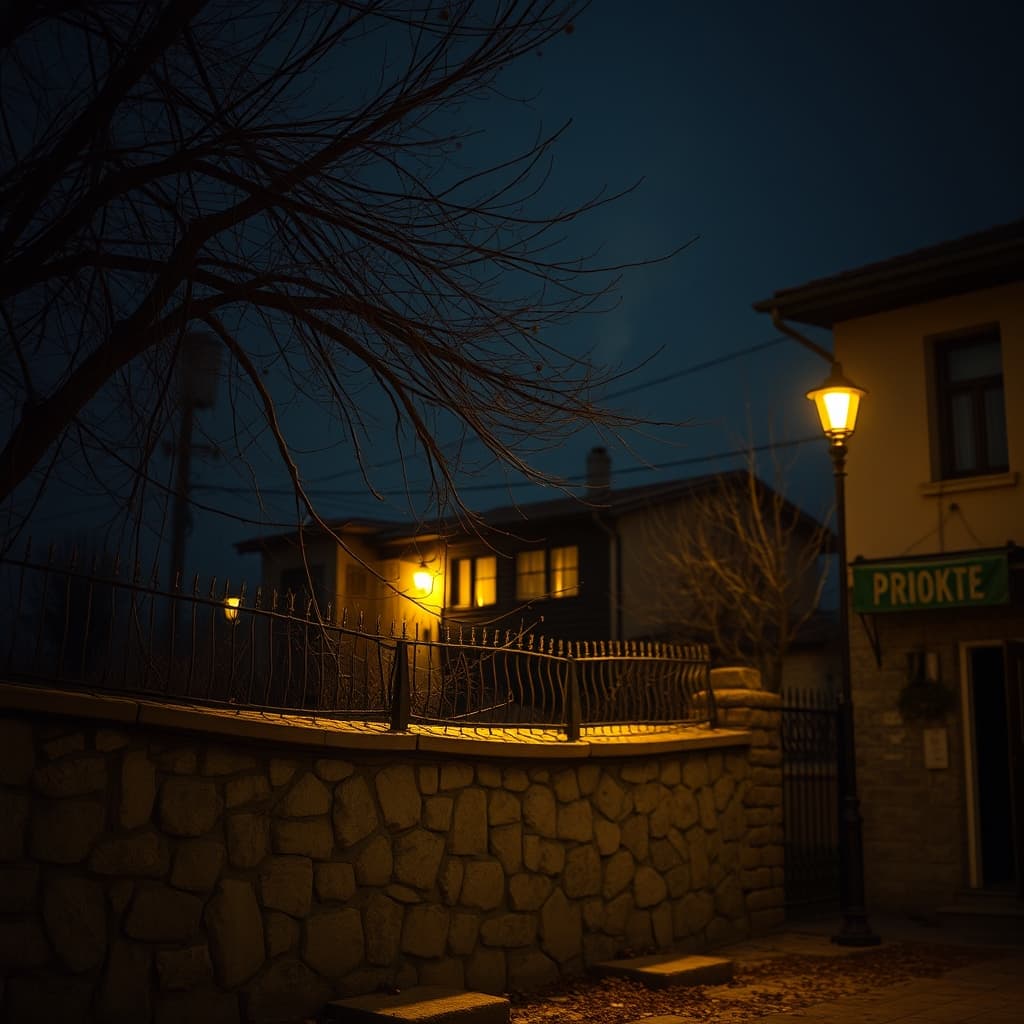
The warmth of old neighborhoods did not always come from the stove alone. Sometimes a small image encountered while walking down the street was enough to soften the whole night. The plum branches hanging over low garden walls on winter evenings were exactly such a scene. Their leaves long fallen, their slender bodies holding against the frost, those branches looked both bare and inviting beneath the yellow streetlamp. Behind them there was often the lit window of a one-story or bay-fronted house, steam rising from the kitchen, the sound of conversation from the sitting room, and the smell of coal drifting out through a half-open door. The branch itself might hold no fruit, yet the image it carried represented the invisible bond between domestic warmth and the chill of the street. That is why it remained in memory as one of the warmest scenes of old neighborhoods.
Within neighborhood culture, the garden wall was one of the gentlest boundaries between private life and public space. It was never fully closed, yet never entirely open. A branch leaning over the top was the softest way of saying: a household lives here. A passerby on a winter night could imagine, through that branch alone, that a stove was burning inside, soup was simmering in the kitchen, or children were bent over homework. In old neighborhoods, neighborliness was often built through just such indirect signs. People did not always knock on one another's doors, yet they knew one another's lights, smoke, tree shadows, and seasonal sounds. The plum branch was one of the most poetic parts of that silent familiarity.
Part of the warmth of the scene came from the fact that seasons were once felt more distinctly in city life than they often are today. Winter was sensed directly in the street, and the desire to return home could be felt clearly in the body. Hands were tucked into pockets, scarves were wrapped tight, and bread bought from the grocer was carried in a paper bag through the cold. At just such a moment, a plum branch bending over a garden wall seemed to complete the neighborhood not only with a natural detail, but with a promise of home. Behind it lay the possibility of an ordered household, an evening meal, strong tea, or chestnuts swelling on top of a stove. Often people feel the warmth of what they cannot fully see more deeply than what is visible. Old neighborhoods carried their bittersweet closeness through exactly this ability to suggest rather than display.
It is no coincidence that the plum tree held this role. Known in spring for its blossoms and in late summer for its fruit, it carried a living memory even in winter when stripped of leaves. It was one of those trees that made the passing of seasons visible, that children climbed, mothers watched, and neighbors commented on by saying it bloomed early that year. A bare winter branch hanging over a wall did not call up only that moment. It evoked the tree's relationship with the neighborhood across the entire year. Looking at it, one saw not merely a cold branch, but sensed former springs, summer fruit, and buds yet to come. Part of the warmth came from that feeling of continuity.
Today apartment walls are higher and gardens fewer, yet one of the images that still recalls old neighborhoods is this modest scene. The branch describes the unshowy side of neighborliness: a warmth that exists without displaying itself. No one arranges it deliberately, no one places a sign beneath it, yet everyone passing by receives the same inward impression. It is like the quietest greeting a home can offer to the street. That is why plum branches hanging from garden walls on winter nights are remembered as the warmest scene. They were living signs that old neighborhoods did not merely shelter people, but warmed them from a distance.
Why Were the Plum Branches Hanging Over the Garden Wall on Winter Nights the Warmest Scene of Old Neighborhoods?