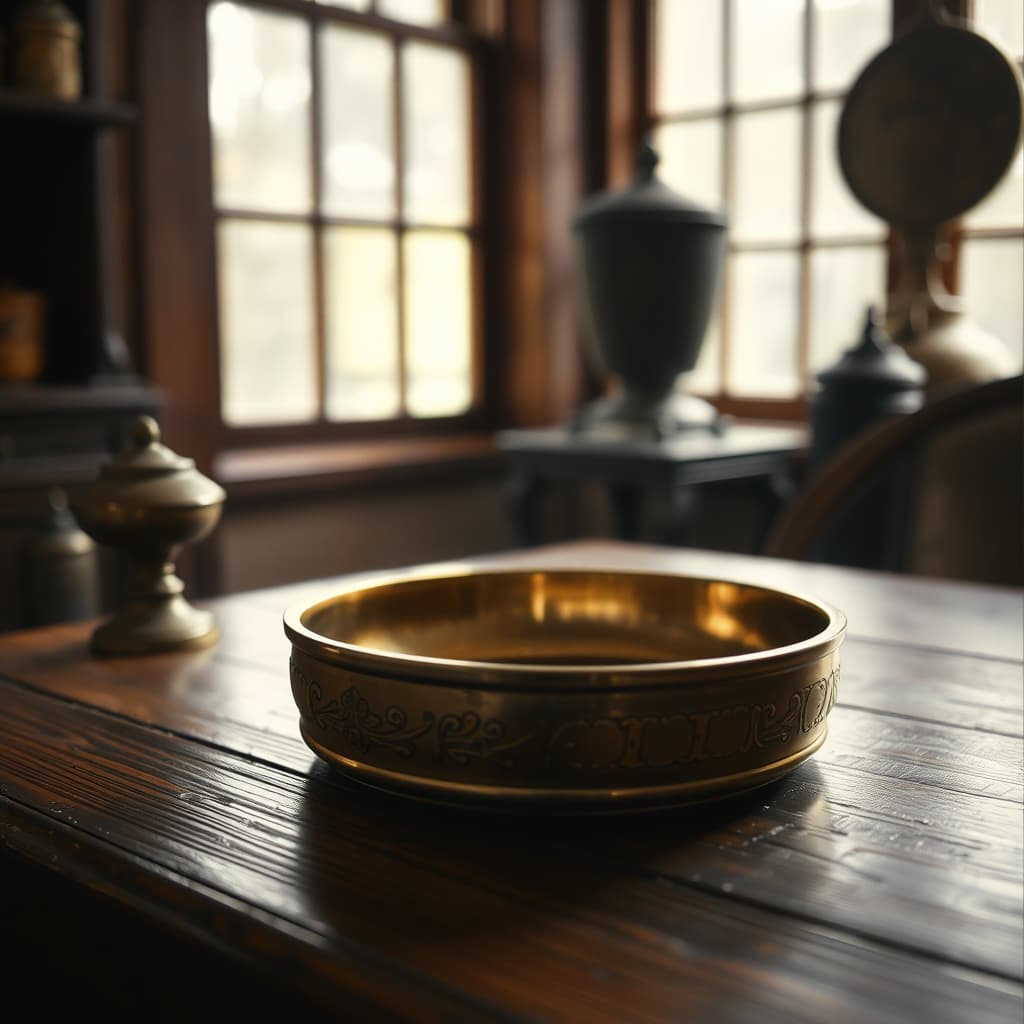
Eski Pano
Some objects occupy such an ordinary place in daily life that their value is understood only after they disappear. The brass ashtray is one of them. Once resting almost unnoticed on living room tables, coffeehouse counters, hotel lobbies, and formal guest rooms with heavy curtains, it now appears in the eyes of collectors not merely as a functional object, but as a small capsule of time. Its coolness in the hand, the worn surface, carved edges, manufacturer's stamp, and the muted shine that comes from standing in the same place for years all turn it from an accessory into an object with a story. A brass ashtray is no longer simply looked at. It is read.
From the perspective of object stories, it is no accident that brass ashtrays are attracting interest again. In a world of rapid consumption, items that endure, require care, and gain character with age have begun to seem more precious. Brass tarnishes over time, but precisely for that reason it invites close attention. When polished, its past is not erased. Another layer simply becomes visible. That is what collectors are tracing: not only the shape of the object, but the way it answers time. Even if no one knows in which hotel it was used, on which family table it stood, or in which barber shop it absorbed tobacco and conversation, the surface carries clues. A brass ashtray functions almost like a silent archive.
Its aesthetic appeal also matters. In older designs, utility and ornament were rarely separated. The broad mouth of the ashtray existed not only to hold cigarette ends, but to sit with visual balance on the table. Edges shaped with stars, leaves, or geometric lines gave a surprising grace to an ordinary household object. Today, as smoking culture has changed, the function of the item has withdrawn and the design has stepped forward. People use it to hold keys, to anchor a desk, or simply as a decorative piece. Yet even in these new uses, it continues to carry the shadow of former salons, coffeehouses, and waiting rooms. Part of its attraction lies in this doubleness. It recalls the past while accepting a new role in the present interior.
The renewed turn toward such objects in collecting cannot be explained by nostalgia alone. It is also bound to the pleasure of tracing origins. Brass ashtrays found in flea markets, antique shops, or the emptied drawers of old family homes lead people toward production histories, material knowledge, and forgotten habits of interior life. In which years were heavier forms preferred? Which workshop used which patterns? In what cities were hotel ashtrays plainer, and where were they more ornate? Questions like these connect a small object to a wide cultural map. For a collector, then, the brass ashtray is not only something purchased. It is a trail pursued.
Another reason for its renewed appeal today is the way it reminds us of the seriousness once carried by everyday things. An ashtray standing quietly on a table could influence the rhythm of a room, the manner of receiving guests, and even the arrangement of bodies in conversation. Hands moved toward it while people spoke, and pauses in talk formed around it. The smoke may have disappeared now, but the social choreography once built around the object has not entirely vanished. If the brass ashtray is drawing attention again, it is because it reminds us that the past is preserved not only in great events, but in small objects resting on a tabletop. That is the trace collectors continue to follow: the weighty, metallic, graspable imprint of daily life.
The Brass Ashtray and the Past Traced by Collectors: Why Is It Drawing Attention Again Today?