Eski Pano
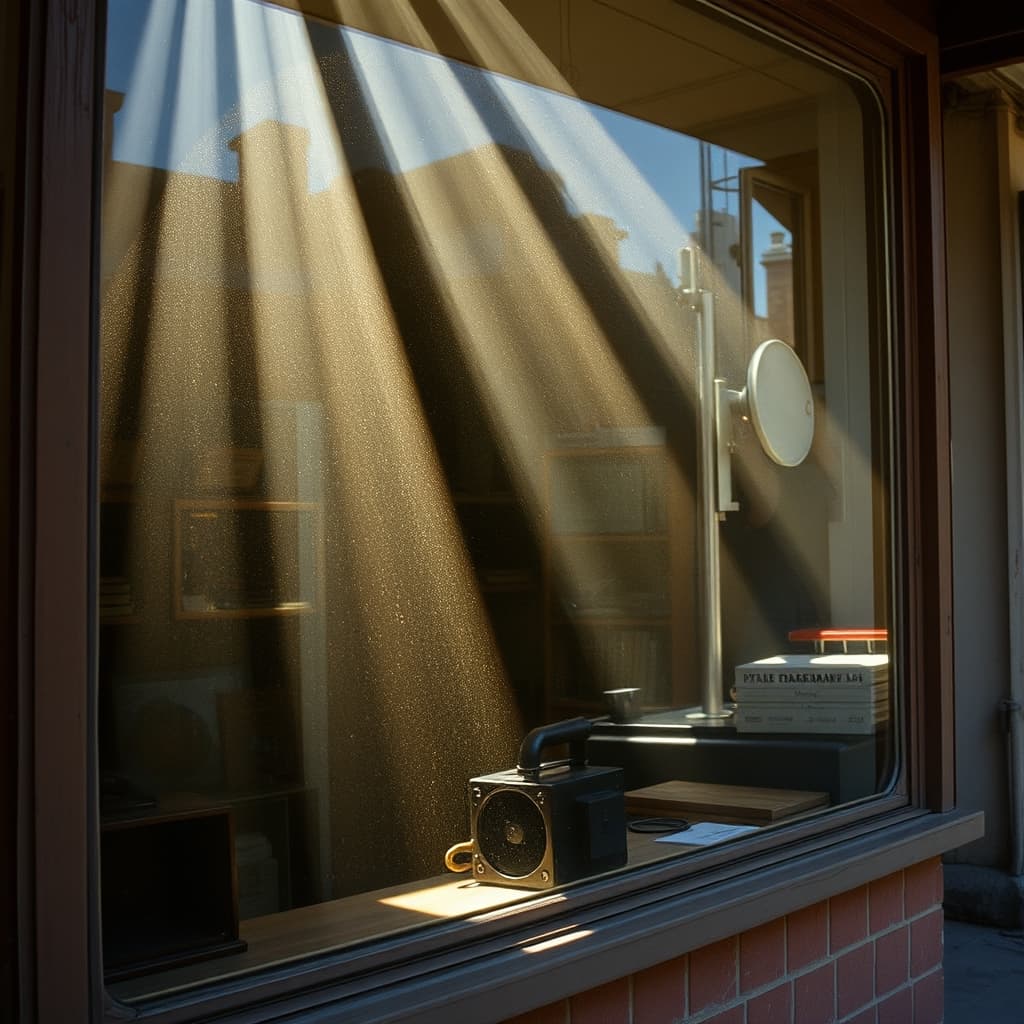
Some technologies live for a long time in a shop window before they ever enter a home. For children and teenagers wandering through the market district during the slow afternoons of summer vacation, the darkroom enlarger was exactly that kind of device. Its name might not be known at first, yet with its upright body, arms, lens, and the promise of photographic paper beneath it, it looked like a mysterious object of engineering. On the same street, a little farther down, people stood outside the television repair shop turning an antenna, shouting between rooftop and living room in the hope of clearing a snowy image. That was the technological hope of those years: getting closer to a picture. One effort tried to sharpen the screen, the other tried to summon an image onto paper by guiding light millimeter by millimeter in the dark. For that reason, using an enlarger was never only a technical act. It was a ceremony of bringing an image back into the world step by step.
From the perspective of technological heritage, the darkroom enlarger is one of the most elegant instruments of the analog age. Printing a photograph demanded as much craft as taking one. The strip of negative had to be placed, focus adjusted, exposure timed with intuitive care, and then the image would slowly emerge in the tray as if from silence itself. Compared with the instant multiplication of images today, that process loaded each frame with effort and with respect. Anyone lingering in holiday idleness before a shop window and admiring such a device was not merely looking at an expensive machine. They were looking at the seriousness of the image. The enlarger was not a tool for freezing time, but for making time visible again in darkness.
Neighborhood and domestic life touched this technology indirectly but deeply. Photography shops were not simply places for identification pictures. They were workshops holding the chemical memory of weddings, circumcisions, school portraits, and summers spent in coastal towns. Children pressed their noses against the display glass, adults asked when albums would be ready, and the shopkeeper, often wearing an apron faintly marked by stains, disappeared into the back room. The value of the photograph came partly from not reaching it immediately. Just as a television picture becoming clear through a turned antenna briefly delighted a household, finding the right light beneath the enlarger was the photographer's quiet triumph. In both cases, technology made visible the bond between patience and reward.
The enlarger's sense of ceremony also arose from the movements of the body around it. Leaning toward the machine, adjusting its height, watching time under the red safety light, lowering the paper carefully into the chemical tray: each gesture was mechanical, yet almost ritualistic. Analog engineering did not push the user away from the process. It drew hands, eyes, and the discipline of waiting into the center of the work. The person operating the enlarger was therefore not only a technician, but a witness accompanying the birth of an image. Those passing in front of the window during the loose hours of vacation could sense that too. Even standing still, the machine suggested that one day, somewhere behind that glass, a photograph would come into being.
Many people who feel renewed interest in darkroom enlargers today are not chasing only an aesthetic nostalgia. What they seek is the return of effort to the image. The device that once looked back at us from old shop windows still asks the same question: when does an image truly become ours? Is it when we possess it instantly, or when we give it time, attention, and a measure of hope? The hope that sharpened with each turn of an antenna and the patience multiplied by the enlarger in darkness were two emotions of the same era. That is why the machine is remembered as a ceremony in itself even in the middle of holiday languor. It reunited people not only with the result, but with the process that gave the result its meaning.
Why Using a Darkroom Enlarger Alongside the Hope That Grew Clearer as the Antenna Was Turned Was a Ceremony in Itself While Looking at Us from a Shop Window in the Middle of Holiday Languor