Eski Pano
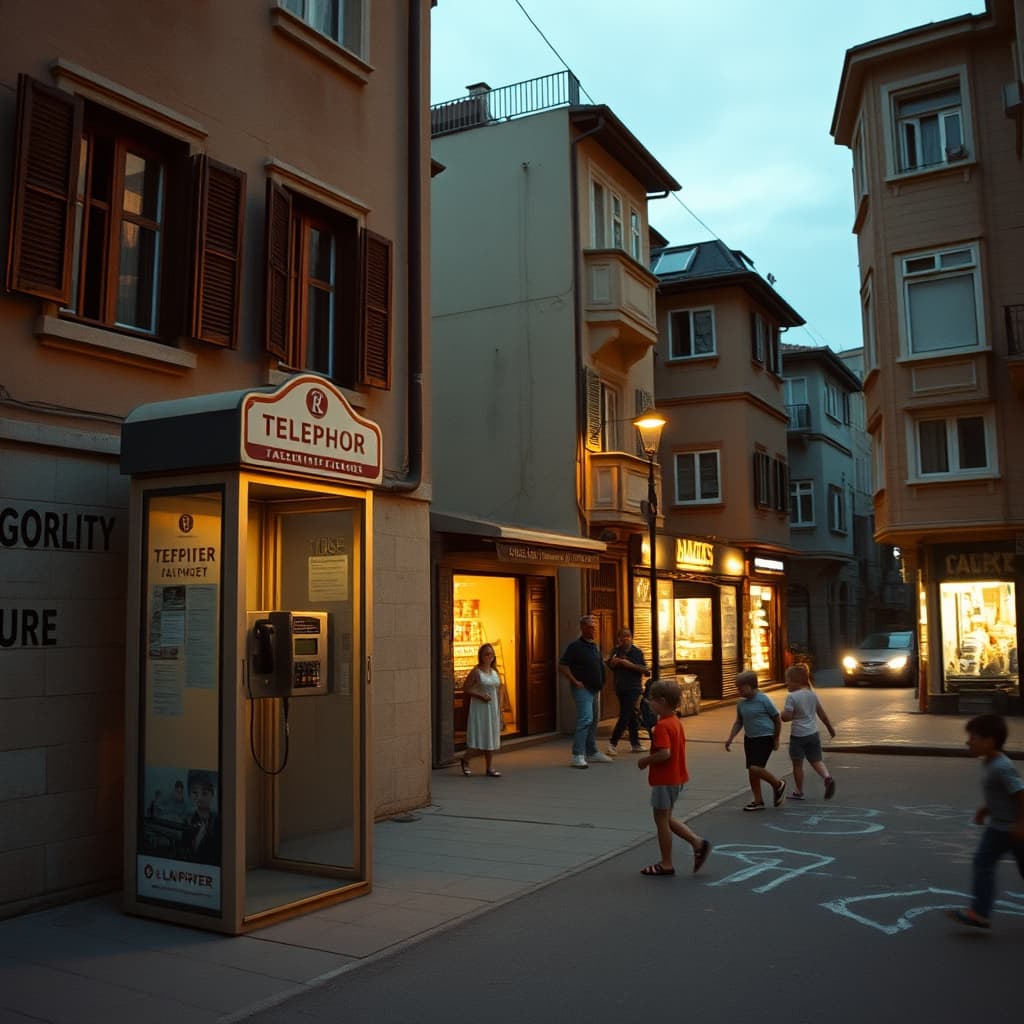
Summer evenings did not darken all at once in old neighborhoods. As the light withdrew slowly from the streets, the hurry of the day also softened little by little. Windows opened, rugs hung over balcony rails held the last warmth, and children tried to jump across the chalk lines of their games one final time before being called inside. At exactly those hours, there was always a faint expectancy around the telephone booth a little beyond the grocer's shop. That narrow cabin, its glass clouded by fingerprints, was not simply a machine. It was a small threshold where voices arriving from far away paused for a moment in the neighborhood. It was the place where someone heard from a son living in another city, where a boarding school student called his mother, or where the voice of a relative in military service entered the home for the price of a few coins.
From the perspective of time and memory, telephone booths were more than a cold detail in communication history. They were scenes that shaped the rhythm of ordinary life. Old newspapers treated tariffs, PTT notices, and long-distance calling hours with visible seriousness, yet what remained in neighborhood memory was the patience that came before the conversation itself. News did not arrive instantly, numbers were often memorized rather than stored, and coins were counted carefully in the palm. Once the booth door closed, the outside world seemed to fall silent for a moment. Those waiting nearby tried to read from a face whether the conversation had gone well or badly. For that reason, the telephone booth carried not only news, but also the emotional weight of news.
This culture of waiting left behind its own quiet habits in summer evenings. People learned not to interrupt, to read emotion from the breath on the other side, and to choose their words before speaking. If there was no telephone at home, leaving a message with a neighbor, saying "I'll call from the booth tonight," or sending a child to exchange money into coins were all ordinary gestures. The neighborhood tradesmen were part of the same rhythm. The grocer kept change aside in a drawer, the stationer let people jot numbers on the back of receipts, and on the bench beside the booth there was usually someone waiting a turn. Through the open summer windows what lingered was not half-heard sentences, but the mood carried back into the house after the call: a shoulder dropping in relief, a distracted silence, or a deep breath that seemed to say, at least we reached them.
One of the most enduring traces left by telephone booths was a form of courtesy that disciplined haste. No one could speak forever. The presence of someone waiting in line reminded everyone that time belonged to others as well. Because of that, sentences were direct, tones measured, and goodbyes unexpectedly careful. Phrases that sound simple today, such as "Don't worry," "I arrived safely," or "I'll call again next week," were once enough to dissolve the tension of an entire evening. Repeated through the same booth across many summer nights, those brief sentences created another emotional economy in the neighborhood, one in which little speech carried great meaning and news was delivered without unnecessary display.
Telephone booths have nearly disappeared from the streets, yet the habits they left behind have not vanished completely. They still live in the way we soften our voices when giving important news, rehearse our sentences before calling someone far away, and feel an unaccountable expectation settling over us at certain hours of summer evenings. The booth was not merely an old communication object. It was a small public school that taught people the value of words, the fairness of taking turns, and the grace of making room for another person even inside silence. That is why it remains on the dusty shelves of memory. It left behind not only sound, but a way of waiting for sound.
In the Dusty Shelves of Memory, the Impatient Minutes When Telephone Booths Carried the News: Which Quiet Habits Did They Leave Behind in Summer Evenings Today?