Eski Pano
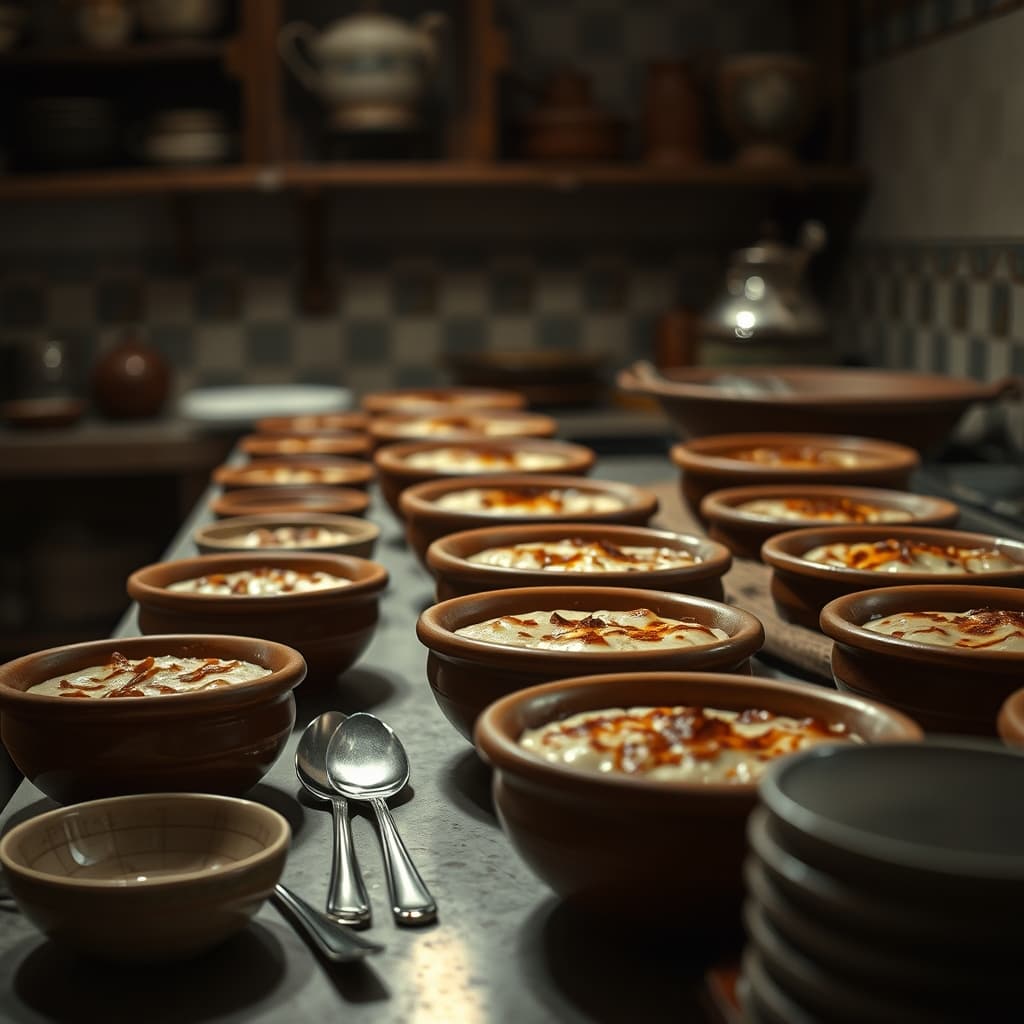
Some desserts are not eaten only with a spoon. They live like an intention moving from one home to another. Oven-baked rice pudding was exactly like that. When the earthen bowls with their lightly browned tops and thin crusted edges were lined up on a tray, the atmosphere of the kitchen changed not only because of the smell of milk and vanilla, but because something meant to be shared was approaching. In many homes, rice pudding day meant more than preparing a sweet. Alongside the stirring of rice, boiling milk, and the careful search for the right consistency, there was always the thought that a few bowls should be sent to the neighbors. For that reason, oven-baked rice pudding in older kitchens stood not only for flavor, but also for measured hospitality, neighborliness, and domestic generosity.
In the memory of taste, its strong place comes from the way it brought the everyday and the special together on the same plate. Its ingredients were not extravagant: milk, rice, sugar, a little starch, perhaps some vanilla. Yet the way it was cooked and served gave it a ceremonial air. Especially once it was placed in the oven and its surface browned, a feeling spread through the house that "today there is something different." It appeared after dinner at family tables, was carried in small bowls when guests came in the evening, and even when left to cool in the refrigerator for children, it remained under close watch. All this shows that it was not merely a recipe, but a dessert that organized time. The sharing culture of an era becomes visible in exactly such foods, because the measure of hospitality is considered together with household economy, yet never reduced by it.
Part of the reason rice pudding days carried a culture of sharing lies in the logic of portioning. Instead of one large dessert baked in a single tray, the pudding was divided into individual bowls, making each person's share visible from the beginning. That practical division created the idea of distribution reaching everyone in the house and even the next-door neighbor. In some homes one bowl went to an ill neighbor, in others to a newly moved family upstairs, and sometimes a few were set aside in advance for evening guests. The dessert itself was simple, but the circulation around it was rich. The sound of the spoon touching the pot, the bowls lined up on the counter after coming from the oven, the cinnamon sprinkled above or the plain browned surface left untouched, all made the house's language of sharing visible. Rice pudding often moved through the neighborhood like a quiet sentence saying, "we thought of you too."
Its special place in older kitchen culture also came from how well it suited a domestic understanding that avoided waste without ever feeling stingy. The sense of abundance in rice pudding did not come from expensive ingredients, but from well-measured proportions. Letting it cook in a large pot without overflowing, building its consistency patiently, dividing it evenly into bowls, and browning the tops with equal care carried not only visible discipline in the kitchen, but an invisible ethic as well. Telling children to wait until it cooled, placing spoons beside the bowls before guests arrived, and reserving several portions especially for the next day were refined ways of managing time and hospitality inside the home. Rice pudding day created a scene of domestic manners that extended beyond the family table.
When we ask today why oven-baked rice pudding reminds us of an era's sharing culture, the answer lies in both its simplicity and its circulation. It is one of those desserts capable of producing warmth without any grand display and of drawing many small joys from a single tray. People kept that culture alive not only by eating it, but by carrying it to others, by waiting for it to cool, and by starting new conversations when the bowls were returned. Rice pudding days therefore remain not only on the palate, but in neighborly relations, kitchen order, and family memory. Sometimes what carries the sharing culture of an older era is exactly this: not the last spoonful left at the bottom, but the memory of with whom that spoonful was shared.
Oven-Baked Rice Pudding Days: How Does It Carry the Sharing Culture of an Era?