Eski Pano
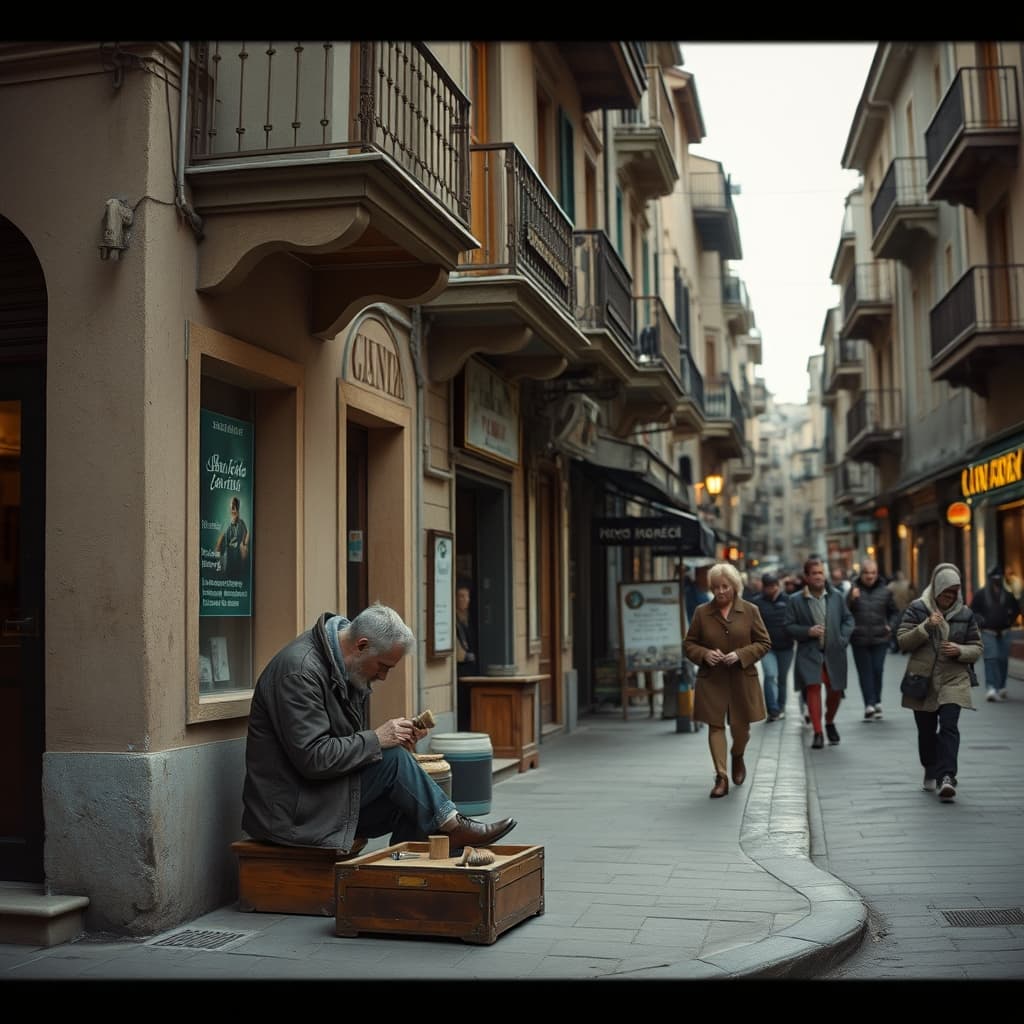
In older cities, some corners described people before they described direction. The corner held by the shoe shiner with his stool, brushes, and small box was one of them. In the early morning, even before the shops had fully opened, that corner already showed signs of preparation: brushes lined up, polish checked, cloths shaken out. The shoe shiner stood there not only like someone waiting for customers, but almost like one of the invisible workers who began the order of the street. Office clerks passing by, children on their way to school, and tradesmen heading toward the market all knew that the corner was occupied. This permanence is the first clue to understanding why it took such a central place in old city life. Some occupations do not merely provide service. They create a feeling of public continuity.
Within neighborhood culture, the shoe shiner belonged to those forms of labor attached to the rhythm of street life itself. He was as settled as a shopkeeper, yet as exposed to open air as an itinerant vendor. That in-between position made him highly visible and in contact with nearly everyone. Once he settled into a corner, it became more than a workplace. It turned into a small station of brief conversation, morning greetings, and passing news. While people sat for a few minutes to have their shoes polished, they spoke about prices in the market, children's school matters, crowds at public offices, or preparations for a wedding. In a sense, the shoe shiner worked for the city's memory by listening and remembering.
Another reason this corner watch stayed so close to the heart lies in the visible connection between appearance and social dignity in older cities. Shining shoes were seen not merely as cleanliness, but as a sign of care and seriousness. Civil servants on their way to work, students preparing for ceremonies, and bridegrooms heading to engagements or holiday visits all treated shoe polishing as a small yet meaningful act of readiness. The shoe shiner was the unseen partner in that preparation. The rhythmic sound of the brush, the smell of polish, and the foot extended onto the wooden box created a brief scene of care in the middle of the street. It was also the kind of scene visible from above. Those sitting on wind-catching balconies watched the man fixed to the corner below and read the pulse of the city partly through that repeated motion.
The shoe shiner settled gently into urban memory precisely through repetition. To be seen in the same corner every day transformed that place from something personal into a shared point of reference. Phrases such as "turn where the shoe shiner sits" or "come up to the man at the corner" show how an occupation could be written into the map of a city. For children, that corner meant learning patience; for adults, it offered a brief pause; for local tradesmen, it signaled that the day had begun. The shoe shiner was usually not someone about whom great speeches were made, but someone whose presence everybody accepted as natural. That quiet acceptance is one of the strongest connective tissues of old city life. A city is made not only of buildings, but also of people who remain in their place day after day.
When we think today about why the shoe shiner's corner watch is still remembered, the answer lies partly in that simple scene where labor remained visible. Before the speed of modern life, he represented care maintained by human hands on the surface of the city. His corner was not only a place where shoes were made to shine. It was also a place where greetings, waiting, and small talk were polished. That is why it found its place in the heart of old urban life. The corner showed the city's order: unhurried, yet never falling apart. Watched from balconies, pavements, and shopfronts, that everyday scene continues even now to leave a warm, modest, and lasting trace in urban memory.
Why Did the Shoe Shiner's Corner Watch Take Root in the Heart of Old City Life by Settling Gently into Urban Memory on Wind-Catching Balconies?