Eski Pano
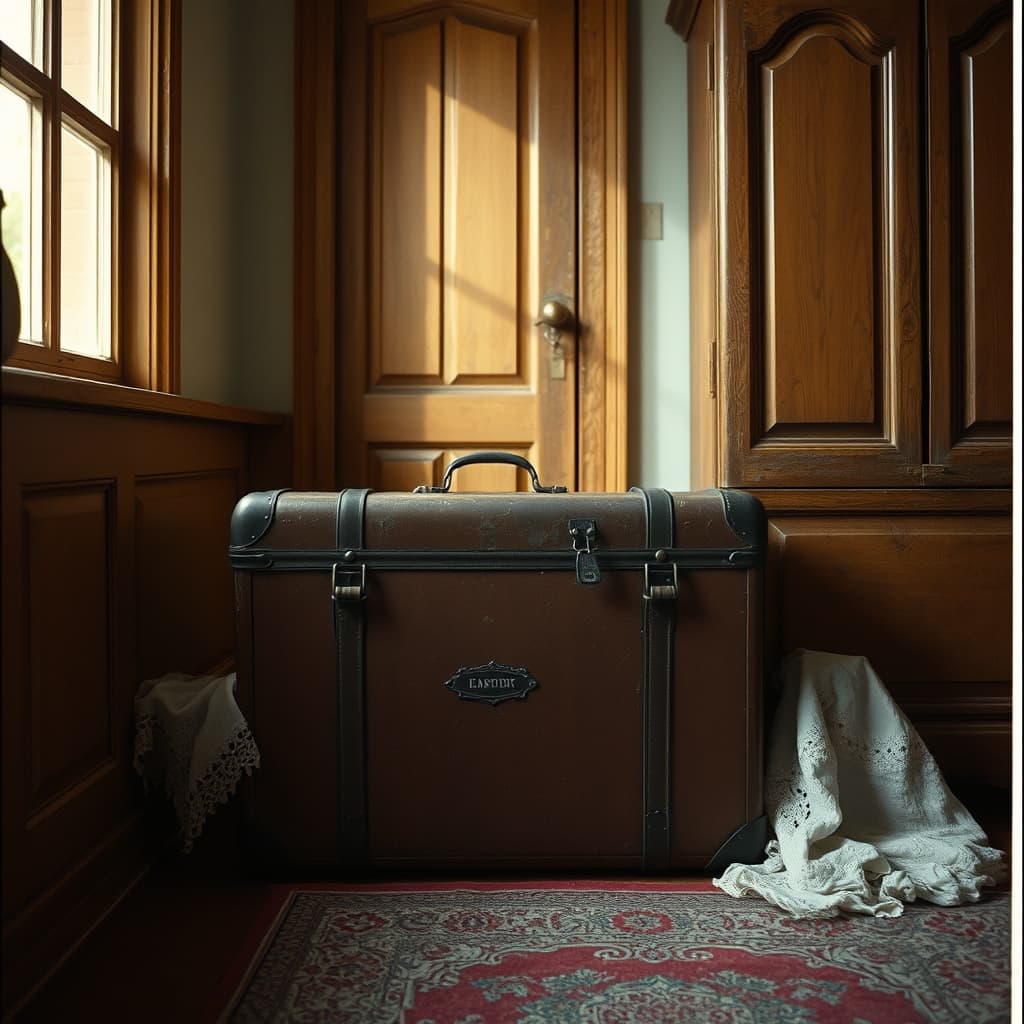
Some objects shape the order of a home even when they are not actively being used. In many grandmother's houses, the old suitcase lived exactly like that. It was neither opened constantly nor ever fully removed. Resting beside a wardrobe, under a divan, or in a fixed corner of the room, it gave silent yet unquestioned weight to the place it occupied. Its leather was slightly worn, its metal locks a little darkened, and its handle had long memorized the pressure of hands. For a child, that suitcase meant both curiosity and prohibition. For adults, it was the secure place where dowry pieces, winter linens, old clothes, or things kept aside for "someday they may be needed" were gathered. The unchanging corner of grandmother's house was therefore not only a spatial constant, but an emotional one.
From the point of view of object stories, the old suitcase mattered where design and habit met. It was not a neutral storage box like those of today. Through its material, smell, and appearance, it became part of the house's aesthetic memory. Its angular form, brown-toned surface, patterned lining, and the solid sound it made when closed gave it a character beyond that of an ordinary container. In many homes, the suitcase was never treated as excess to be hidden away even when no trip was planned. Its visible presence showed the house's relationship with time. The memory of past journeys, the possibility of future visits, and the needs of present storage all met in the same body. At that point, aesthetics could no longer be separated from everyday use.
The rituals of grandmother's house quietly formed around that suitcase. At the turning of seasons, it was often among the first things to be opened. From it emerged quilt covers smelling of mothballs, lace tablecloths, special cloths reserved for holidays, or cardigans knitted long ago for children. Opening it was almost a ceremony in itself: finding the key, turning the lock carefully, raising the lid slowly, and letting the scent of stored fabric spread through the room. For children, this meant looking into one of the house's hidden layers. For elders, it meant checking the continuity of order. Which cloth would be spread where, which item would be folded again and returned, and which might now be given to someone else were often decided at such moments. The suitcase thus carried not only the practical flow of domestic life, but also its emotional accounting.
Its permanence in that corner also guided domestic behavior. The corner was rarely rearranged, nothing random was casually placed upon the suitcase, and even when guests arrived its presence needed no explanation. Family memory had already accepted it as part of the natural order. Children learned not to climb on the object beneath the divan, younger women listened to why grandmother had kept certain cloths, and grandchildren intuitively sensed through its contents the family's older relation to cities, trains, and moves. By balancing use and keeping, visibility and privacy, the suitcase became a quiet archive shaping the rituals of home life.
When we ask today why the old suitcase still feels so touching, the answer lies not only in what it carried, but in the sense of time it produced. As the unchanging corner of grandmother's house, it was one of those objects that suggested that even when many things changed, some things could remain in place. The order of a home is established not only by tables, curtains, and sofas, but also by objects that wait, preserve, and gently bring out the past when needed. That is why the old suitcase remains unforgettable. Within a certain understanding of domestic life, it represented not only the visible face of order, but the layers held in reserve behind it. Even with its lid closed, it could still create ritual.
The Old Suitcase and the Unchanging Corner of Grandmother's House: How Did It Shape the Rituals of Home Life?