Eski Pano
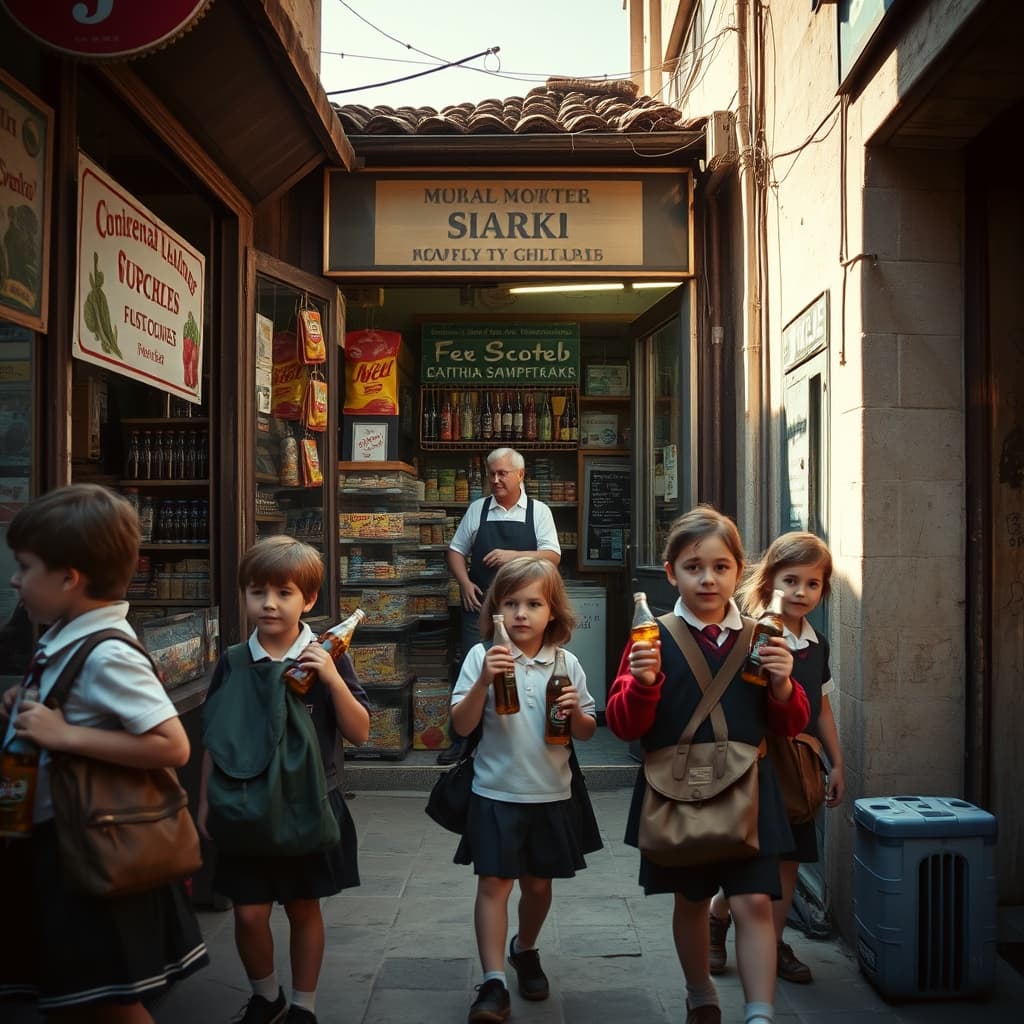
There was a time when walking home after school was not the short transition that today leads straight to an apartment door. Schoolbags slipped a little on the shoulder, the buttons of uniforms loosened, and the tiredness of the day turned into a desire to linger in the street before one had even reached the corner. At that hour the neighborhood grocer, kiosk, or small shop with a soda cooler became for children not merely a place of purchase, but the day's second stop. The mist on glass bottles, the sound of a cap being opened, and a few minutes spent lingering outside the shop gave the time between school and home an entirely different meaning. What we call a soda break was in fact a small social interval that allowed childhood to stretch a little longer in the street.
Viewed through the lens of neighborhood culture, these pauses were visible parts of the trust built between shopkeepers, children, and families. The grocer of the neighborhood was usually not only someone who sold goods, but also a keeper of memory who knew which child belonged to which home, what each liked, and what had been written in the family credit notebook. The children gathering outside the shop after school did not only drink soda. They also entered the adult world of the neighborhood from a safe distance. The shopkeeper might say, "give my greetings at home," slip a small candy in with the change, or open the bottle without hurry and allow the child to sit for a moment on the curb. These modest gestures created a bond that extended beyond commerce.
What made the soda break strengthen that bond was above all its continuity. Stopping at the same shop every day, seeing the same face, recognizing the same biscuits or chewing gum on the shelf made the neighborhood feel emotionally secure to a child. The shopkeeper, in turn, watched the children grow step by step, first with a primary school satchel, later coming alone to buy bread, and years afterward shopping on behalf of their mothers. This familiarity kept the neighborhood from remaining an abstract place and turned it into a web of relationships. A bottle of soda was therefore not just a refreshing drink, but the taste of invisible ties between a child and the world around them.
Within this scene there are also subtle signs of the period's social structure. The fact that children were allowed to linger outside a shop, to exist on their own in the street, that everyone in the neighborhood knew one another to some degree, and that the shopkeeper occupied a position almost like a distant relative all point to a public life different from the more enclosed cities of today. The hours after school were also the hours when mothers watched the street from the window and the daily rhythm of the neighborhood was carried by children and shopkeepers before fathers returned from work. The soda break was therefore not only a childish habit, but a living detail that showed how the order of the neighborhood functioned.
When we remember the sound of those glass bottles today, we are in fact recalling something larger: an older order of trust in which childhood was tied to the street, the street to the shopkeeper, and the shopkeeper to the family. If the hours spent in a post-school soda break have not been forgotten, the reason is greater than the delight of a cool drink. Those hours strengthened the bond with neighborhood tradesmen in an ordinary and natural way. A shopkeeper who knew a child's name, remembered which drink they preferred, and gently warned them not to be late going home was part of the neighborhood's quiet etiquette. That is why the soda break may seem small, yet it remains a large key to understanding older neighborhood culture.
How Did the Hours Spent in a Post-School Soda Break Strengthen the Bond with Neighborhood Shopkeepers?