Eski Pano
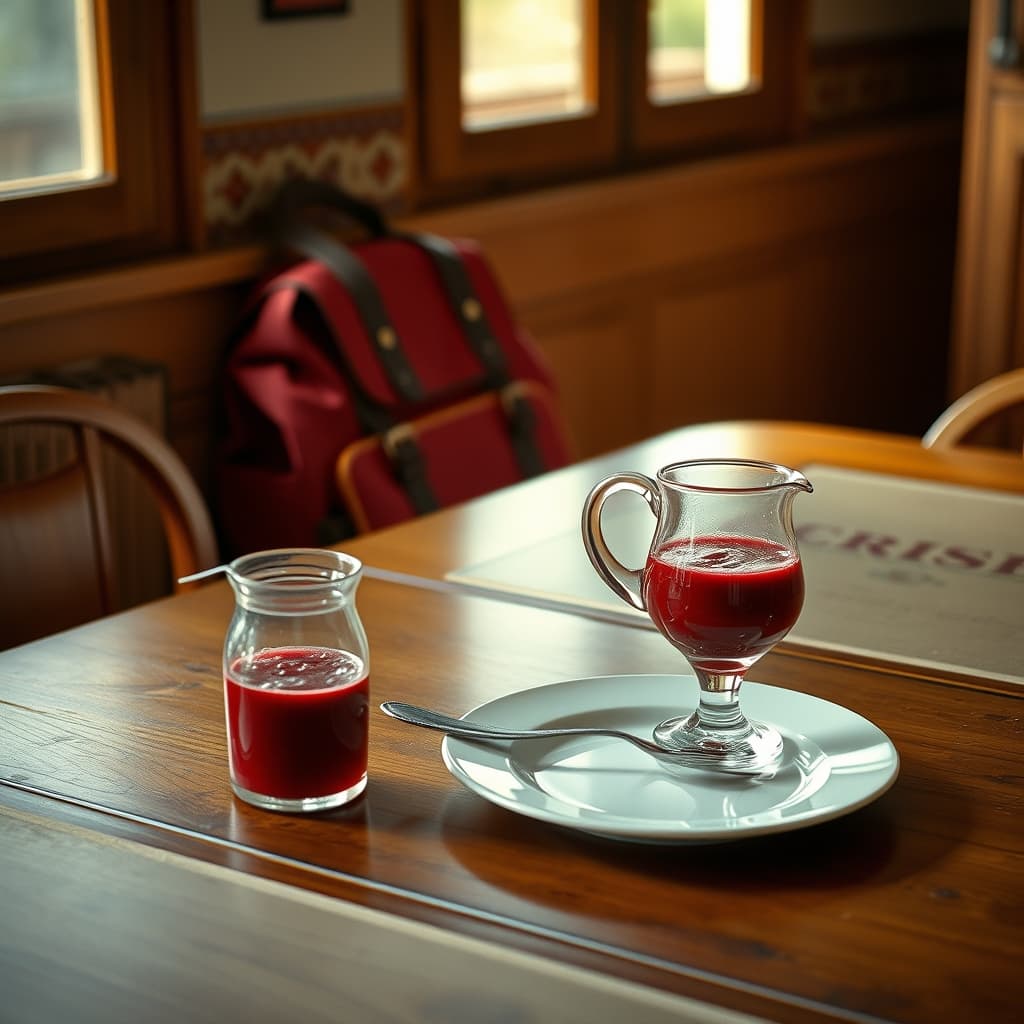
There was a time when opening the door after school meant being met not only by the smell of food, but also by the deep color of sour cherry sherbet waiting in a cool corner of the kitchen like an invitation that softened the tiredness of the day. No sooner had the child set down the schoolbag than the lid of the pot or pitcher was lifted, and sometimes the first spoon reaching the plate looked for that sweet-and-tart coolness even before the meal began. Homemade sour cherry sherbet was far more than a simple drink. It carried the patience of fruit saved from summer, the hand of a mother or grandmother who measured by instinct, and a sense of consistency that shifted slightly according to each person in the house. For that reason, its taste settled not only on the tongue, but within the feeling of care shared by the family.
Seen through the lens of taste memory, the sherbet's special place comes from the way it joined seasonal abundance to domestic order. When sour cherry season arrived, the fruit was sorted, stems removed, and large pots set to boil. Foam was skimmed away, sugar reduced in some homes, balanced with lemon in others. The recipe lived less as something written than as knowledge held in the hands of the women of the house. In older kitchens, the ways of storing, cooling, and serving the sherbet mattered almost as much as the recipe itself. The glass pitcher chosen, what was served beside it, and whether it appeared before or after the table was fully set all revealed small household styles that differed from one home to another. It found its special place among family recipes precisely because a stable core met personal touch.
Its particular meaning after school belonged to the daily rhythm of childhood. For a child stepping in from the street, the cool sherbet waiting in the kitchen did more than quench thirst. It felt like a sign of being welcomed back into the protective order of the home. The image of the first spoon reaching the plate carries weight for a reason. In many homes, tasting the sherbet from the pot or pitcher before the meal properly began counted as a small privilege. The gentle tartness left by the sour cherries, the soft sweetness that followed, and the red trace remaining at the rim of the glass became details that childhood memory rarely erased. As much as the flavor itself, the identity of the person who prepared it and the manner in which it was offered became part of the taste.
Another reason this recipe occupied such a special place within the family was that it made generational transmission visible. Although sour cherry sherbet might be made through similar steps in every house, the result was never entirely the same. In one home it was denser, in another lighter, in one lightly scented with clove, in another left to the fruit's own acidity. In this way the recipe became a quiet signature of a household's palate and character. When the child grew up and tasted the same drink somewhere else, the first comparison was often not the amount of sugar, but whether that familiar afternoon from home had returned. Some flavors are remembered not by measurement, but by life.
When we think of homemade sour cherry sherbet today, we do not imagine only fruit, sugar, and water. We also remember the warmth of returning from school, the stillness of the kitchen, a spoon waiting beside a plate, the cool red held in a glass, and the language of care established inside a family. The reason it holds such a special place among family recipes lies exactly there. Sour cherry sherbet preserved not only a season, but the emotional climate of a household. What the first spoon remembers is not only flavor, but the peace of coming home.
Homemade Sour Cherry Sherbet Remembered with the First Spoon Reaching the Plate After School: Why Does It Hold a Special Place Within Family Recipes?