 Eski Pano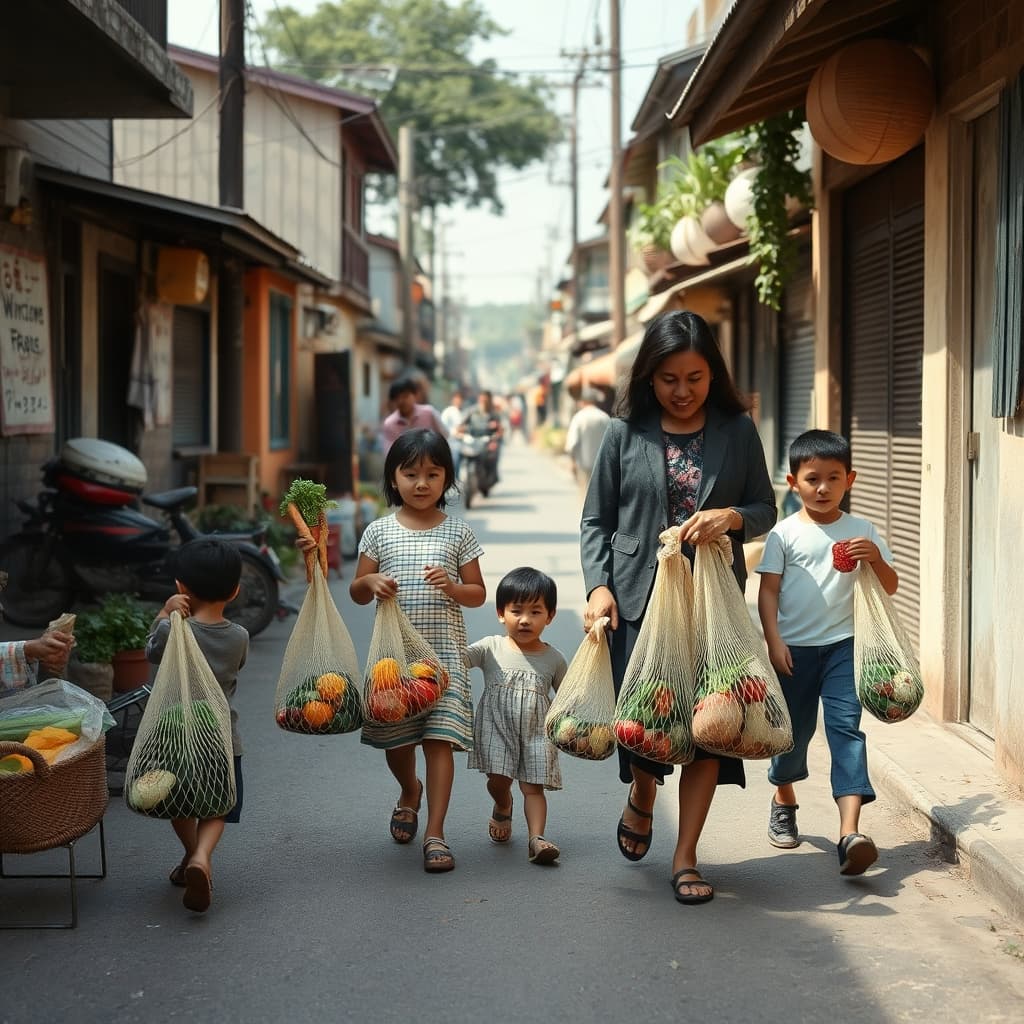
A mesh bag filled on the way home from the market made household shopping visible. Tomatoes pressed against the net, greens protruded, and the shapes of onions, fruit, or bread could be recognised before the bag reached the kitchen. For a child walking beside an adult, the contents mapped the coming meals. The bag also revealed weight: it lengthened as it filled, pulled at the hand, and sometimes required a change of grip before the next corner.
Market routines varied by town, neighbourhood, season, household means, and available transport. Some families carried several mesh bags, others combined them with baskets, cloth sacks, carts, or later plastic carriers. Children might hold a light bag, guard eggs, count purchases, or simply follow through the crowd. It would be misleading to turn every journey into cheerful participation. Carrying could be tiring, compulsory, and unevenly divided.
The Net Required Decisions at Every Stall
Because mesh offered little protection, placement mattered. Firm produce went below, delicate fruit needed space, and damp greens could affect paper-wrapped goods. A knot, stretched loop, or broken strand had to be noticed before the bag failed. Experienced shoppers redistributed purchases between hands and bags, considering not only price and quality but the route home. Shopping skill continued after payment through packing and carrying.
The bag’s openness changed social interaction. A neighbour could see what was in season and ask about price or quality. A shopkeeper recognised a regular household’s preferences. Yet visible purchases could also invite comparison or unwanted judgement, especially when budgets differed. Neighbourhood familiarity offered useful information, but did not make private circumstances public property.
Children Learned the Route Through Weight and Pauses
The journey home had repeated landmarks: a fountain, bakery, bus stop, steep street, shaded wall, or shop where the load was briefly set down. A child given one handle learned to match the adult’s pace. Resting was practical rather than a sign of failure. Heavy bags, traffic, heat, rain, and uneven pavements made the route demanding, and loads should never be romanticised when they exceeded a child’s safe ability.
At home, the market continued. Bags were emptied, produce sorted, greens washed, and ingredients assigned to immediate use or storage. The child who carried a bag might watch the table fill and understand how separate purchases became a household plan. This connection between public market and private kitchen helped fix the outing in memory more firmly than any single item.
A Reusable Bag Carried Repair as Well as Produce
Mesh bags could be folded small, washed, dried, and used repeatedly. A loosened handle or torn section might be knotted or mended, although a weak repair could fail under weight. Material and construction varied, so durability should not be idealised. Reuse often reflected practicality and limited alternatives as much as environmental intention. The bag remained valuable because it returned to service.
For a Digital Nostalgia Archive, the market mesh bag matters because it connects food supply, neighbourhood movement, household labour, and childhood responsibility. The remembered journey was not only colourful produce swinging at knee height. It included choosing, packing, carrying, pausing, unpacking, and planning. What stayed in memory was the route by which the market entered the home: visible through the net, shared between hands, and gradually transformed into the week’s meals.