 Eski Pano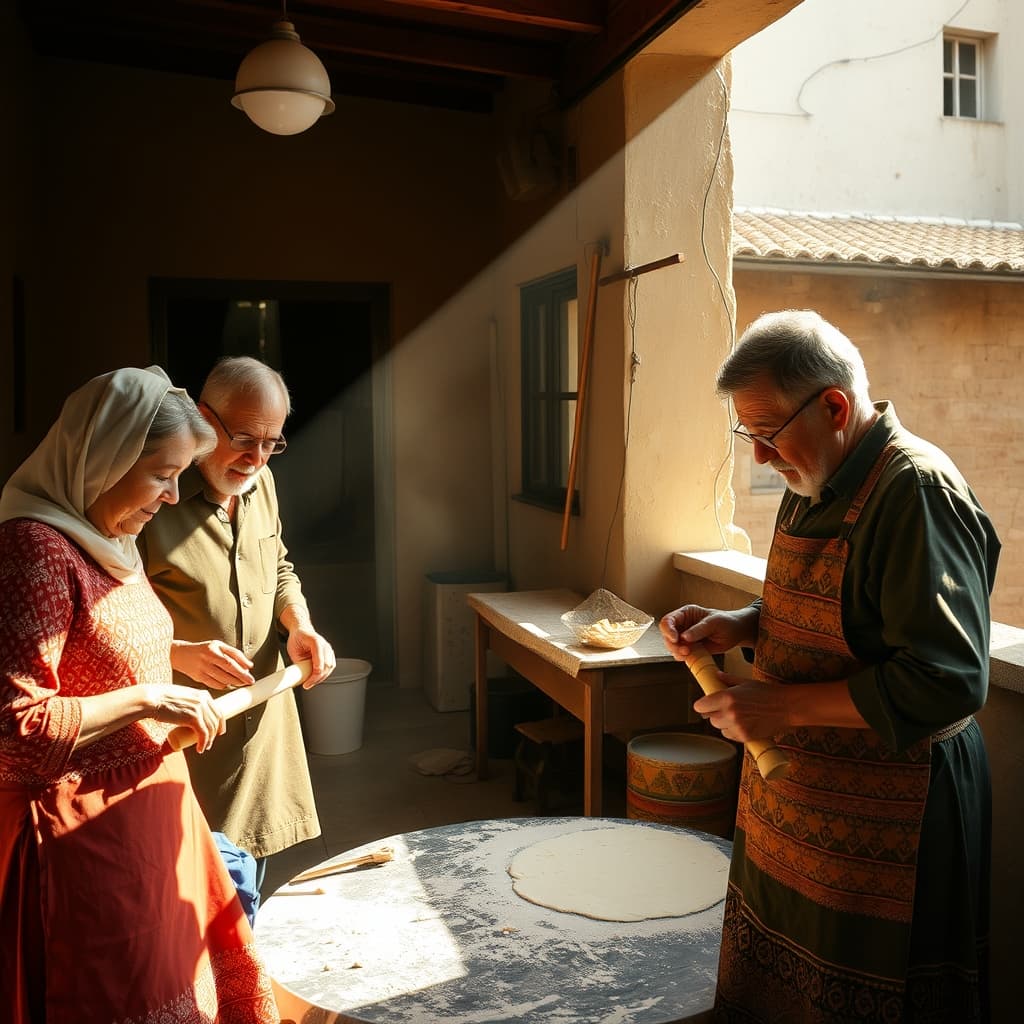
A courtyard prepared for yufka looked different from a courtyard at rest. Low tables were positioned where hands could work comfortably, cloths protected dough and finished sheets, flour was kept within reach, and the cooking surface was placed with attention to heat and smoke. The transformation was temporary but precise. An outdoor domestic space became a working kitchen whose success depended on sequence, cooperation, and knowledge of the weather.
The dough itself demanded judgement that was difficult to reduce to written instruction. Its softness affected rolling; the amount of flour changed how it moved under the pin; thickness had to suit cooking and later storage. Experienced hands recognised problems through touch and appearance. Others supported the work by dividing portions, carrying fuel, tending heat, moving cooked sheets, or keeping the area organised. The morning’s rhythm came from tasks meeting at the correct moment.
The Courtyard Became A Working Kitchen
Shared preparation could connect neighbouring households because the workload was easier to manage in company. A person skilled at rolling quickly might take that position, while another watched the griddle or arranged the finished yufka. Conversation accompanied the labour, but it did not erase its physical demands. Repeated bending, heat, flour dust, and the pressure to finish a large quantity made the day tiring. Describing the scene honestly means recognising both sociability and work.
Children often encountered the preparation from its edges. They might be asked to carry something small, warned away from the heat, or offered a freshly cooked piece. What they remembered later could be a cloud of flour, the sound of the rolling pin, the smell near the griddle, or the unusual sight of several homes represented in one courtyard. Such fragments explain why a food-making day could remain vivid even for someone who never learned the full technique.
Flour, Fuel, And The Local Shopkeeper
The courtyard did not operate separately from the neighbourhood economy. Flour, salt, cloth, fuel, storage materials, and missing utensils came through local suppliers and shopkeepers. Quantities might be discussed in advance; a forgotten item could be obtained quickly because the seller understood what the household was preparing. Trust mattered, especially where purchases were recorded for later payment or where familiar customers relied on advice about availability and quality.
This exchange strengthened neighbourhood ties in a practical way. The shopkeeper was not merely a symbolic figure of warmth, and the households were not participating in an idealised community without disagreement. Their relationship grew through repeated transactions, reliability, proximity, and knowledge of one another’s routines. A yufka morning made that network particularly visible because preparation concentrated many needs into a short period.
Fewer homes now have access to suitable courtyards, outdoor cooking arrangements, or the uninterrupted time required for collective preparation. Yufka continues through homes, bakeries, markets, and regional practices, but the organisation around it changes. Preserving the memory of the courtyard morning does not require claiming that every neighbourhood worked the same way. It requires documenting a specific form of food labour: skilled hands, shared equipment, local supply, and cooperation turning flour and water into something that could support a household long after the tables were folded away.