 Eski Pano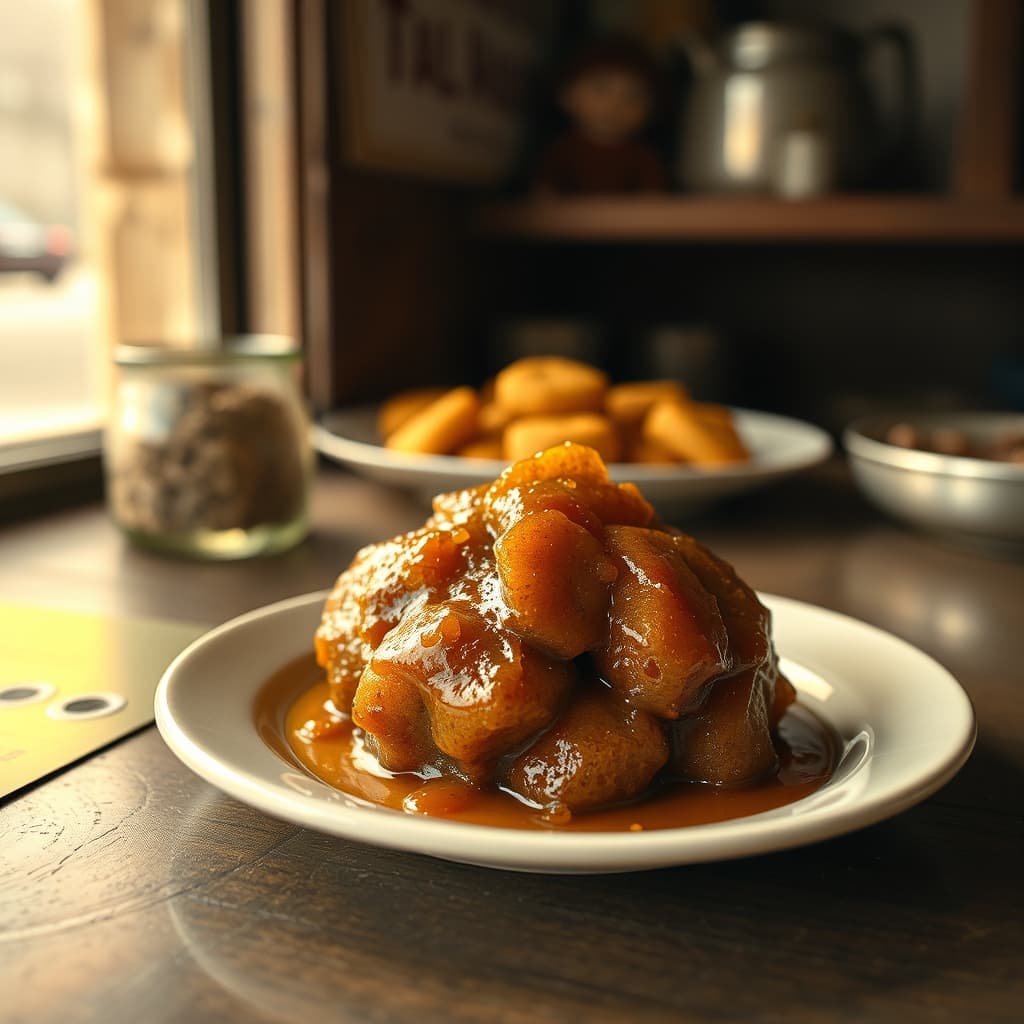
Kazandibi announces itself through contrast. The pale, soft body of the milk pudding meets a darkened surface whose flavour is deeper, slightly bitter, and caramel-like. On the plate, that browned layer may appear as a burnished top after the portion has been turned out. The visual difference is not decoration added at the end; it comes from the way the pudding meets the heated tray and from the judgement required to develop colour without losing the desired texture.
That balance helps explain why kazandibi became a test of familiarity as much as appetite. A regular customer might notice whether the browned layer was too faint, too forceful, evenly developed, or attached cleanly to the serving. Preferences vary, and household versions do not always resemble shop versions exactly. The useful cultural point is not to declare one plate universally correct, but to see how repeated tasting creates a local language of texture and degree.
The Burnished Layer That Defines The Dish
Preparing a tray involves attention to heat, timing, thickness, and cooling. The work continues after cooking because the pudding must settle before portions can be cut and lifted. A rushed service can damage the shape; an overworked surface can change the balance of flavour. Experienced makers develop practical signals through sight, resistance, smell, and the behaviour of the tray. These are workshop skills, even when the workshop is a modest kitchen behind a neighbourhood shop.
At home, kazandibi may enter memory through a family attempt, a special visit, or a plate carried back from a trusted muhallebici. Recipes and techniques can differ, and memories often attach themselves to the person who chose the shop or served the dessert rather than to a formal culinary history. A child may first remember the dark surface as something unexpected, then learn that the contrast is precisely what gives the dish its identity.
A Pudding Shop Between Home And Street
The neighbourhood muhallebici occupied a useful position between domestic cooking and public dining. It could provide a brief stop after shopping, a planned family outing, a takeaway dessert for guests, or a calm table at the end of an evening. Marble-topped tables, metal trays, glass displays, water carafes, and the movement of spoons formed an atmosphere based less on ceremony than on dependable repetition. Customers returned because they knew what kind of pause the place offered.
Such shops also preserved specialised labour. Preparing several milk desserts required organisation, clean equipment, temperature control, and an understanding of how each tray would behave during service. The work was not frozen in time; ingredients, regulations, equipment, rent, and customer expectations changed. Treating the muhallebici as an unchanging nostalgic stage would hide the adaptation necessary for it to survive.
Kazandibi remains meaningful because its defining feature cannot be separated from controlled transformation. Milk, starch, sugar, heat, and time produce a surface that looks close to failure yet is valued when handled well. That tension gives the dessert its character and gives memory something precise to hold. Preserving its place in a digital nostalgia archive means recording not only sweetness, but the skilled browning, careful serving, family preferences, and neighbourhood businesses that carried the plate from kitchen knowledge into shared urban taste.