 Eski Pano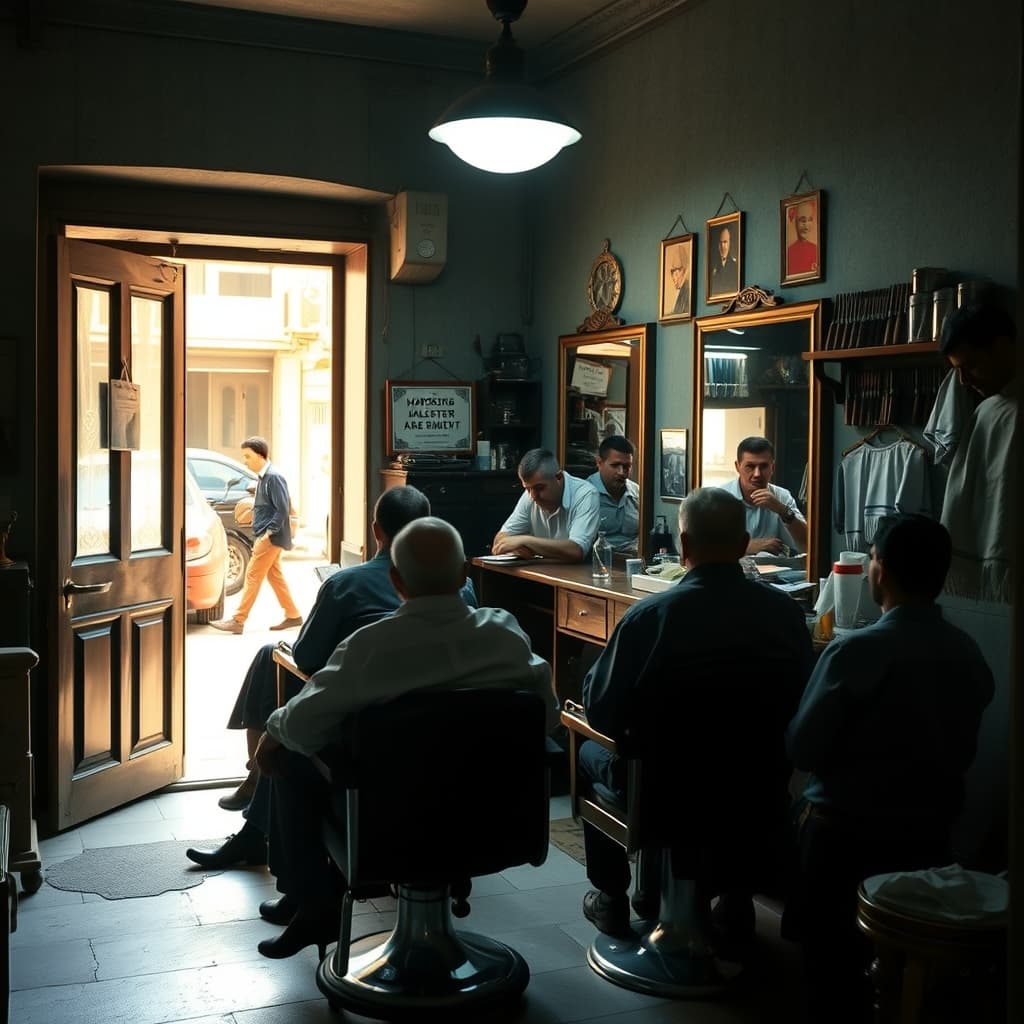
A neighbourhood barbershop could be busy even when only one customer occupied the chair. Someone waited by the window with a folded newspaper, another stopped at the door to ask a question, and a child watched the brush, comb and scissors move across the counter. In summer, the open entrance joined the shop to the pavement. Street sounds entered freely, while fragments of conversation travelled in the opposite direction. The room offered a haircut or shave, but it also kept pace with the ordinary news of the quarter.
The information exchanged there was rarely a formal bulletin. It concerned a shop changing hands, a relative expected from another city, preparations for a wedding, a football result or the best hour to avoid the heat. A barber met people of different ages in succession and learned how to keep conversation moving without allowing every confidence to become public property. Discretion mattered as much as sociability. The shop's standing depended on skilled work, fair dealing and an understanding of which stories could be repeated and which should end at the mirror.
The Waiting Chair Was Part Of The Street
Waiting created the shop's particular rhythm. Appointments were not always the organising principle, so customers measured time through the number of people ahead of them. A quick trim might become a longer visit because the room was lively; an impatient customer might return after an errand. Chairs along the wall placed strangers and acquaintances side by side. The newspaper could pass from hand to hand, while the radio supplied music, match commentary or a prompt for disagreement. None of this erased the commercial purpose of the place. Rent, tools, towels, water and long hours shaped the barber's working day.
The interior carried its own practical order. Mirrors enlarged a narrow room and allowed the barber to check a cut from several angles. Clean towels, shaving soap, bottles, brushes and sharpened instruments had assigned places. Hair was swept repeatedly because each customer left a visible trace of the work. Children learned the etiquette by observation: wait without touching the tools, keep still under the cape, and answer politely when older customers included them in conversation. Their first independent visit could feel like a modest step into neighbourhood life.
Before The Holiday, The Queue Changed
The hours before a holiday or family journey gave the barbershop a different energy. Customers wanted to look prepared, children were brought in together, and familiar jokes returned as the queue lengthened. Warm air, cologne, soap and the dry sound of scissors formed a sensory record of anticipation. Yet memory can make these scenes gentler than they always were. Waiting was tiring, shops could be cramped, and the occupation required standing through demanding days. Remembering the warmth of the room should not conceal the physical labour that sustained it.
Many barbershops still serve their neighbourhoods, although booking systems, changing styles and faster communication have altered the old flow of information. News now reaches a telephone before it reaches the waiting chair. What remains distinctive is the face-to-face continuity of the craft: a person returns, preferences are remembered, and small changes become visible over time. Preserving this scene does not mean treating gossip as history. It means recognising a local institution where grooming, trust, work and public conversation once shared the same few square metres.
For a Digital Nostalgia Archive, the barbershop matters because it shows how urban memory was maintained through repeated contact rather than grand events. The open door, the swept floor and the familiar question of who was next connected private routines to the life of the street. Holiday-scented summer days remain vivid not because every visit was exceptional, but because the shop made ordinary anticipation audible: one chair occupied, several voices waiting, and a neighbourhood briefly gathered around a mirror.