 Eski Pano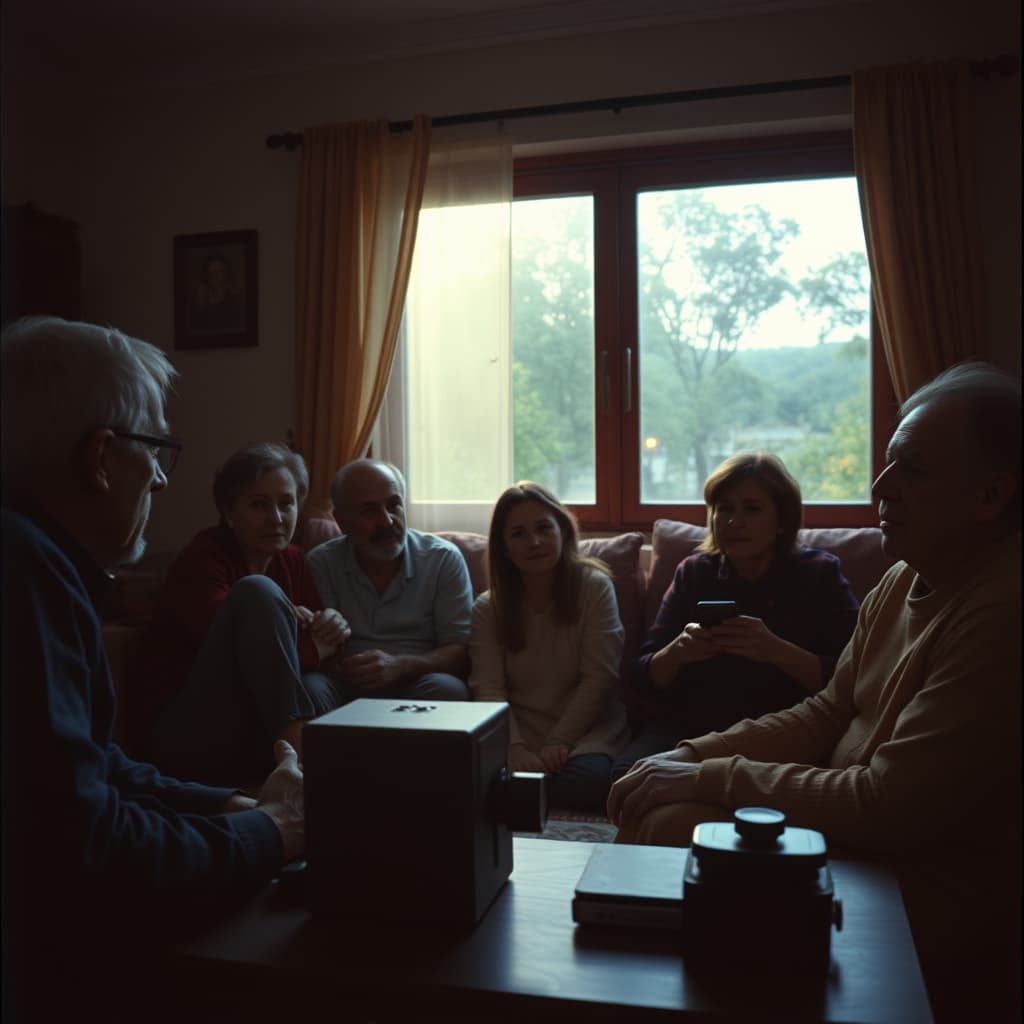
Before a home film began, the living room had to be rearranged around the machine. Curtains were drawn, a pale wall or portable screen was cleared, chairs turned in one direction, and the projector was placed where its beam would remain unobstructed. The audience might already know the people and places stored on the reel, yet anticipation gathered while the film was threaded. A small rewind crank belonged to this wider ritual. It promised that the strip could be returned carefully to its starting reel and made ready for another evening.
The crank was simple in appearance but demanded attention. The reel had to sit correctly, the loose end needed control, and the turning hand established a steady pace. Too much haste could leave the film wound unevenly; too little tension could create a slack loop. The person managing the equipment learned through touch, sight and sound. These were domestic technical skills rather than mysterious expertise, often passed on by letting a younger family member watch first and help only when the fragile material was safely under control.
Loading The Reel Changed The Room
A projected film did not behave like a programme selected instantly from a screen. It had a beginning prepared by hand and an ending announced by the tail of the reel. The projector's mechanical sound remained present beneath conversation, while the image's flicker encouraged everyone to look toward the same place. If the film slipped, jammed or lost focus, the interruption became part of the event. Someone approached the machine, others waited, and advice might arrive from several chairs at once.
The images themselves were often brief and uneven. A family outing, children on a balcony, a visitor waving, or a landscape recorded from a moving vehicle could appear without polished continuity. Their value came from recognition rather than technical perfection. Viewers named relatives, corrected dates and supplied the stories that silent frames could not carry. The device therefore held more than visual information. It created a setting in which family memory was narrated aloud, contested gently and handed to those too young to remember the original moment.
Rewinding Was The Final Act
When the light came on, the evening was not quite finished. The film still needed to be rewound, returned to its container and stored away from dust, heat and careless handling. Turning the crank extended attention beyond viewing. The strip crossed the small distance between reels while fingers watched its edge and the metal spool gradually filled. On a breezy balcony or beside an open summer window, ordinary night sounds could replace the projector as the family reviewed what they had seen.
This material technology also had limits that nostalgia should not conceal. Projectors were costly for many households, films could be damaged, lamps failed, and not every family had access to recording equipment. The person who operated the machine carried responsibility that could make the occasion tense as well as exciting. Later video formats and digital files removed much of this preparation and made copying easier, though they also changed the shared patience demanded by a single reel.
The rewind crank deserves a place in a Digital Nostalgia Archive because it reveals the physical labour hidden inside an evening of images. The family did not merely consume a recording. Someone darkened the room, aligned the projector, threaded the film, solved interruptions and finally returned every frame to order by hand. The quiet excitement came from that combination of vulnerability and care: a moving picture could disappear into a tin, wait on a shelf, and come alive again only when people gathered and the reel began to turn.