 Eski Pano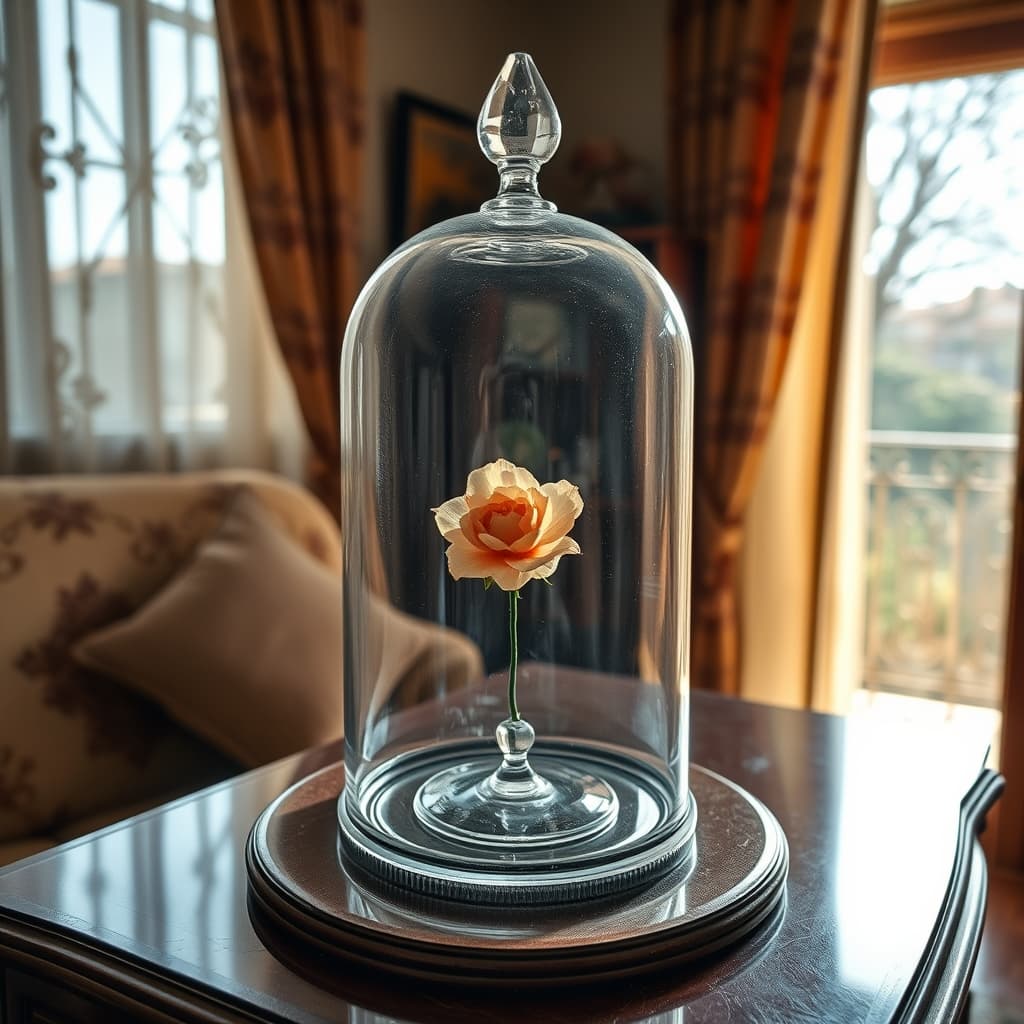
In some homes, the glass display dome occupied a corner so consistently that it became part of the room's orientation. It might stand on a sideboard, a small table or a high shelf, covering artificial flowers, a delicate arrangement or another ornament valued enough to protect. Visitors did not need to know the object's origin to understand its status. The transparent cover separated it from daily handling while keeping it fully visible, creating a small domestic stage inside the larger room.
The dome balanced display with defence. Glass allowed colour and shape to be admired, but reduced contact with dust, fingers and accidental knocks. Its base helped define the arrangement as a complete object rather than a loose collection of parts. Materials underneath varied from house to house, so no single ornament can represent every family. What remained consistent was the principle: something fragile or meaningful had been given a boundary, and that boundary announced care.
Cleaning Required More Than A Quick Wipe
A transparent cover made neglect unusually visible. Dust dulled the surface, fingerprints caught the light, and the narrow area around the base collected traces that a hurried cloth might miss. Cleaning therefore involved lifting the dome carefully, supporting it with both hands and protecting the arrangement beneath. The ornament could not simply be treated like an everyday bowl or tray. Its maintenance was a small piece of domestic labour, often folded into a larger routine of airing the room, wiping furniture and preparing the house for visitors.
Its position mattered as much as its material. Placed away from children's games or the edge of a table, the dome shaped movement through the room. People learned where not to lean and which surface was not available for cups. A child might be allowed to look closely but warned not to touch. Such rules were not written down; they were learned through repeated visits. The corner became familiar partly because the object stayed put while curtains, upholstery or appliances changed around it.
A Still Object Inside A Changing Household
The dome could survive by being transferred rather than used up. When furniture was rearranged or a household moved, it demanded separate wrapping and upright storage. If inherited, its value might lie less in the ornament's market price than in the recognition of where it had stood and who had cleaned it. Yet responsible archival writing must resist inventing a specific grandmother or family history. Scratches on a base and tiny flaws in glass show handling, but they do not identify the hands.
Modern homes offer different ways to display and protect possessions. Closed cabinets, minimalist shelves and easier-to-clean materials have changed the visual density of many rooms. Glass domes also return as decorative products, sometimes detached from the domestic meanings older examples acquired through long placement. The difference lies not only in design but in duration. An object seen in the same corner across years becomes a reference point for visits, celebrations and ordinary afternoons.
For a Digital Nostalgia Archive, the glass dome is valuable because it records a household decision about what deserved visibility and protection. It turns cleaning, placement and restraint into evidence of care without requiring a dramatic story. The enduring image is quiet: afternoon air enters from a balcony, the room shifts with family life, and the covered ornament remains in its chosen corner. Its stillness does not mean the house was unchanged. It shows how one carefully maintained object helped people recognise continuity while everything around it moved.