 Eski Pano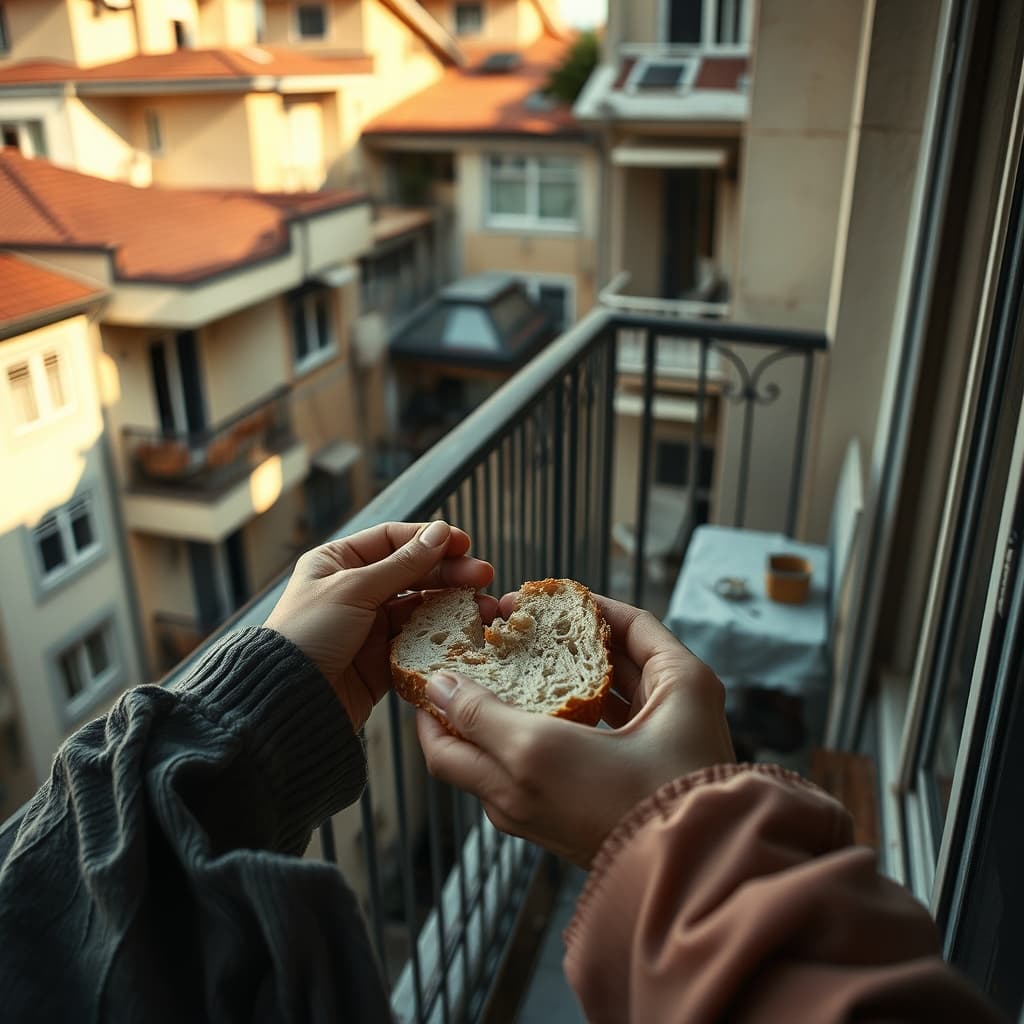
A piece of bread that had hardened overnight was not always treated as immediate rubbish. In many households it was inspected, separated from fresh loaves and kept in a cloth, paper bag or open container until someone decided its next use. Some pieces returned to the kitchen in another form; others were broken up for birds. On a breezy balcony, that small decision connected the private work of managing food with the sounds and responsibilities of the shared neighbourhood outside.
The practice depended on judgement rather than a single rule. Bread suitable for birds was not the same as bread spoiled by mould or damp. Pieces had to be kept dry and offered in modest amounts. Adults might ask children to crumble them, turning a household remainder into a lesson about waste and care. The gesture could feel generous, but it was also practical: bread represented money, labour and daily planning, so throwing it away without thought sat uneasily with habits formed under tighter household budgets.
The Balcony Became A Small Feeding Station
Balconies provided an edge between home and street. Crumbs might be placed on a tray, ledge or quiet patch below, depending on the building and local custom. Birds learned regular locations quickly, and their arrival became part of the morning or late-afternoon soundscape. Children watched from behind a curtain; an older neighbour might call across to say that the birds had come. The routine gave people a common subject that required no formal invitation.
Shared space also required informal limits. Food scattered carelessly could dirty a neighbour's balcony, attract unwanted animals or create conflict with the person responsible for sweeping the entrance. Wind carried crumbs beyond their intended place. A considerate household adjusted the quantity and location, cleaned after feeding and listened when another resident objected. Older neighbourhood culture contained mutual help, but it also contained negotiation, unequal workloads and irritation. The habit only worked when care for animals included care for the people sharing the building.
Thrift Was Visible In Small Decisions
Saving bread belonged to a broader domestic economy in which leftovers were evaluated before being discarded. This should not be reduced to a picturesque symbol of a supposedly simpler past. For some families, economy was a necessity, and managing every piece of food demanded time. The person who sorted, dried, reused or distributed bread performed real household labour. Feeding birds could emerge from that discipline, but it did not erase the pressures behind it.
Urban conditions have changed the practice. Packaged food, municipal guidance, concerns about hygiene and better knowledge of suitable bird diets complicate the old image of scattering bread freely. Today, responsible feeding requires attention to local rules and animal welfare rather than repeating a habit without question. What can be preserved is the ethical impulse: pause before wasting, understand the environment around the home and make a small act answerable to its consequences.
For a Digital Nostalgia Archive, the saved crust matters because it reveals how neighbourhood belonging could be rehearsed through an ordinary remainder. The bread moved from table to balcony, from an adult's hand to a child's, and finally into a space observed by several homes. No grand ceremony marked the exchange. Its cultural weight lies in the chain of decisions around it: preserve what still has value, share without creating a burden, notice other living creatures, and remember that even a private kitchen opens onto a common city.