 Eski Pano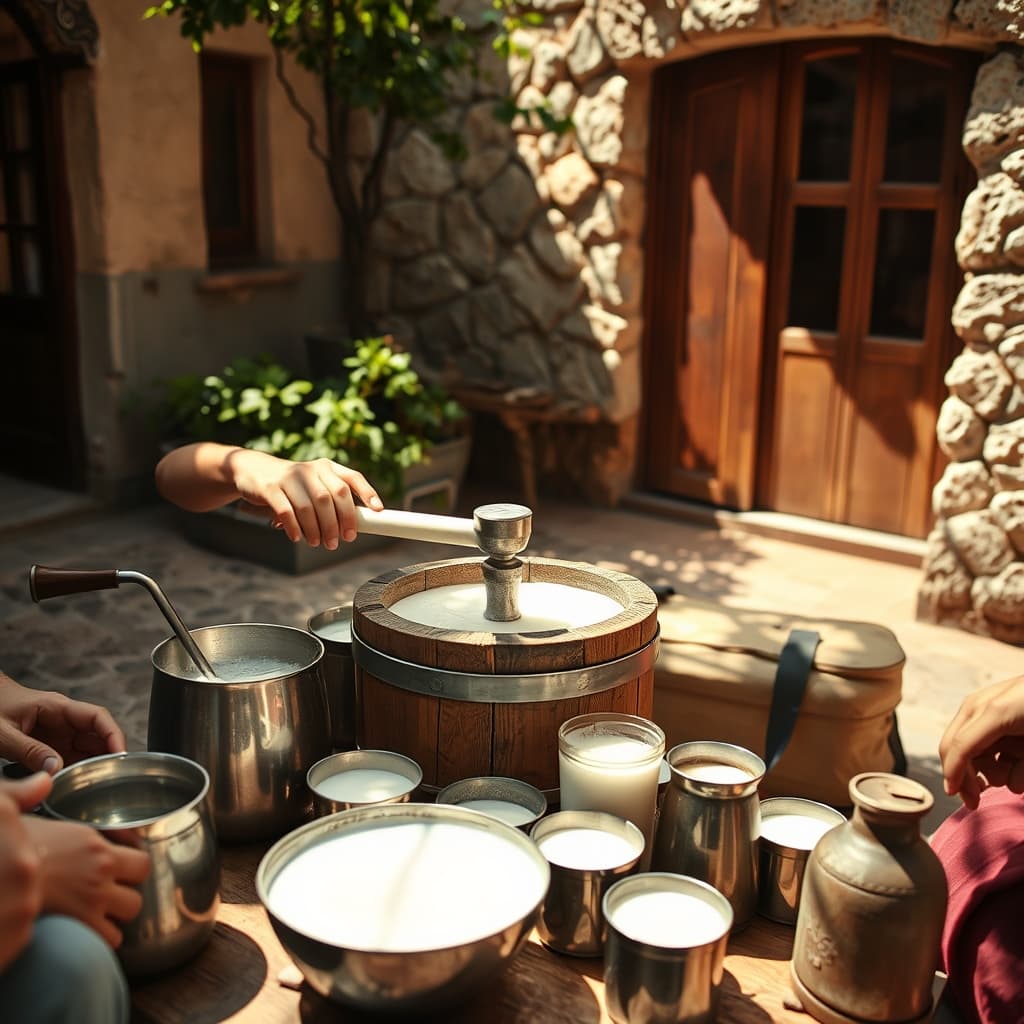
A day associated with yayık ayranı began before the drink reached a cup. The churn had to be clean, the cultured dairy base prepared, water and salt judged, and a place chosen where repeated movement could continue without interruption. The familiar sound of churning announced work in progress. In a household courtyard, kitchen or cool balcony corner, the rhythm belonged to the person holding the handle or moving the vessel, but everyone nearby understood what was being made.
Yayık ayranı is closely linked to butter-making practices, and its character cannot be reduced to yoghurt diluted quickly at the table. Regional vessels, proportions and methods vary, so one household's texture should not be declared the only authentic version. What many memories share is sustained agitation: fat gathers, liquid changes, foam appears, and the maker reads resistance, temperature and taste. Experience lives in these adjustments rather than in a single fixed measurement.
The Churn Set The Pace Of The Work
Churning could be repetitive and physically demanding. Arms tired, the vessel needed stability, and warm weather made cooling important. Work might pass between family members, with an older person judging when the process had gone far enough and a younger one taking a turn. The exchange could produce conversation and laughter, but it remained labour. Celebrating collective preparation honestly means recognising the people, often women, whose practiced attention turned dairy into several useful products.
The resulting ayran carried sensory details shaped by the process. It could be lightly foamy, cool, salty and more sharply cultured than a modern packaged drink. A jug, metal cup or glass affected presentation, while storage and serving depended on the household's available means. It accompanied bread, bulgur dishes, field work, a crowded meal or a pause in summer heat. Its appeal was not luxury but refreshment joined to nourishment and familiarity.
A Jug Travelled Beyond The Immediate Table
Sharing gave the drink a social route. A neighbour who had helped, a relative arriving at the right hour or someone working nearby might receive a cup. A portion could be sent across a courtyard, just as another household might later return a plate or ingredient. This exchange did not mean that every community shared equally or that resources were abundant. It worked through relationships, obligation and the practical knowledge that food prepared in quantity could strengthen ties when distributed thoughtfully.
Industrial production, refrigeration and ready-to-drink packaging have made ayran consistent and widely available. They have also separated the drink from the sound and duration of churning for many consumers. Homemade and regional forms continue, sometimes with revived equipment or demonstrations. The archival task is not to rank one against another. It is to distinguish the product in a sealed cup from the process that once organised time, movement and cooperation around a vessel.
Yayık ayranı belongs in a Digital Nostalgia Archive because taste here is inseparable from labour. Foam, acidity and coolness carried evidence of cultured milk, patient motion, temperature and experienced judgement. The memory lasts not simply because the drink relieved thirst on a hot day, but because its preparation made work audible and shareable. A turning handle or rocking churn established the rhythm; cups then carried the result outward, allowing a demanding household task to become part of family and neighbourhood memory.