 Eski Pano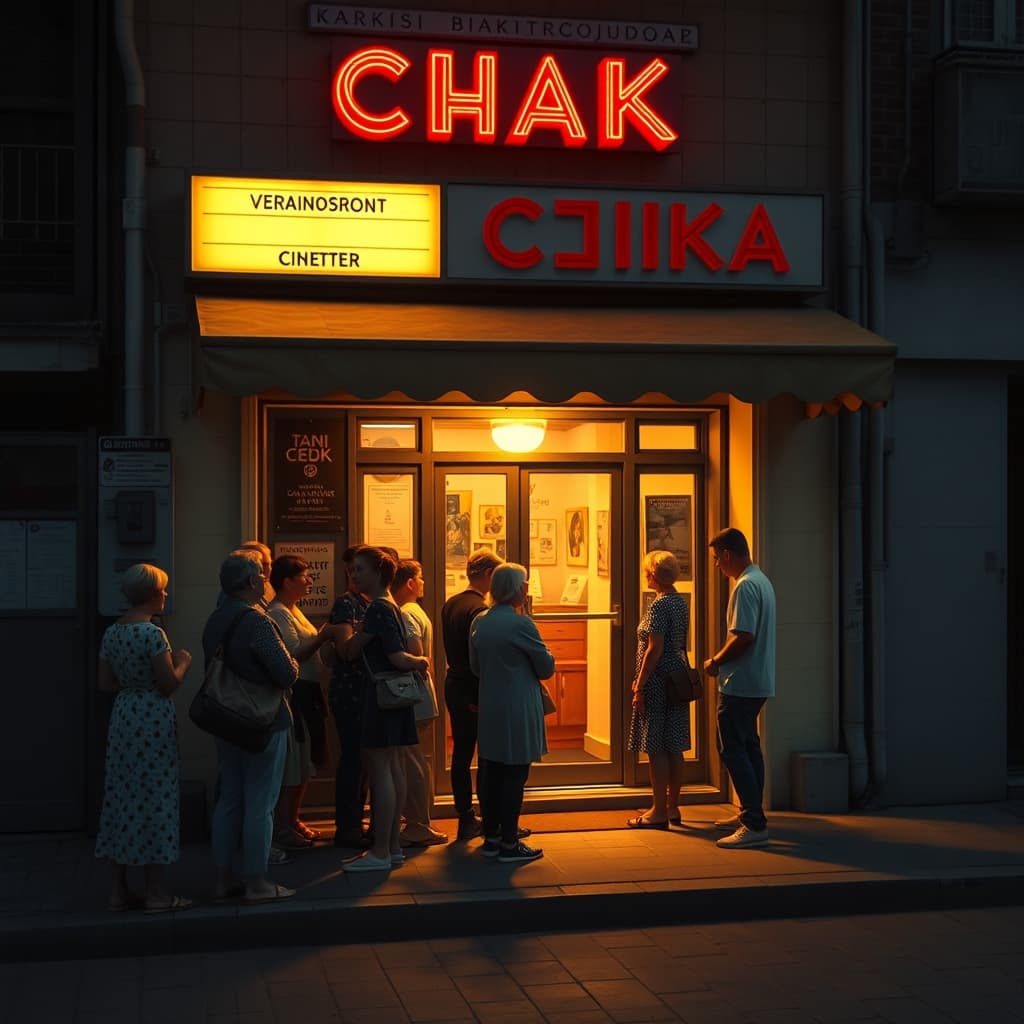
On a warm evening, the cinema queue began outside the story on the screen. It formed beside a ticket window, stretched along the pavement and adjusted itself whenever a doorway, shopfront or passing pedestrian needed room. People arrived in family groups, pairs of friends or small clusters of children supervised from a short distance. The posters offered a promise, but the queue supplied the first act: deciding which session to enter, counting the people ahead and wondering whether the preferred seats would still be available.
Waiting in public had its own etiquette. A relative might hold a place while someone bought water, checked the programme board or looked for a late arrival. Those at the back asked who was last; those near the window prepared money before reaching it. The arrangement was not always orderly, and popular evenings could bring impatience or argument. Yet the line made demand visible. Before online booking and private viewing, a full pavement announced that many households had chosen the same destination at the same hour.
The Ticket Window Set The Evening In Motion
The exchange at the small window turned anticipation into a physical object. Tickets had to be kept dry, counted correctly and handed to the attendant at the entrance. Their printed details varied between cinemas and periods, so a surviving ticket can document a particular business without representing every venue. What it consistently recalls is a sequence of actions: choose, pay, wait, enter and find a place before the lights dimmed. Each step involved another person, making filmgoing a chain of face-to-face encounters.
Inside, summer shaped the experience as much as the programme. Ventilation, open doors, fans or an outdoor setting affected comfort. The smell of the street might linger near the entrance, while conversation softened as the room darkened. A latecomer disturbed a row; a familiar face greeted another across the aisle. The audience responded together, but not identically. Laughter could spread quickly, while silence at a tense scene created a temporary public concentration difficult to reproduce alone.
The Walk Home Extended The Screening
When the audience returned to the warm street, the film became conversation. People repeated a scene, disagreed about a character or decided whether the evening had justified the queue. Children might imitate a gesture until an adult told them to watch the road. Shop lights, buses and neighbourhood shortcuts placed the imagined world back inside the ordinary city. The route home was not an afterthought; it was where a shared viewing separated into several family memories.
This culture was never equally accessible. Ticket prices, work schedules, transport, gendered expectations and the location of venues shaped who could attend and when. Queues could be uncomfortable, and a sold-out session meant disappointment rather than romance. A careful archive keeps those limits beside the pleasure. Nostalgia becomes more useful when it remembers the labour of cinema staff and the practical decisions that made an evening possible.
Multiplexes, mobile tickets and streaming have changed both waiting and watching. Public queues still appear for major releases, but the old ticket window no longer organises every visit. What survives is the desire to encounter a story among other people and discuss it while returning home. The summer cinema queue belongs in a Digital Nostalgia Archive because it joined urban space, commerce and imagination before the first frame appeared. Its quiet legacy is a habit of collective attention: strangers agreeing, for one evening, to wait on the same pavement and look toward the same screen.