 Eski Pano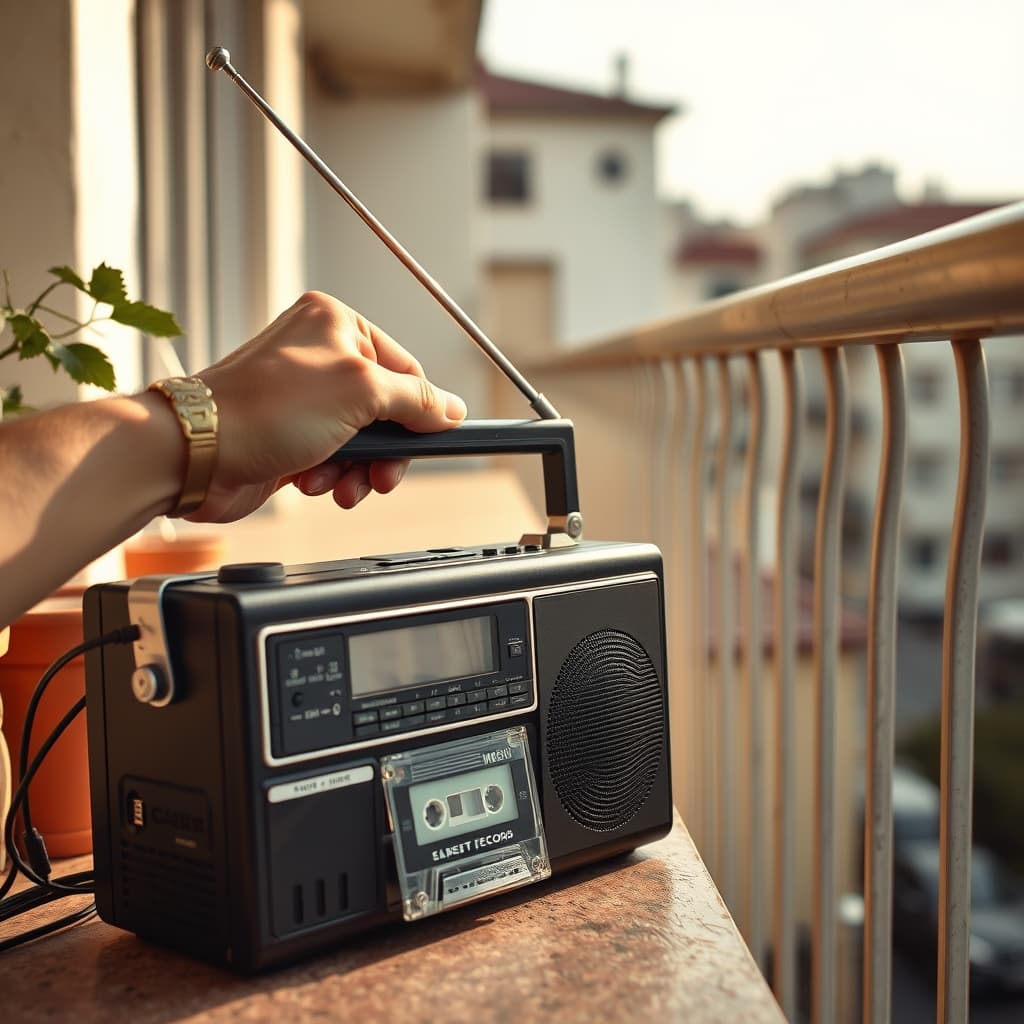
Using a radio cassette player often began with a hand above the machine rather than a finger on the play key. The telescopic antenna was raised, angled and turned while someone listened for a station to emerge from hiss. A position that worked in one corner could fail after the set moved to a balcony table. The search was physical: rotate the dial slowly, shift the aerial by a few centimetres, step away, then return when the signal weakened again.
The device combined two kinds of attention. Radio arrived from outside according to a broadcaster's schedule; the cassette stayed inside the household and could be played repeatedly. Bringing them together made recording possible, but only if the listener was ready. A favourite song might begin without warning. The record keys had to be pressed at once, and an announcer's voice could overlap the opening. The resulting tape preserved not a perfect copy but the circumstances of listening.
A Clear Signal Could Depend On The Room
Domestic reception revealed that technology did not operate separately from architecture. Thick walls, nearby buildings, electrical interference and the position of a window could affect what was heard. Listeners discovered useful locations through experiment rather than formal training. One person held the antenna while another called out whether the sound improved. Foil, wire or other improvised additions sometimes appeared, although such modifications varied and were not always safe or effective.
The controls demanded familiarity. Radio bands, tuning marks, volume, tone and cassette keys occupied a compact surface. Mechanical buttons offered clear resistance, and some actions required two keys together. Owners learned to recognise the end of a tape, the slowing sound of tired batteries and the loose movement that suggested a cassette problem. When failure exceeded household skill, a repair shop could inspect belts, contacts, motors and damaged mechanisms.
Recording Turned Listening Into Selection
A blank or reusable cassette had limited duration, so recording involved choices. Listeners wrote titles on an insert, estimated remaining space and decided whether to interrupt an existing collection. The pause key could help avoid speech, though timing was never exact. Over time, a tape became a private sequence assembled from public broadcasts. Small imperfections—the presenter, a burst of static, a clipped beginning—later identified the moment more vividly than a flawless copy might have done.
Care continued after the recording. Cassettes were kept away from heat, dust and magnets, returned to cases and rewound without pulling the tape. A pencil could help turn a spool when the mechanism left slack, but damaged tape still required patience and might not be recoverable. Sharing a cassette with a friend meant temporarily surrendering a unique arrangement, which is why names and warnings often accompanied the loan.
Digital radio, streaming and automatic playlists have removed much of this uncertainty. Songs can be identified and replayed without waiting beside a machine. The radio cassette player's cultural value lies precisely in the connection between access and effort. Turning the antenna, guarding the record key and caring for the finished tape made listening visible as an activity. For a Digital Nostalgia Archive, the device preserves a domestic technical language in which hope became briefly audible when static thinned, the music settled into focus and nobody in the room dared touch the aerial.