 Eski Pano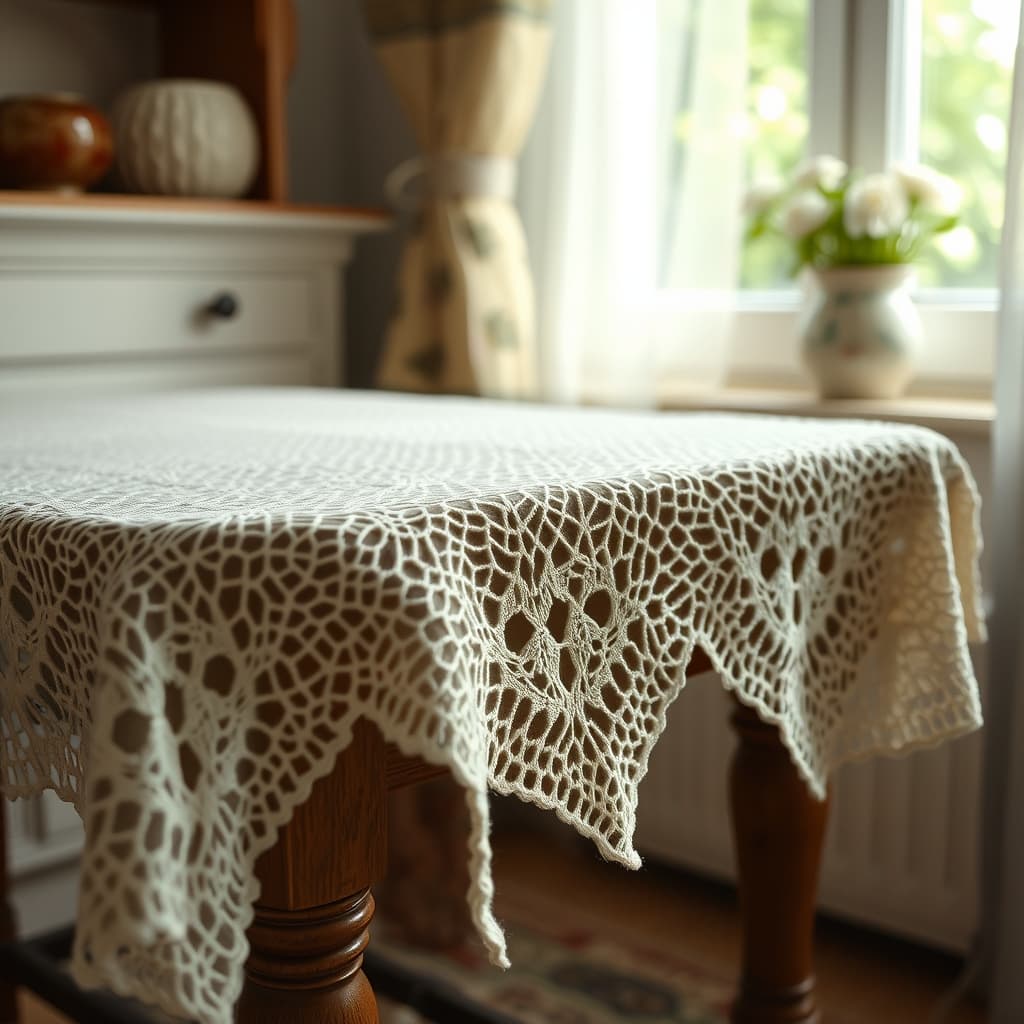
A lace cover could change the appearance of a familiar surface without hiding it completely. Spread over a side table, tray, radio, shelf or the back of a chair, its open pattern allowed wood, metal or fabric to remain visible beneath the thread. The effect came from contrast: a geometric or floral network placed over a solid household object. What looked light and decorative was the result of counted movement, repeated tension and hours of close work.
The term covers many techniques and materials. Cotton thread, synthetic fibre, handmade crochet, needlework and machine-produced lace can resemble one another at a quick glance while differing greatly in construction. A collector therefore begins with observation rather than a romantic assumption. How are the loops joined? Are the edges finished consistently? Does wear appear where the cover touched a surface? These questions reveal making and use without assigning an owner who cannot be documented.
Starching Gave The Pattern A Temporary Shape
Washing and starching were part of the object's life. Dust settled between openings, while smoke, handling and the surface below could change the colour. Cleaning had to protect the thread from stretching or breaking. After washing, the cover might be shaped while damp and allowed to dry flat so points and repeated units remained legible. Starch added crispness, but the effect was temporary and had to be renewed. Display therefore depended on maintenance as well as making.
Damage offers another kind of evidence. A loose end, replaced section or slightly different thread may show that someone repaired the piece rather than discard it. Fading can suggest exposure to light; a cleaner protected area can indicate how it rested on furniture. None of these signs proves a specific memory, but together they describe a domestic object that was touched, cleaned, adjusted and kept in service.
Collecting Requires Context, Not Just Pattern
Renewed interest in lace comes from several directions. Some people inherit pieces and want to identify them; others value handwork, reuse old textiles in contemporary interiors or study regional variations. Online images make patterns easy to compare, but they can also detach an object from scale, material and history. A careful catalogue records measurements, fibre where known, construction, condition, repairs and any reliable provenance supplied by the family or seller.
Collectors should also distinguish appreciation from certainty. Similar motifs can travel across regions and generations, and patterns may be copied from printed guides. Declaring every flower uniquely local or every yellowed edge antique can turn desire into false evidence. Honest uncertainty adds value. It allows the maker's skill to be respected without building a marketable legend around an undocumented object.
The lace cover belongs in a Digital Nostalgia Archive because it makes domestic time visible. Its pattern records hand rhythm; its stiffness recalls washing and shaping; its repairs show decisions to preserve. The object also prompts a wider question about whose labour entered the historical record. Work completed at home was often admired as decoration while the time and concentration behind it remained unnamed. Looking closely today can restore that labour to view. The renewed interest matters most when it moves beyond surface charm and treats thread, maintenance and trustworthy context as parts of the same cultural object.