 Eski Pano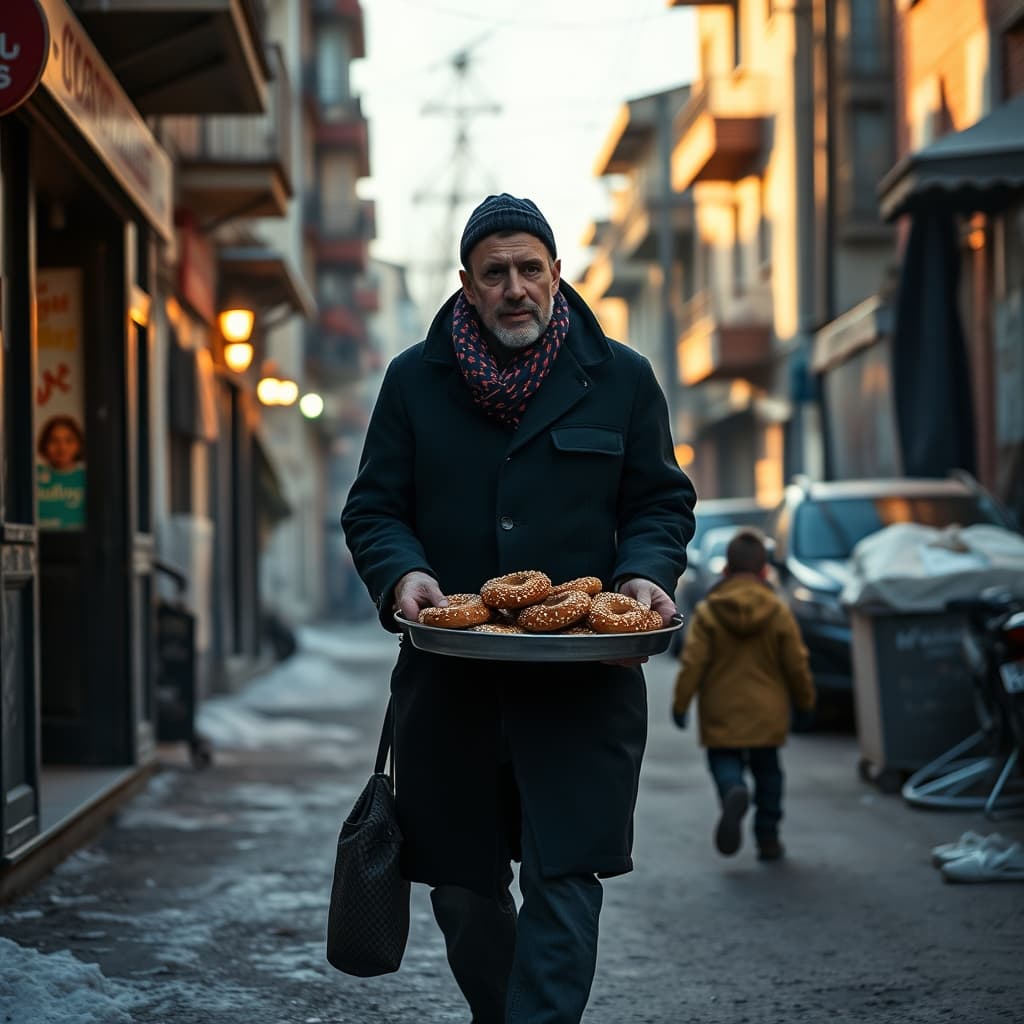
On a winter morning, the simit vendor's call could reach a home before daylight felt fully established. It travelled between apartment fronts, climbed stairwells through open windows and briefly separated itself from traffic, kettles and the scrape of shutters. Residents recognised not only the word but its direction and distance. Someone near a window decided whether the vendor was approaching quickly enough to catch at the entrance.
The call belonged to a moving trade organised by timing. Simit had to leave the bakery, remain appealing and reach streets when workers, students and households were beginning the day. The vendor carried a tray, basket, cart or another arrangement suited to place and period; no single form represents every city. What united the variations was a route learned through repetition. Stops, likely customers, school hours and steep streets shaped the pace.
Bakery Heat Entered The Cold Street
Fresh simit brought a material contrast to winter. Its crust could still hold warmth while the air made hands stiff. Sesame released an aroma when the bread was moved or broken, and the ring shape allowed several pieces to be stacked without becoming shapeless. Quality varied by bakery and hour. Customers judged colour, crispness and freshness through familiarity rather than a printed standard, sometimes asking which batch had just arrived.
The doorway exchange was brief but social. A child might be sent downstairs with coins; a shopkeeper bought breakfast while lifting a shutter; a regular customer called from a balcony and met the vendor below. Trust could make payment flexible, though it should not be romanticised as universal. Accounts, misunderstandings and competition were part of street commerce. The vendor also worked in cold, rain and early darkness, carrying stock whose unsold remainder affected the day's earnings.
The Call Mapped The Waking Neighbourhood
Because the seller moved, the voice created a temporary map. It was louder at the corner, faded behind a building and returned on a parallel street. Children on the way to school associated it with a particular hour. For adults, it could signal that transport, shops and household routines were beginning. The sound was useful information as well as advertisement, and its regularity made it part of local timekeeping.
Warmth in this scene came from more than hot bread. It arose from small coordination: a baker finishing a batch, a vendor planning a route, a resident listening and someone opening a door. Yet the scene also depended on strenuous and insecure labour. Preserving it honestly means seeing the worker rather than reducing the call to pleasant background sound. Weather exposure, long walking and narrow margins belonged to the same morning.
Modern bakeries, delivery services, regulations and changing traffic have altered mobile food selling, while simit remains central to urban life in many forms. Recorded nostalgia cannot reproduce the practical relationship between a specific route and its listeners. The winter call deserves archival attention because it joined production, movement and appetite in real time. A neighbourhood heard breakfast coming before it saw it, and for a few minutes the cold street was connected by people calculating distance, coins, freshness and whether there was still time before school or work.