Eski Pano
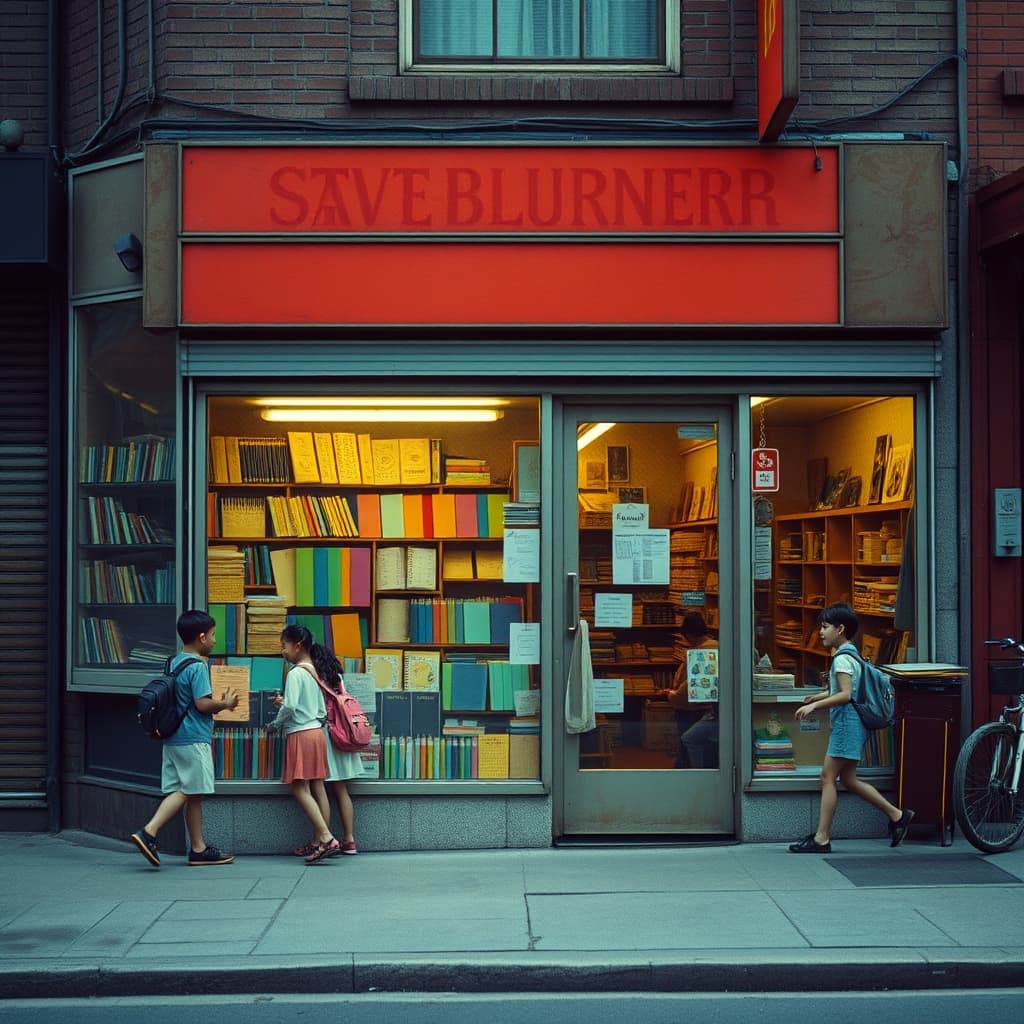
There was a time when every neighborhood had a hidden threshold for children, and that threshold often began at the glass door of the stationery shop on the corner. As the crowd leaving school dispersed, some children went straight home while others stopped there for a few extra minutes of delay. Inside were the smell of graphite pencils, the dust of erasers, the matte texture of cardboard notebooks, and rows of colored boxes arranged on shelves. Stickers tucked into the corner of the shop window, colored paper, rulers, and small toys lifted the shop beyond the ordinary function of a place to buy supplies. The hours spent there may not have been long in real time, but in memory they grew larger than their actual duration.
In neighborhood culture, the corner stationery shop was one of the most delicate meeting points between local shopkeeping and childhood. The grocer mattered for necessities, the bakery for bread, the butcher for dinner, but the stationery shop carried a little imagination, a little school order, and a little feeling of growing up. The shopkeeper knew which grade the neighborhood children were in, suggested which pencil worked best, and sometimes marked a tiny note in a ledger instead of worrying about missing change. Before the new school year, the mild rush around stationery windows was one of the most graceful seasonal preparations in city life. Covering notebooks, choosing name labels, trying pencil sharpeners, and looking at scented erasers were less an errand than a public ritual of childhood.
One reason these hours never fade is that the objects in the shop did not mean function alone to a child. A pencil also carried the hope of writing better and beginning again. A notebook with a beloved picture on the cover could make homework seem more bearable. Bright sheets of paper stood not only for school projects, but like a wall of possibilities. More importantly, lingering inside the stationery shop offered the child a small but valuable field of choice. Deciding which eraser to buy, which folder looked better, or which sticker would suit the inside of a notebook was like making some of the first marks of personality within ordinary life.
The corner stationery shop was also a safe extension of street life. Children could go there alone, be recognized by the shopkeeper, run into a friend by the entrance, or continue a conversation left unfinished at school. On rainy days the front window fogged up, the fluorescent light inside looked warmer, and the contrast between the gray weather outside and the colorful shelves inside became even stronger. Even during summer holidays it was possible to stop by, because the stationery shop was not merely a place selling school goods. It was a small center built in the language of neighborhood childhood. The order inside it held both seriousness and delight in a child’s eyes.
Perhaps that is why the hours spent in the corner stationery shop were never erased. In that shop the child felt both belonging to the neighborhood and beginning to develop personal preferences. Moving between the shelves, the measured order of the adult world met the bright curiosity of childhood in one place. Shopping today may have shifted to large stores, online carts, and standardized packages, but what remains in memory is the familiar shop window seen when turning the corner, the smell of paper breathed in upon entering, and the pleasant weight of a small purchase carried home. For that reason, stationery hours survive not only as school preparation, but as one of the warmest scenes of growing up inside a neighborhood.
Why Did the Hours Spent in the Corner Stationery Shop Never Fade from a Child’s Memory