Eski Pano
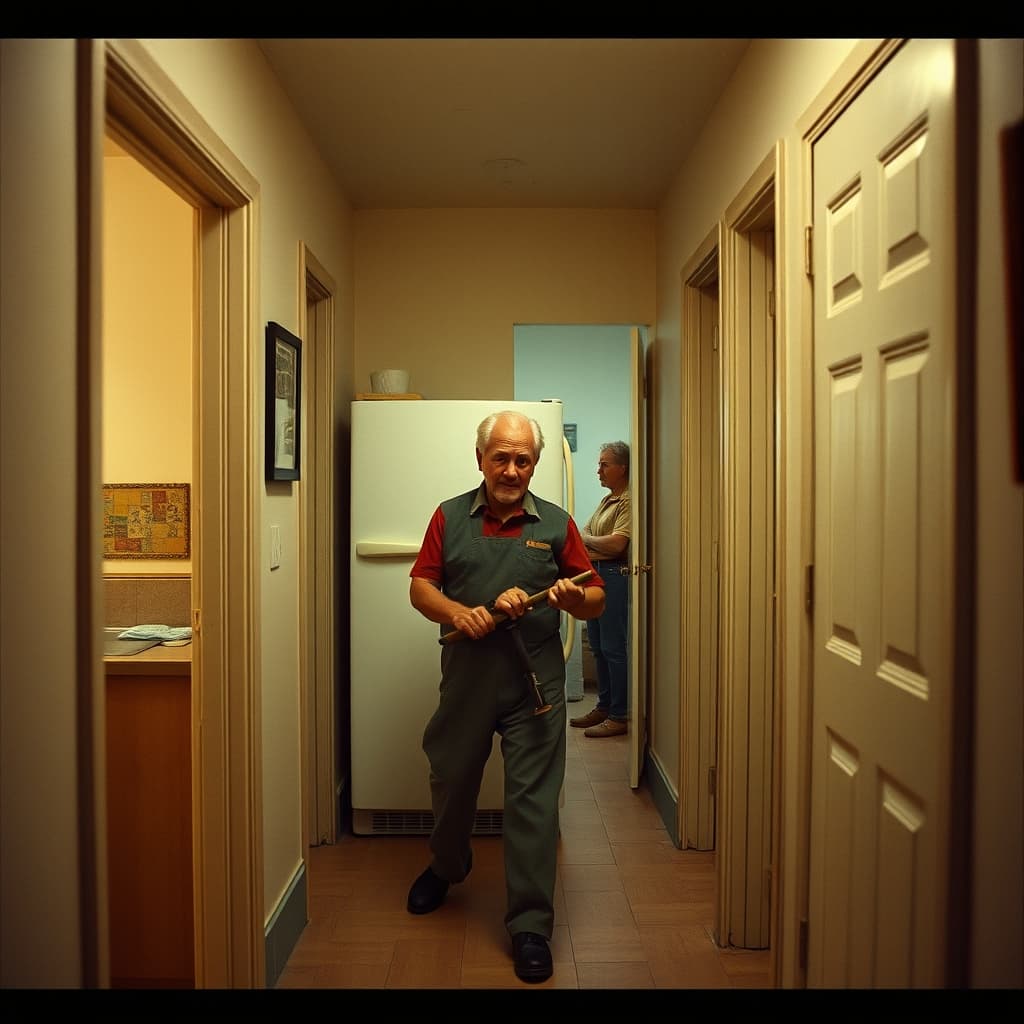
There was a time when one of the most attentive forms of waiting in an apartment building was reserved for the refrigerator repairman. Market bags left by the door, the faint smell of a freezer beginning to thaw, a note left with the concierge saying “let us know when he arrives,” and footsteps echoing through the stairwell were all small signs of that expectation. Even before the repairman appeared, a shared movement began inside the building. One neighbor carried yogurt upstairs to keep it cold, another called out through a half-open door, “I still have the number of our old repairman.” In older city life, certain household breakdowns did not remain the private concern of one flat; they became moments of solidarity that made relationships inside the building visible.
Seen through the lens of neighborhood culture, apartment buildings waiting for the refrigerator repairman show that modern urban life was not nearly as isolated as it may seem today. The refrigerator stood at the center of domestic order, and when it failed, the problem was not only technical. Would the milk spoil, could dinner ingredients be saved, what would happen to the dessert kept for the children tomorrow? Questions like these moved from the kitchen into conversations across the building. When the repairman arrived, he entered not only the apartment, but often the memory of the building itself. He knew which bell did not work, which kitchen still held an older model appliance, and which neighbor always offered coffee. In this way, a bond formed between repairman and building that was based not on one visit, but on familiarity and trust.
What made this waiting feel like the heartbeat of city life was the way it connected ordinary routines. When a refrigerator broke, doors opened more often, kitchen sentences spilled into the stairwell, children stared curiously at the tool bag, and elders began talking about how older machines used to last longer. The sound of the repairman’s screwdriver, the fitting of a gasket, the motor beginning to run again, and the shared sigh of relief afterward formed one of the small yet deeply human rituals of the city. For residents, repair did not mean only that an object had been fixed; it also meant that for a short while people had come into closer contact with one another. That is why the refrigerator repairman, though seemingly a technical figure, became in old city life a familiar character who refreshed the bonds of neighborliness.
Today, when many broken appliances are replaced almost immediately, the longing for that old way of waiting comes partly from the human relationships built around repair. Apartment buildings waiting for the refrigerator repairman remind us that cities are not made only of concrete blocks; they are also shaped by small tensions, acts of help, and hallway conversations lived within the same building. The old melody lingering in the silence by the stove perhaps survives there: in the sounds between kitchen and stairwell, in the phrases exchanged through a doorway, and in the shared relief that arrived once the machine worked again. The heart of old urban life sometimes beat not in grand squares, but in apartment corridors waiting for the repairman.
That waiting also strengthened the way residents came to know one another inside the building. People gradually learned who still had an older refrigerator model, who could recognize a motor problem by sound alone, and whose yogurt was always kept safely at a neighbor’s home during an outage. As the repairman walked down the stairs, someone else might call out, “Could you look at ours too?” and short evaluations followed in the doorway after the work was done. These small conversations formed an unofficial social network of city life. At times, the refrigerator repairman restored not only a machine, but the everyday communication of the apartment building itself.
Why Did Apartment Buildings Waiting for the Refrigerator Repairman Take Their Place at the Heart of Old Urban Life with an Old Melody Lingering in the Silence by the Stove