Eski Pano
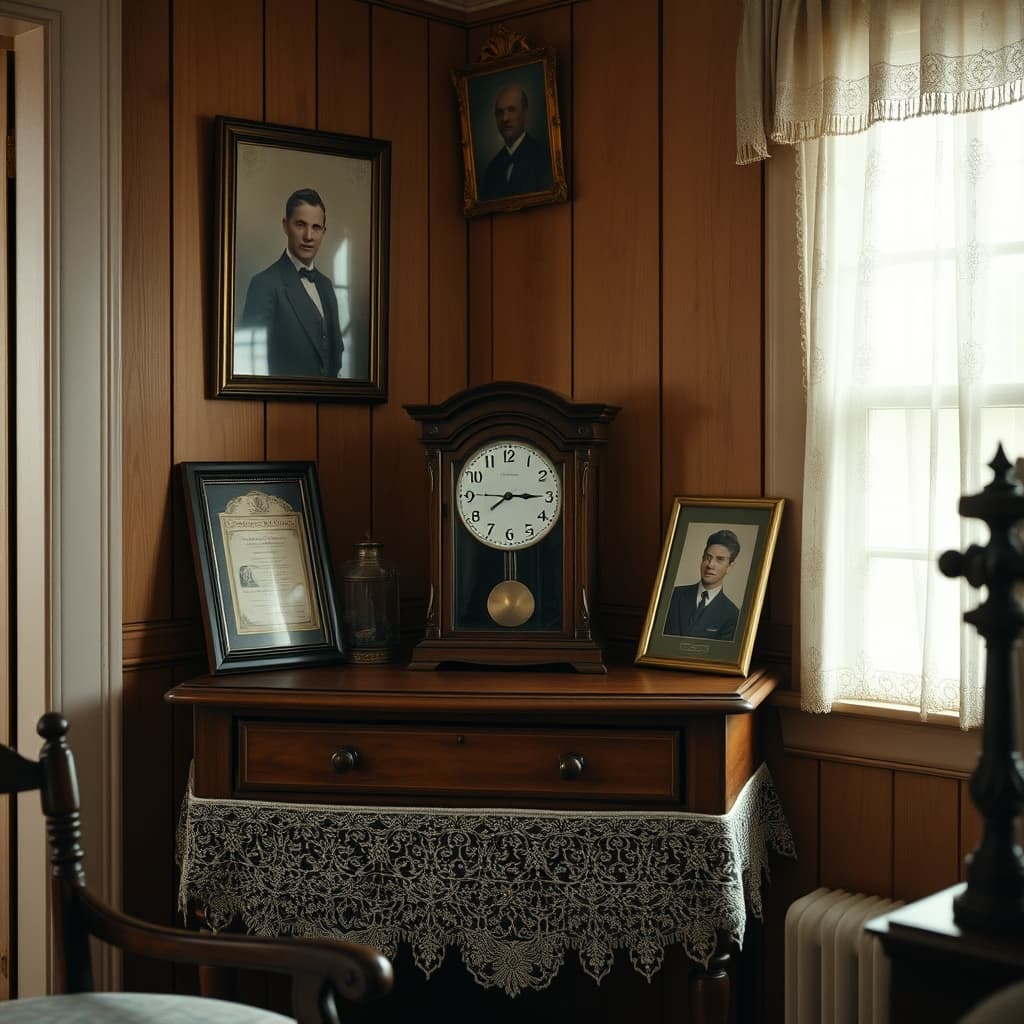
There was a time when the passing of hours in certain homes was understood not from a calendar on the wall, but from the winding clock standing in the same corner every day. Upon entering grandmother’s house, the first thing often noticed was that regular ticking, coming from its fixed place on top of a lace-covered cabinet, surrounded by family photographs and a small porcelain ornament. The same rhythm could be heard when curtains were opened in the morning, while lunch was being prepared, when afternoon tea was brewed, and just before the evening news began. The sound of the clock acted like an invisible signal arranging the tasks of the home without ever sounding forceful. Most of the household did not even need to look at it to know what time of day had arrived, because the order spread from that corner had already entered everyday life.
Seen through the lens of object stories, the winding clock was not merely something that showed time. Through its design, its sound, and the place it occupied, it became a central object that shaped domestic ritual. Its wooden case was polished, its glass wiped with a soft cloth, and on a certain day each week its key was turned with care. That act of winding was a ritual in itself; in many houses, grandmother or the most meticulous elder performed it, never allowing the clock to be over-wound or neglected. In that way, the relationship between person and object became one of care as well as use. The corner where the clock stood became a place guests glanced toward, children were warned not to touch, and special attention was given during holiday cleaning. The clock made not only time, but also the idea of order, visible.
Much of domestic life took shape around that unchanging corner. Breakfast was often gathered according to the minute the clock suggested, afternoon visits to neighbors were timed with phrases like “let’s leave before three,” and as evening approached, preparations for the table seemed to accelerate in step with the ticking. For children, the clock meant more than learning the hours; it was a sign of seriousness within the home. No one ran loudly beside it, leaned against the cabinet, or borrowed the winding key without permission. In this way, the winding clock became less a tool of discipline than a quiet elder arranging the rhythm of shared life. Even as family members changed, seasons passed, and curtains were replaced, that corner remained the same, and from it came the feeling of continuity.
Today digital screens may show the hour everywhere, yet almost none place such a tactile sense of order into a home. The winding clock reminds us that in older domestic life, objects were not merely used; they also shaped behavior and habit. Its ticking taught people to wait, to watch time, and to feel the divisions of the day. That is why the unchanging corner of grandmother’s house remains more than a piece of furniture arrangement. It is a strong memory of how generations inhabited a home, respected time, and wove daily rituals together. If the winding clock is still remembered, it is because it kept not only minutes, but the measure of domestic life itself.
Part of the power of that corner in memory came from its quiet continuity. Rugs might be replaced, the living room set might change, and children might grow up and move to other cities, yet the clock often remained in the same place. On holiday mornings it was wound earlier, in winter it sounded more clearly, and in summer it blended with neighborhood noises entering through the open window. In that way, the winding clock was remembered not simply as an object standing in the home, but as a witness living alongside seasons and family life. Even when many details of grandmother’s house faded, the order gathered in that corner stayed vivid.
The Winding Clock and the Unchanging Corner of Grandmother's House: How It Shaped the Rituals of Domestic Life